
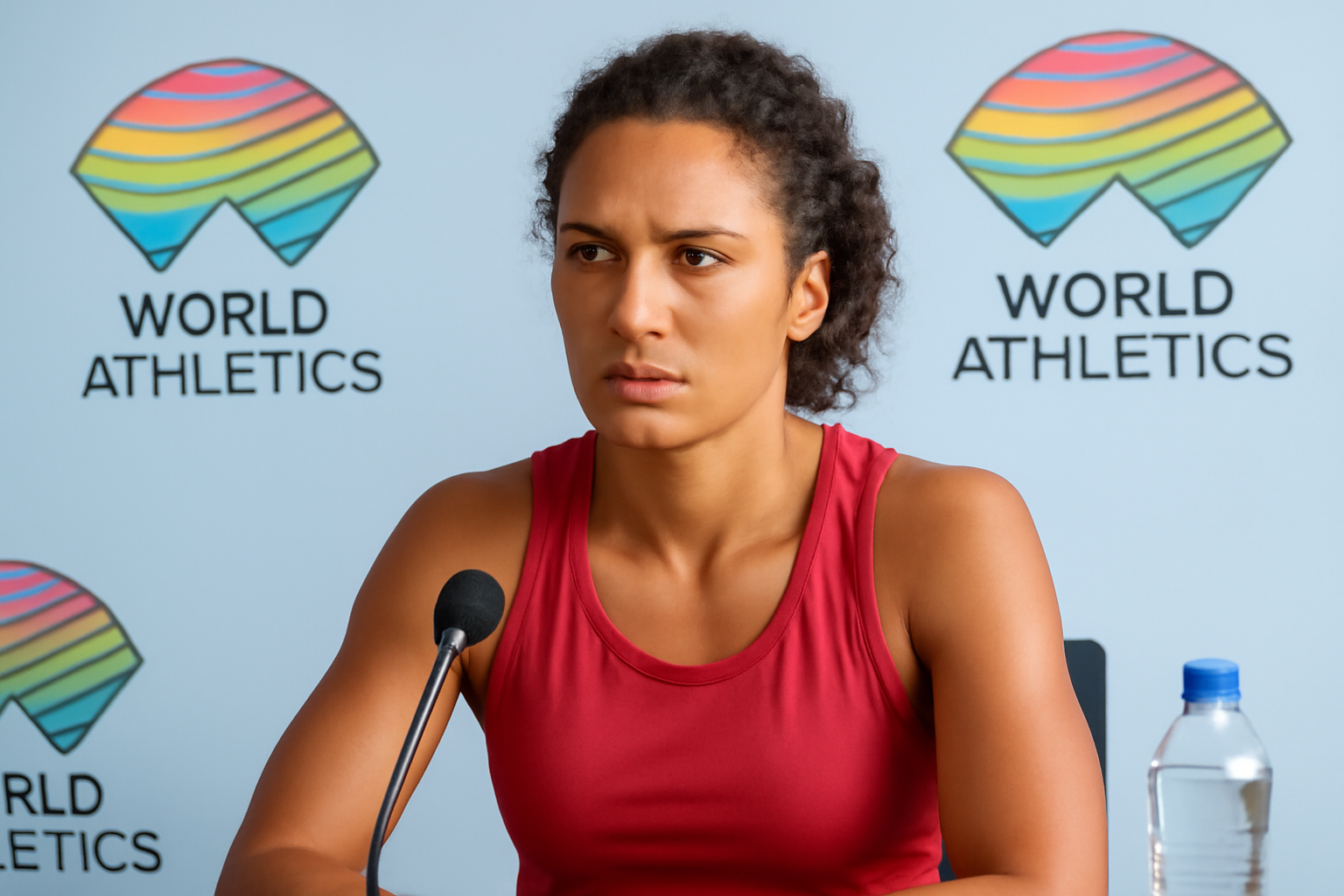
World Athletics uncovers game-changers in sex verification testing
World Athletics has just dropped some serious bombshells with their recent presentation on sex verification testing. Led by Dr. Stéphane Bermon, who heads up health and sciences at World Athletics, they revealed that since 2000, between 50 and 60 female athletes who made it all their finals in major championships wouldn't pass today's sex testing criteria. That's pretty huge, right?
The data they've gathered from 2000 through 2023 tells quite a story. Out out 135 finalists identified with differences in sexual development (DSD), many have been repeat competitors. Dr. Bermon pointed out that those with DSD are a staggering 151.9 times more likely than others qualify international championships, suggesting these athletes may have some competitive edge.
The backdrop: History and legal fights
These revelations come after years and years heated legal battles, with high-profile athletes like Caster Semenya often at center. Semenya, an Olympic champ from South Africa, alongside Indian sprinter Dutee Chand and Namibia's Christine Mboma (who snagged silver in 200 meters at Tokyo 2021), have all found themselves in thick this debate over sex testing and how athletes categorized.
The issue really caught fire during Rio 2016 Olympics. The women 800-meter final had top medalists, including Semenya, with naturally high testosterone levels. In response, World Athletics rolled out new rules, requiring these athletes undergo medical procedures or medication get testosterone levels down acceptable ranges.
More tests, tighter rules
World Athletics has cranked up their testing game by bringing back SRY gene analysis, a method that was put aside by International Olympic Committee back in 1999. This genetic test now part standard procedure all female athletes, following recent World Athletics Championships. If they find an athlete carrying a Y chromosome, she's not allowed compete in female category.
Sebastian Coe, President World Athletics, made it clear organization staunchly committed protecting women sports. "We're all about fairness female athletes," Coe said. "To compete at elite levels female category, being biologically female must."
Discussions and pushback from scientists
Despite World Athletics' firm stance, there's a growing chorus criticism from scientists questioning reliability and ethics using SRY gene testing determine biological sex. Dr. Andrew Sinclair, who actually discovered SRY gene, has been vocal about misuse his research. He argues that biological sex involves complex mix factors—chromosomal, gonadal, hormonal, secondary sex characteristics, not just one gene.
"Having SRY gene doesn't mean it works," Dr. Sinclair pointed out. "Doesn't tell you anything about testes development, testosterone production, or how body uses hormone."
Looking ahead: What's at stake globally?
World Athletics' new policies are making waves worldwide, pushing other sports organizations consider similar testing. Take Asian Games—they've started sex verification every female athlete. Even World Boxing's thinking about launching comprehensive testing. Just recently, Vietnam under-21 women volleyball team saw two players disqualified from FIVB Under-21 World Championships after failing sex tests, prompted by external protests.
This debate isn't cooling down any time soon—it ignites strong feelings from athletes, scientists, and human rights activists alike. As sporting bodies juggle between competitive fairness and inclusivity, future sex testing in athletics remains hotly debated and ever-evolving.
Want keep up with all twists and turns in sports regulations and stories from LGBTQ athletes? Sign up our newsletter—we're your go-to source inspiring tales and essential issues!
Related Posts
Supreme Court to Address State Bans on Trans Women in Female Sports
The upcoming U.S. Supreme Court term promises to be a pivotal moment for transgender rights, as the nation's highest court has agreed to evaluate whether states have the authority to prohibit transgender women from participating in female sports competitions. This case, scheduled to be argued in the next term beginning October, is expected to have a significant impact on the future of sports inclu [...]
Megan Rapinoe and Sue Bird Announce Amicable Separation After Ten Years Together
In a heartfelt announcement that resonated deeply within the sports and LGBTQ+ communities, soccer star Megan Rapinoe and basketball legend Sue Bird have revealed their decision to part ways after nearly a decade together. The couple, who have been icons both on and off the field, shared the news with their fans through a joint statement on social media, expressing that the choice was made with mu [...]
Groundbreaking Ruling Ends Sodomy Ban for Police and Military in the Dominican Republic
The Constitutional Court of the Dominican Republic recently delivered a landmark decision on November 18th, ruling that the nation’s police and armed forces are not permitted to criminalize consensual same-sex relations among their personnel. This pivotal ruling is a significant stride towards equality and the protection of LGBTQ+ rights within these institutions. A Resounding Victory for Equal [...]