
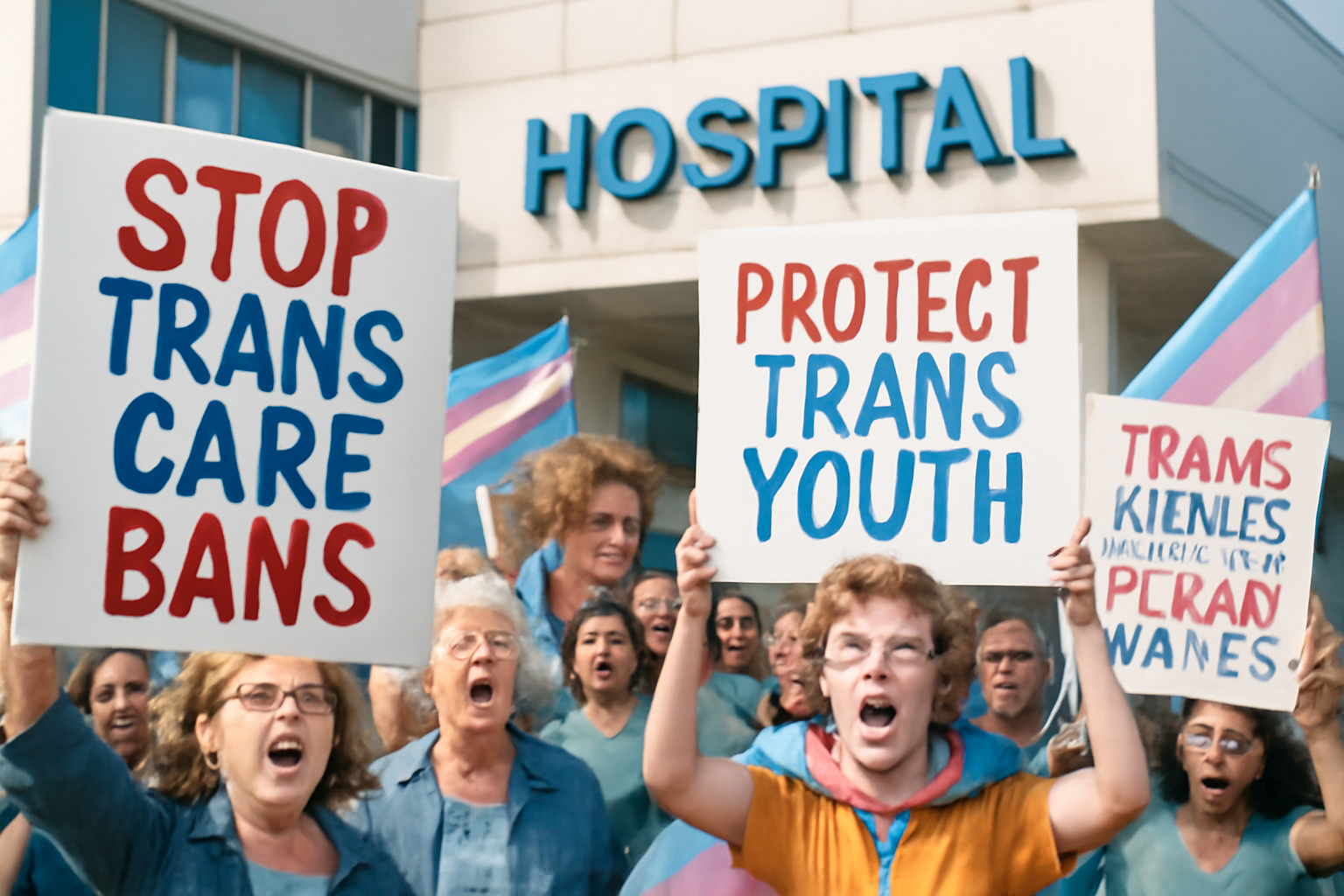
Across the United States, communities have rallied to protest a recent executive order affecting transgender youth under the age of 19. This directive, issued by the federal administration, has prompted many hospitals to alter their care practices, sparking outrage and concern among LGBTQ+ advocates and allies.
The executive order in question mandates stringent restrictions on gender-affirming care for minors, a move that healthcare professionals and civil rights organizations argue undermines the well-being of transgender youth. As hospitals begin to comply with the new regulations, protests have erupted in various cities, highlighting the widespread dissent against the policy.
Impact on Healthcare Providers
Healthcare providers find themselves in a difficult position, balancing the legal requirements of the new policy with their commitment to patient care. Many medical professionals have voiced their opposition to the order, citing research and clinical guidelines that support the provision of gender-affirming care for transgender minors.
Dr. Emily Carter, a pediatric endocrinologist, expressed her concerns: "This policy contradicts the best practices established by major medical organizations. Denying access to necessary care can have severe consequences for the mental and physical health of our transgender patients." Her sentiments are echoed by many in the medical community who fear the policy could lead to negative health outcomes.
Voices from the Protests
Protesters from diverse backgrounds have come together to voice their opposition to the policy. At a demonstration in New York City, tens of thousands of people gathered outside a major hospital, carrying signs that read "Trans Rights are Human Rights" and "Protect Trans Youth." The energy was both somber and resolute, as speakers shared stories of how the policy has affected them and their loved ones.
One of the speakers, Alex Rivera, a non-binary activist, addressed the crowd: "We are here today because we believe in a future where every child can express their true self without fear of discrimination or harm. This policy is a step backward, and we must stand united in our fight for equality and justice."
Legal and Political Reactions
In response to the executive order, several states have filed lawsuits challenging its legality. These legal battles argue that the policy violates constitutional rights and jeopardizes the health of transgender youth. Support from civil liberties organizations has bolstered these efforts, with many advocating for the courts to intervene and halt the implementation of the order.
Politicians and public figures have also weighed in on the issue, with some condemning the policy as discriminatory. "This executive order goes against everything we stand for as a nation committed to liberty and justice for all," said Senator Jamie Lee, a vocal supporter of LGBTQ+ rights. "We must work tirelessly to protect the rights of transgender youth and ensure they have access to the care they need."
The Path Forward
As protests continue, the future of the executive order remains uncertain. Advocacy groups are mobilizing efforts to raise awareness and support for transgender youth, emphasizing the importance of inclusive and affirming healthcare practices. These efforts include educational campaigns, community outreach, and collaboration with lawmakers to draft legislation that supports the rights of transgender individuals.
"Our fight is far from over," said Jordan Kim, director of a national LGBTQ+ advocacy group. "We will continue to amplify the voices of those affected and push for policies that protect the dignity and rights of all people, regardless of gender identity."
The resilience and determination of the LGBTQ+ community and its allies serve as a powerful reminder of the ongoing struggle for equality and acceptance. As the nation grapples with this contentious issue, the message from the protests is clear: the fight for transgender rights and healthcare access is a fight for humanity and justice.
As the situation develops, it remains crucial for individuals and organizations to stay informed and engaged. By supporting initiatives that promote inclusivity and challenging policies that harm marginalized communities, we can work towards a more equitable and compassionate society for all.
Related Posts
Supreme Court to Address State Bans on Trans Women in Female Sports
The upcoming U.S. Supreme Court term promises to be a pivotal moment for transgender rights, as the nation's highest court has agreed to evaluate whether states have the authority to prohibit transgender women from participating in female sports competitions. This case, scheduled to be argued in the next term beginning October, is expected to have a significant impact on the future of sports inclu [...]
Megan Rapinoe and Sue Bird Announce Amicable Separation After Ten Years Together
In a heartfelt announcement that resonated deeply within the sports and LGBTQ+ communities, soccer star Megan Rapinoe and basketball legend Sue Bird have revealed their decision to part ways after nearly a decade together. The couple, who have been icons both on and off the field, shared the news with their fans through a joint statement on social media, expressing that the choice was made with mu [...]
Groundbreaking Ruling Ends Sodomy Ban for Police and Military in the Dominican Republic
The Constitutional Court of the Dominican Republic recently delivered a landmark decision on November 18th, ruling that the nation’s police and armed forces are not permitted to criminalize consensual same-sex relations among their personnel. This pivotal ruling is a significant stride towards equality and the protection of LGBTQ+ rights within these institutions. A Resounding Victory for Equal [...]