
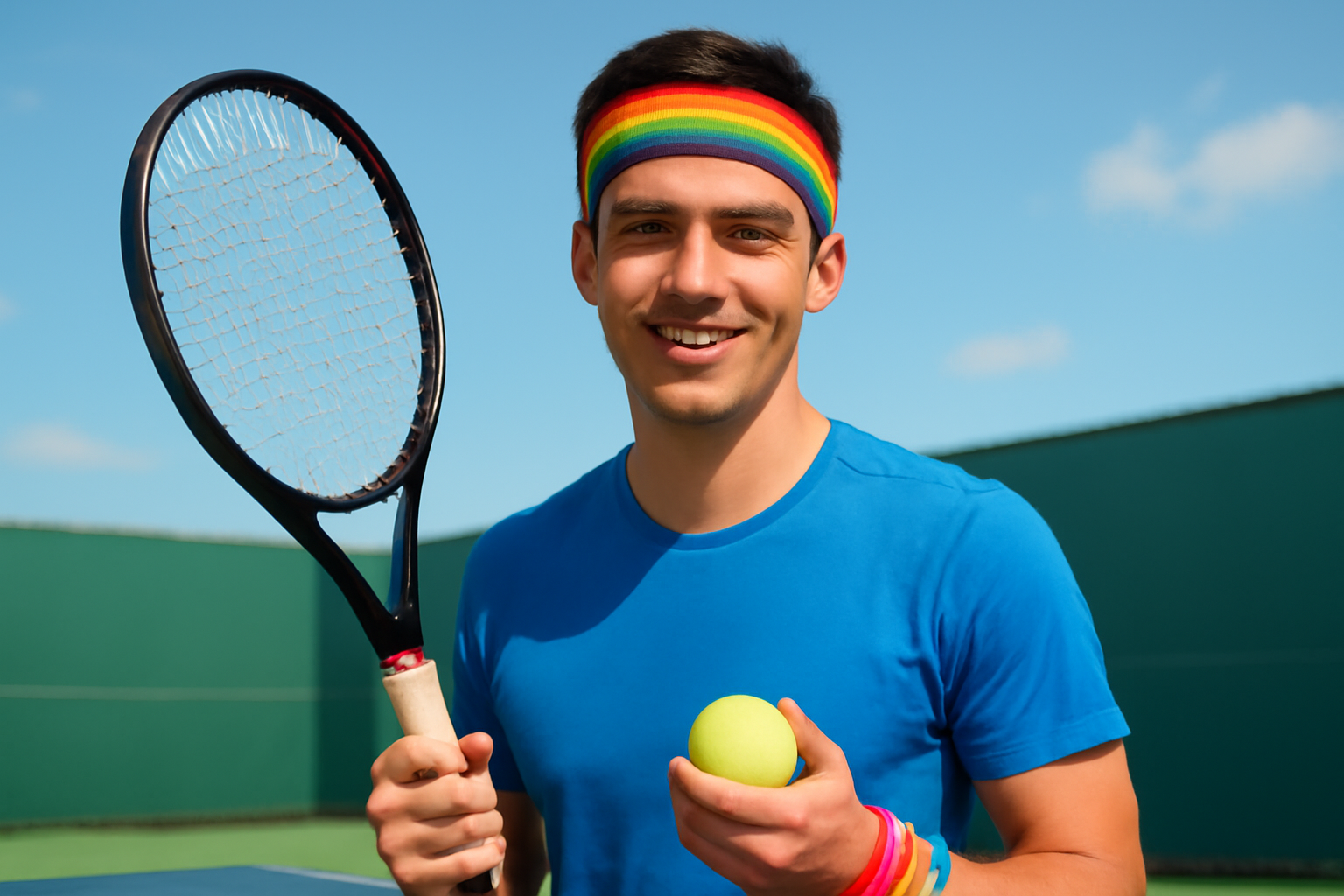
In the world of men’s professional tennis, the presence of openly gay players is a significant rarity. Despite a growing acceptance of LGBTQ+ athletes across many sports, men’s tennis continues to be an outlier with only one known openly gay player, Joao Lucas Reis da Silva, who is ranked 400th in the world. This raises the question: What factors contribute to this conspicuous absence of openly gay players in a sport that otherwise prides itself on inclusivity and progressiveness?
Support From Within the Sport
Many top ATP stars have expressed their support for openly gay peers. Icons like Roger Federer, Novak Djokovic, Andy Murray, and others have publicly voiced their acceptance. Kevin Anderson, Daniil Medvedev, Felix Auger-Aliassime, and Stefanos Tsitsipas have also shown their support, indicating that the tennis community itself may not be as hostile as one might assume.
Despite this supportive environment, men’s tennis has seen very few players come out. This is in stark contrast to other sports like soccer and football, where athletes such as Robbie Rogers, Carl Nassib, and Jason Collins have come out during their careers.
The Nature of Tennis
One potential reason for the lack of openly gay players could be the individualistic nature of tennis. Unlike team sports, where players have the support of teammates, tennis is a solitary pursuit. Players travel extensively, often alone, focusing on rankings and prize money. In such an environment, coming out may not be a priority.
Gender Dynamics at Play
Gender dynamics also play a role. Historically, there have been more openly gay female players in tennis, such as Billie Jean King and Martina Navratilova. The women’s tour currently features several openly gay players. Social acceptance and gender norms could influence this disparity, as women are statistically more likely to identify as LGBTQ+.
Institutional Challenges
The ATP tour participates in events in countries where homosexuality remains illegal. This creates a precarious situation for openly gay players, limiting where they can compete safely. The ATP has initiatives to promote inclusivity, but the lack of openly gay players allows the organization to maintain certain partnerships without addressing these concerns directly.
Former world No. 64 Brian Vahaly, who came out in 2017, has spoken about the lack of overt homophobia on the tour. However, the issue remains the broader institutional practices that do not support LGBTQ+ players adequately.
The Need for Change
The ATP must consider reforming its practices to genuinely foster inclusivity. This includes addressing pay structure disparities and reconsidering participation in countries with discriminatory laws. Players like Andy Roddick have raised concerns about these issues, advocating for the protection and safety of all players.
Moreover, the economic pressures faced by lower-ranked players make them more vulnerable. With a significant percentage of the tour’s revenue not reaching these athletes, playing in nations with human rights concerns may be a financial necessity.
To truly embody the values of inclusivity, the ATP should focus on substantial systemic changes rather than superficial gestures. Initiatives that genuinely support gay athletes must be prioritized, showing a commitment to all players’ well-being.
The current situation highlights the complexities of being an openly gay athlete in men’s professional tennis. While the community shows personal support, institutional changes are necessary to create an environment where coming out is a viable option for many athletes.
As the sport continues to evolve, the hope is that we will see more openness and representation within men’s tennis. By addressing the challenges head-on, the ATP can pave the way for a more inclusive future.
Related Posts
Supreme Court to Address State Bans on Trans Women in Female Sports
The upcoming U.S. Supreme Court term promises to be a pivotal moment for transgender rights, as the nation's highest court has agreed to evaluate whether states have the authority to prohibit transgender women from participating in female sports competitions. This case, scheduled to be argued in the next term beginning October, is expected to have a significant impact on the future of sports inclu [...]
Megan Rapinoe and Sue Bird Announce Amicable Separation After Ten Years Together
In a heartfelt announcement that resonated deeply within the sports and LGBTQ+ communities, soccer star Megan Rapinoe and basketball legend Sue Bird have revealed their decision to part ways after nearly a decade together. The couple, who have been icons both on and off the field, shared the news with their fans through a joint statement on social media, expressing that the choice was made with mu [...]
Groundbreaking Ruling Ends Sodomy Ban for Police and Military in the Dominican Republic
The Constitutional Court of the Dominican Republic recently delivered a landmark decision on November 18th, ruling that the nation’s police and armed forces are not permitted to criminalize consensual same-sex relations among their personnel. This pivotal ruling is a significant stride towards equality and the protection of LGBTQ+ rights within these institutions. A Resounding Victory for Equal [...]