
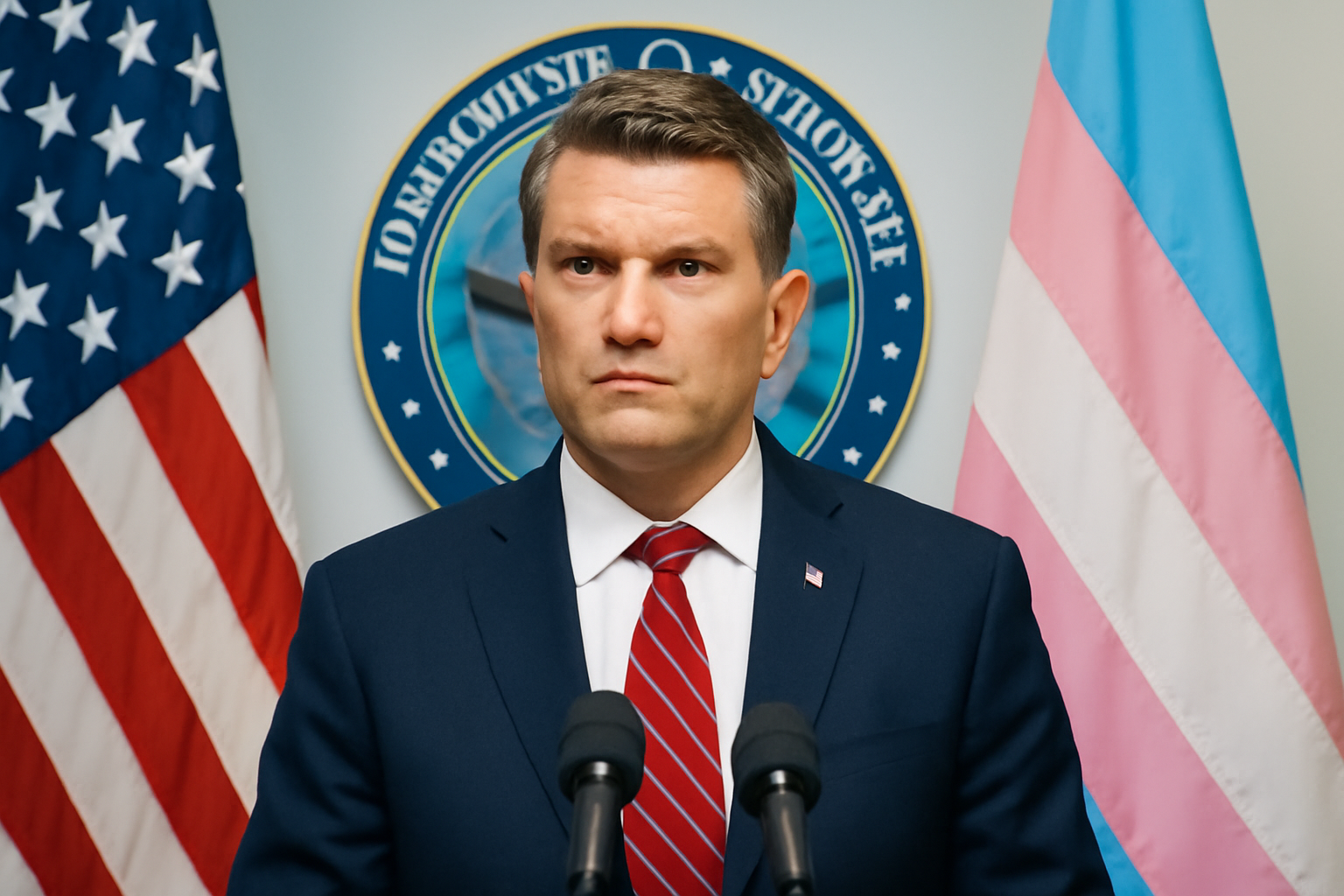
US Defense Secretary Implements Ban on Transgender Military Recruits
In a significant policy change, US Defense Secretary Pete Hegseth has enacted a ban that prevents transgender individuals from enlisting in the US military. This decision, signed into effect last week, specifically targets those with a historical diagnosis of "gender dysphoria." The policy shift, revealed through a recently discovered memo, marks a reversal from previous military inclusivity efforts.
The implementation of this ban follows an executive order by former President Donald Trump that sought to reinstate restrictions on transgender military service. These restrictions had been lifted during President Joe Biden's administration. Now, with the new policy in place, transgender individuals face renewed barriers to military service.
The memo from Hegseth directs an immediate cessation of all "scheduled, unscheduled or planned" gender-affirming medical procedures for military personnel. The Defense Secretary emphasized the need for a cohesive military force defined by ability and mission adherence, cautioning against divisions based on identity. "Efforts to split our troops along lines of identity weaken our force and make us vulnerable. Such efforts must not be tolerated or accommodated," Hegseth stated.
Despite the ban's stipulations, Hegseth acknowledged the presence of transgender service members currently in the military. He assured that those individuals "must be treated with dignity and respect." However, the future status of transgender personnel within the armed forces remains uncertain, with no clear guidance on retention policies for those already serving.
According to reports from the Human Rights Campaign (HRC), an organization advocating for LGBTQ+ rights, there are approximately 15,000 transgender or non-binary individuals actively serving in the US military. This figure contrasts with official estimates, which suggest the number might be in the low thousands. In response to the ban, the HRC, alongside Lambda Legal, has initiated a federal lawsuit challenging the policy, labeling it as "dangerous and discriminatory." They argue that the ban undermines national security and disregards the significant training and financial investments made in these service members.
Sarah Warbelow, the HRC's Vice President for Legal Affairs, stated, "Thousands of transgender service members have already met the military's rigorous standards and have more than proven themselves. Our military must be able to recruit the best candidates, retain the highly trained service members, and every qualified patriot should be able to serve free of discrimination." The legal challenge aims to overturn the ban and ensure continued inclusivity within the military ranks.
Public opinion on the matter has seen some shifts in recent years. A Gallup poll indicates that 58 percent of Americans currently support allowing transgender individuals to serve in the military, a noticeable decline from the 71 percent recorded six years ago. The changing sentiment highlights the ongoing debate surrounding the integration of transgender individuals in military service.
This policy change and its ramifications have sparked widespread discussion and concern among LGBTQ+ advocacy groups, military personnel, and the general public. As the legal battle unfolds, the military's approach to transgender service members remains a crucial topic of national importance. The outcome of this policy shift will have profound implications for both the individuals affected and the military as a whole.
We invite you to share your thoughts and experiences related to this development. Please join the conversation in the comments section below, and remember to keep all discussions respectful and constructive.
Related Posts
Supreme Court to Address State Bans on Trans Women in Female Sports
The upcoming U.S. Supreme Court term promises to be a pivotal moment for transgender rights, as the nation's highest court has agreed to evaluate whether states have the authority to prohibit transgender women from participating in female sports competitions. This case, scheduled to be argued in the next term beginning October, is expected to have a significant impact on the future of sports inclu [...]
Megan Rapinoe and Sue Bird Announce Amicable Separation After Ten Years Together
In a heartfelt announcement that resonated deeply within the sports and LGBTQ+ communities, soccer star Megan Rapinoe and basketball legend Sue Bird have revealed their decision to part ways after nearly a decade together. The couple, who have been icons both on and off the field, shared the news with their fans through a joint statement on social media, expressing that the choice was made with mu [...]
Groundbreaking Ruling Ends Sodomy Ban for Police and Military in the Dominican Republic
The Constitutional Court of the Dominican Republic recently delivered a landmark decision on November 18th, ruling that the nation’s police and armed forces are not permitted to criminalize consensual same-sex relations among their personnel. This pivotal ruling is a significant stride towards equality and the protection of LGBTQ+ rights within these institutions. A Resounding Victory for Equal [...]