
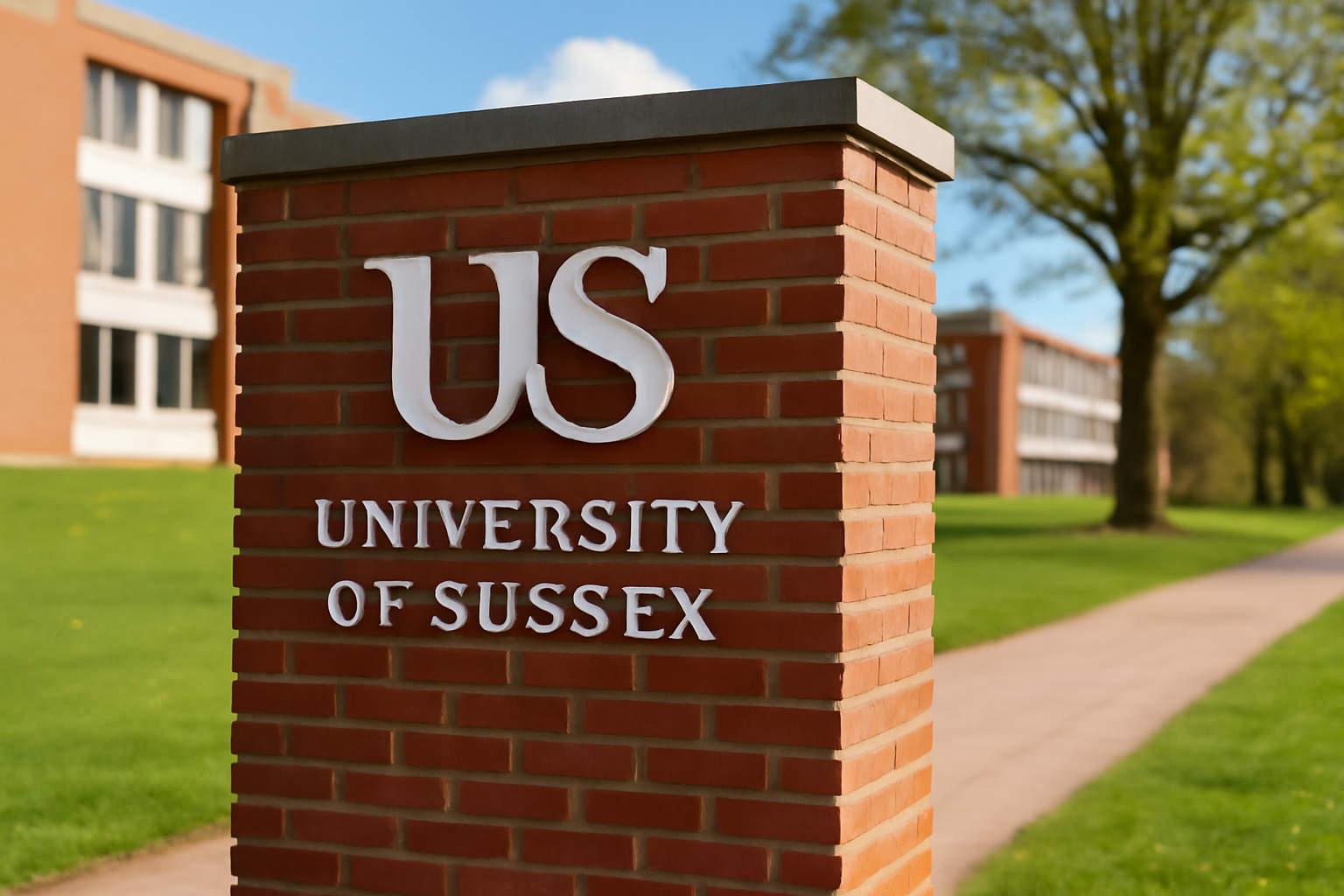
University Fined for Free Speech Policy Concerns
The University of Sussex is set to challenge a substantial fine of £585,000 levied by the Office for Students (OfS) in response to a policy that the regulatory body claims restricted free speech. The controversy arose around the policy's implications on the expression of views by former university employee, Professor Kathleen Stock, and others.
The university's policy in question reportedly mandated that staff and students must "positively represent trans people," explicitly stating that transphobia "would not be tolerated." This policy has led the OfS to assert that it might foster self-censorship among individuals holding "gender-critical" opinions, which include perspectives questioning or critiquing aspects of transgender identity.
The OfS's investigation was triggered following campus protests that erupted demanding the dismissal of Professor Stock, a then-philosophy professor, due to her gender-critical viewpoints. These events culminated in Stock's departure from the university in 2021, under circumstances that she described as limiting her ability to freely express her lawful views on gender.
According to a statement from the OfS, Professor Stock felt increasingly cautious in sharing her gender-critical opinions, and she noted certain views could not be expressed or taught, despite their legality. This concern extended to other faculty members and students who might similarly feel restricted in expressing lawful views due to the university's policy.
The imposed fine of £585,000 marks the largest of its kind by the Office for Students, significantly exceeding any previous penalties and underscoring the perceived gravity of the university's failure to uphold freedom of speech.
University's Response to the Fine
In response to the fine, the University of Sussex has expressed its intention to contest the decision. Professor Sasha Roseneil, the university's vice-chancellor, criticized the investigation as "Kafkaesque," highlighting concerns over the fine's disproportionality. In a published opinion piece, Roseneil outlined the university's stance, stating, "We will strongly contest these findings and have grave concerns about the implications of its decisions for students and staff, especially those from minoritized groups."
Roseneil further commented on the broader context within which universities operate, emphasizing the contentious nature of debates surrounding gender, sex, and identity in academic environments. "Sussex will not be the last to face the challenge of a debate on gender, sex and identity that has become toxic," Roseneil remarked. "Universities across England are grappling with claims and counterclaims about academic freedom and freedom of speech regarding issues of equality, identity, and inclusion."
She also highlighted the financial implications of the penalty, particularly at a time when the higher education sector faces financial constraints, stating, "Levying a wholly disproportionate fine after a flawed, politically motivated, and wasteful investigation—when the higher education sector is in financial crisis—serves no one."
Regulator's Justification
Arif Ahmed, the OfS's director for freedom of speech and academic freedom, defended the fine, explaining that restrictions on viewpoints and the expression of ideas are inconsistent with the fundamental objectives of higher education institutions. "If you have policies which are restricting what viewpoints you can express, what ideas can be expressed, then that's inconsistent with the whole aim of the university, with the aim of research and with the aim of a genuine humanistic education," Ahmed told the press.
He reinforced the appropriateness of the fine, highlighting the severity of the breaches observed and the damage caused. "So for all of those reasons, we think it's really important that the fine reflects the severity of the breaches that we saw," he stated.
A spokesperson for the University of Sussex confirmed their commitment to challenge the OfS's findings legally, expressing concerns about the broader implications for academic freedom. "We will strongly contest these findings and have grave concerns about the implications of the decisions for students and staff across all universities," the spokesperson explained. "Our lawyers are currently drafting a pre-action protocol letter as we proceed with a judicial review."
As the situation unfolds, it underscores the ongoing tension between regulatory authorities and academic institutions over the boundaries of free speech and the role of university policies in shaping or restricting discourse on sensitive topics such as gender identity.
Related Posts
Supreme Court to Address State Bans on Trans Women in Female Sports
The upcoming U.S. Supreme Court term promises to be a pivotal moment for transgender rights, as the nation's highest court has agreed to evaluate whether states have the authority to prohibit transgender women from participating in female sports competitions. This case, scheduled to be argued in the next term beginning October, is expected to have a significant impact on the future of sports inclu [...]
Megan Rapinoe and Sue Bird Announce Amicable Separation After Ten Years Together
In a heartfelt announcement that resonated deeply within the sports and LGBTQ+ communities, soccer star Megan Rapinoe and basketball legend Sue Bird have revealed their decision to part ways after nearly a decade together. The couple, who have been icons both on and off the field, shared the news with their fans through a joint statement on social media, expressing that the choice was made with mu [...]
Groundbreaking Ruling Ends Sodomy Ban for Police and Military in the Dominican Republic
The Constitutional Court of the Dominican Republic recently delivered a landmark decision on November 18th, ruling that the nation’s police and armed forces are not permitted to criminalize consensual same-sex relations among their personnel. This pivotal ruling is a significant stride towards equality and the protection of LGBTQ+ rights within these institutions. A Resounding Victory for Equal [...]