
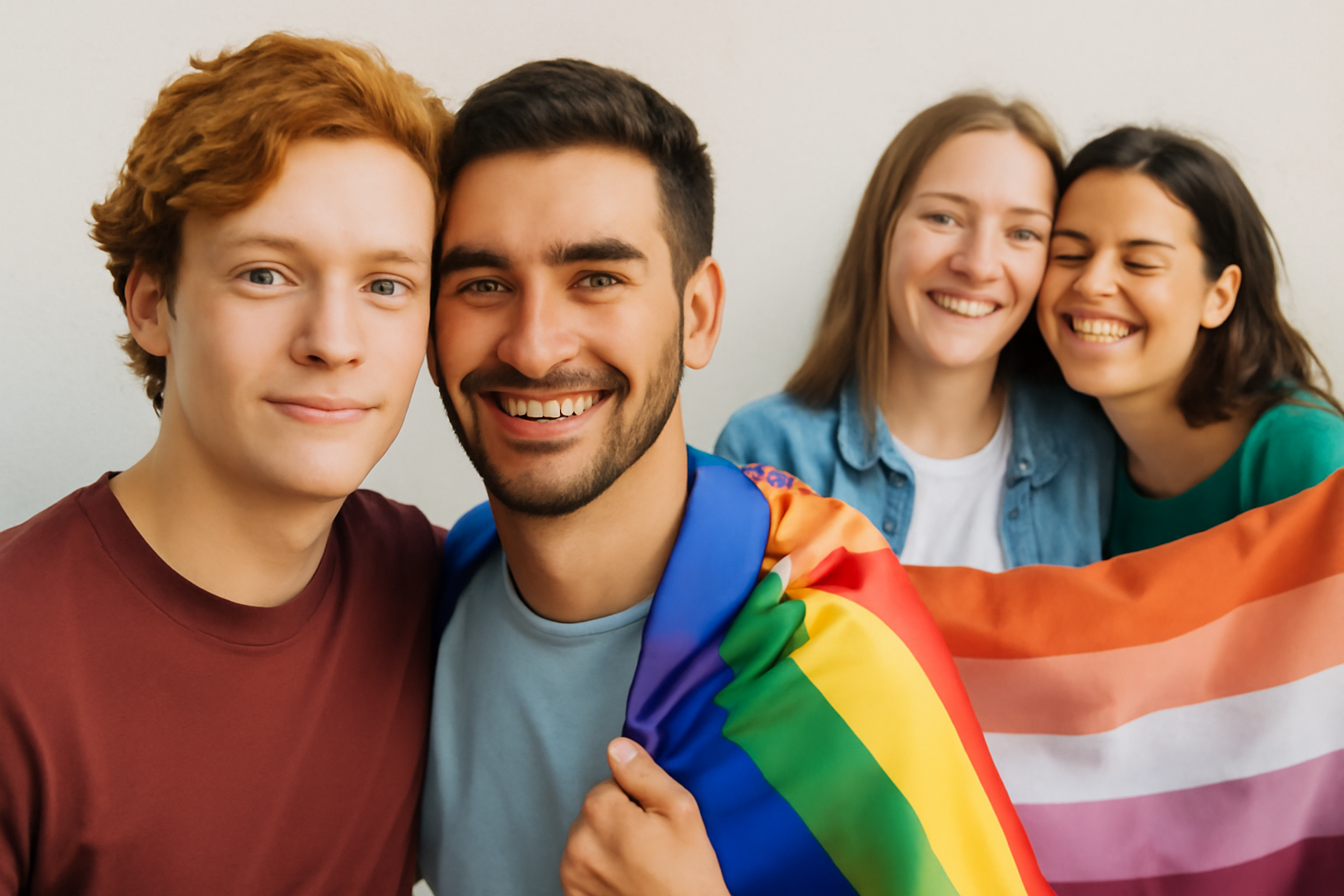
These days, acronyms like "MLM" and "WLW" have become more popular within LGBTQ+ circles, especially on platforms like TikTok. Younger folks are leaning towards these terms instead, moving away from traditional labels like "gay" or "lesbian." It's a reflection on how Gen Z's language around identity continues evolving. Let's dive deeper and explore what these terms mean, why they're important, and how they fit within a broader LGBTQ+ identity.
What does MLM mean? Men loving men
MLM stands proudly as "men loving men." It's important not just as an LGBTQ+ term but also as one that sets itself apart from that other MLM—those multi-level marketing schemes. In LGBTQ+ discussions, MLM covers men who feel romantic or sexual attraction toward other men. This includes not only gay men but also those who identify as bisexual, pansexual, and non-binary folks with attractions toward men.
MLM beautifully captures how diverse male attraction can be. It acknowledges that attraction doesn't have strict borders, opening up a spectrum within identities and experiences. Going by MLM, people can comfortably express their feelings without sticking strictly within narrower labels, appreciating how fluid male sexual orientation can be.
Checking out WLW: Women loving women
Just like MLM, WLW stands tall, representing "women loving women." It describes women or non-binary individuals who find themselves romantically or sexually drawn towards women. While hugely embraced by lesbians, WLW also warmly includes bisexual and pansexual women, and non-binary individuals too.
The beauty in using WLW lies in its ability not just as a term, but a celebration—acknowledgment and understanding across identities attracted toward women. WLW, similar in spirit, recognizes and celebrates fluidity in women and non-binary people's romantic and sexual preferences.
Widening horizons: NBLNB, NBLW, WLNB, and more
Beyond MLM and WLW, new acronyms have emerged, shining light on attractions involving non-binary identities. Some include:
- NBLNB: "Non-binary loving non-binary" points towards non-binary individuals drawn towards other non-binary folks.
- NBLW: "Non-binary loving women," capturing non-binary individuals attracted towards women.
- WLNB: "Women loving non-binary" reflects women who feel attraction toward non-binary people.
- MLNB: "Men loving non-binary" signifies men feeling drawn toward non-binary folks.
- NBLM: "Non-binary loving men," showcasing non-binary individuals with attractions toward men.
These new terms show how attraction spans widely across various gender identities, echoing how language in LGBTQ+ communities grows and evolves.
Honoring identity and changing language
Words used around sexual orientation and gender identity are always in motion, influenced by societal changes and quick idea-sharing online. For some, acronyms like MLM and WLW might hit home differently, and they may not resonate with everyone.
At its core, appreciating people's chosen labels matters greatly. These terms aren't just words but personal reflections on identity. Unsure about someone else? Just ask them kindly. Engaging, respectful conversations create understanding and foster acceptance.
Dig deeper: Exploring LGBTQ+ terminology
If you're curious and want more depth on LGBTQ+ terms, there are plenty more resources and guides out there. Learning about terms like "vers," "golden retriever lesbian," or "gender non-conforming lesbian" enriches our grasp on this vibrant community and its varied identities.
As language carries on changing, so does how we see identity. By embracing all these rich diversities with genuine respect, we're building better, stronger, and more connected communities.
Related Posts
Supreme Court to Address State Bans on Trans Women in Female Sports
The upcoming U.S. Supreme Court term promises to be a pivotal moment for transgender rights, as the nation's highest court has agreed to evaluate whether states have the authority to prohibit transgender women from participating in female sports competitions. This case, scheduled to be argued in the next term beginning October, is expected to have a significant impact on the future of sports inclu [...]
Megan Rapinoe and Sue Bird Announce Amicable Separation After Ten Years Together
In a heartfelt announcement that resonated deeply within the sports and LGBTQ+ communities, soccer star Megan Rapinoe and basketball legend Sue Bird have revealed their decision to part ways after nearly a decade together. The couple, who have been icons both on and off the field, shared the news with their fans through a joint statement on social media, expressing that the choice was made with mu [...]
Groundbreaking Ruling Ends Sodomy Ban for Police and Military in the Dominican Republic
The Constitutional Court of the Dominican Republic recently delivered a landmark decision on November 18th, ruling that the nation’s police and armed forces are not permitted to criminalize consensual same-sex relations among their personnel. This pivotal ruling is a significant stride towards equality and the protection of LGBTQ+ rights within these institutions. A Resounding Victory for Equal [...]