
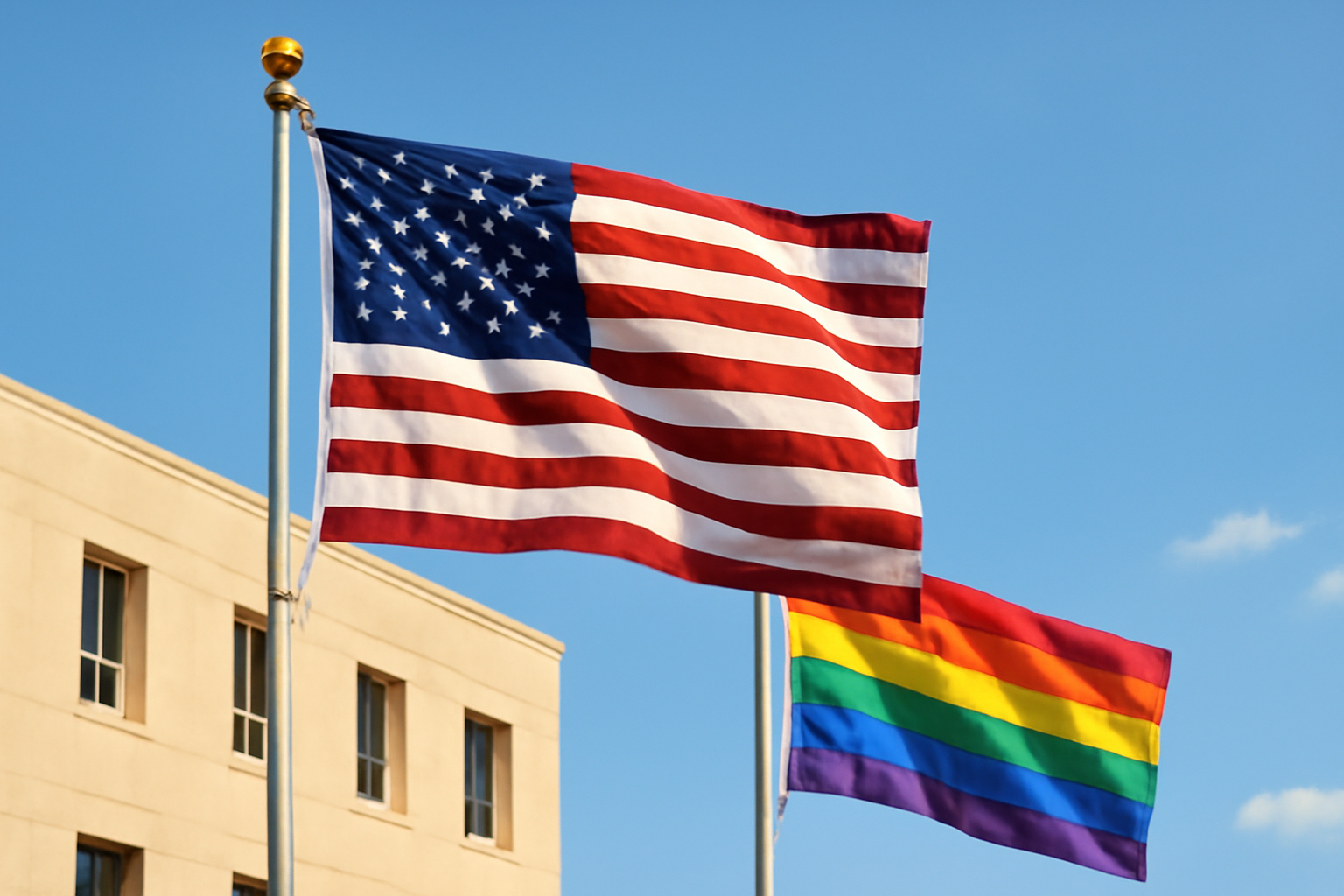
The question of whether or not to display Pride flags at U.S. embassies around the world has sparked significant discussion and debate. Recently, a policy change has been implemented that affects the visibility of these symbols of LGBTQ+ pride at diplomatic sites.
Historically, Pride flags have been a way for U.S. embassies to demonstrate solidarity with LGBTQ+ communities globally. Flying these flags during Pride Month, and at other times of the year, has been a practice that many embassies have adopted to show their commitment to inclusivity and human rights. However, under a new directive issued by the administration, U.S. embassies are now restricted from hoisting Pride flags on the same poles as the American flag, effectively banning the display of these flags in the most visible locations.
Understanding the Policy Change
This policy shift comes as part of a wider set of guidelines that regulate what symbols can be shown on official embassy flagpoles. The stated intent of the policy is to maintain uniformity and ensure that the American flag remains the primary national symbol displayed at these diplomatic sites. While the new rule does not completely prohibit the presence of Pride flags within embassy grounds, it limits their placement to less prominent areas, such as inside buildings or at other locations not shared with the U.S. flag.
The move has drawn criticism from various LGBTQ+ advocacy groups, diplomats, and human rights organizations. Critics argue that this restriction sends a message that could be perceived as lack of support for LGBTQ+ rights at a time when continued advocacy and visibility are crucial. The decision has also sparked conversation about how best to balance national symbols with expressions of support for diverse communities and causes.
Historical Context and Reactions
In the past, many U.S. embassies have celebrated Pride Month by flying the rainbow flag as a visible symbol of support for LGBTQ+ rights. Such actions were often coordinated with other diplomatic events and initiatives aimed at promoting equality and human rights. The ability of individual ambassadors to decide whether to fly the Pride flag played a significant role in how these expressions of solidarity were perceived internationally.
Reactions to the new policy have varied. Some diplomats and foreign service officers have expressed disappointment, noting that the Pride flag serves as a powerful symbol of American values of freedom and equality. Meanwhile, others argue that embassy policies should reflect national standards and that the American flag should remain the sole emblem on official flagpoles.
Implications for LGBTQ+ Advocacy
The impact of this policy change on LGBTQ+ advocacy efforts is a subject of ongoing concern and discussion. For many activists, the visibility of the Pride flag on U.S. embassy flagpoles was a crucial gesture of support from the American government towards LGBTQ+ communities facing discrimination and marginalization in their respective countries.
By limiting the display of the Pride flag, critics contend that the U.S. risks sending a message that could be interpreted as a step back in its commitment to championing LGBTQ+ rights globally. Others suggest that alternative methods of support and advocacy must be explored to ensure that these critical messages of inclusion and equality continue to be communicated effectively.
Looking Ahead
As discussions continue, the future of Pride flags at U.S. embassies remains uncertain. Advocates and diplomats alike are exploring ways to navigate this new policy landscape, striving to find balance between adherence to official guidelines and the desire to visibly support LGBTQ+ rights and communities.
While the debate over the display of Pride flags at embassies is likely to persist, one thing is clear: the conversation about how best to uphold the principles of equality and inclusion on the global stage remains as vital as ever.
As the world observes shifts in diplomatic policies and practices, it is important to continue engaging in dialogue and advocating for policies that reflect values of diversity, inclusion, and human rights for all.
Related Posts
Supreme Court to Address State Bans on Trans Women in Female Sports
The upcoming U.S. Supreme Court term promises to be a pivotal moment for transgender rights, as the nation's highest court has agreed to evaluate whether states have the authority to prohibit transgender women from participating in female sports competitions. This case, scheduled to be argued in the next term beginning October, is expected to have a significant impact on the future of sports inclu [...]
Megan Rapinoe and Sue Bird Announce Amicable Separation After Ten Years Together
In a heartfelt announcement that resonated deeply within the sports and LGBTQ+ communities, soccer star Megan Rapinoe and basketball legend Sue Bird have revealed their decision to part ways after nearly a decade together. The couple, who have been icons both on and off the field, shared the news with their fans through a joint statement on social media, expressing that the choice was made with mu [...]
Groundbreaking Ruling Ends Sodomy Ban for Police and Military in the Dominican Republic
The Constitutional Court of the Dominican Republic recently delivered a landmark decision on November 18th, ruling that the nation’s police and armed forces are not permitted to criminalize consensual same-sex relations among their personnel. This pivotal ruling is a significant stride towards equality and the protection of LGBTQ+ rights within these institutions. A Resounding Victory for Equal [...]