
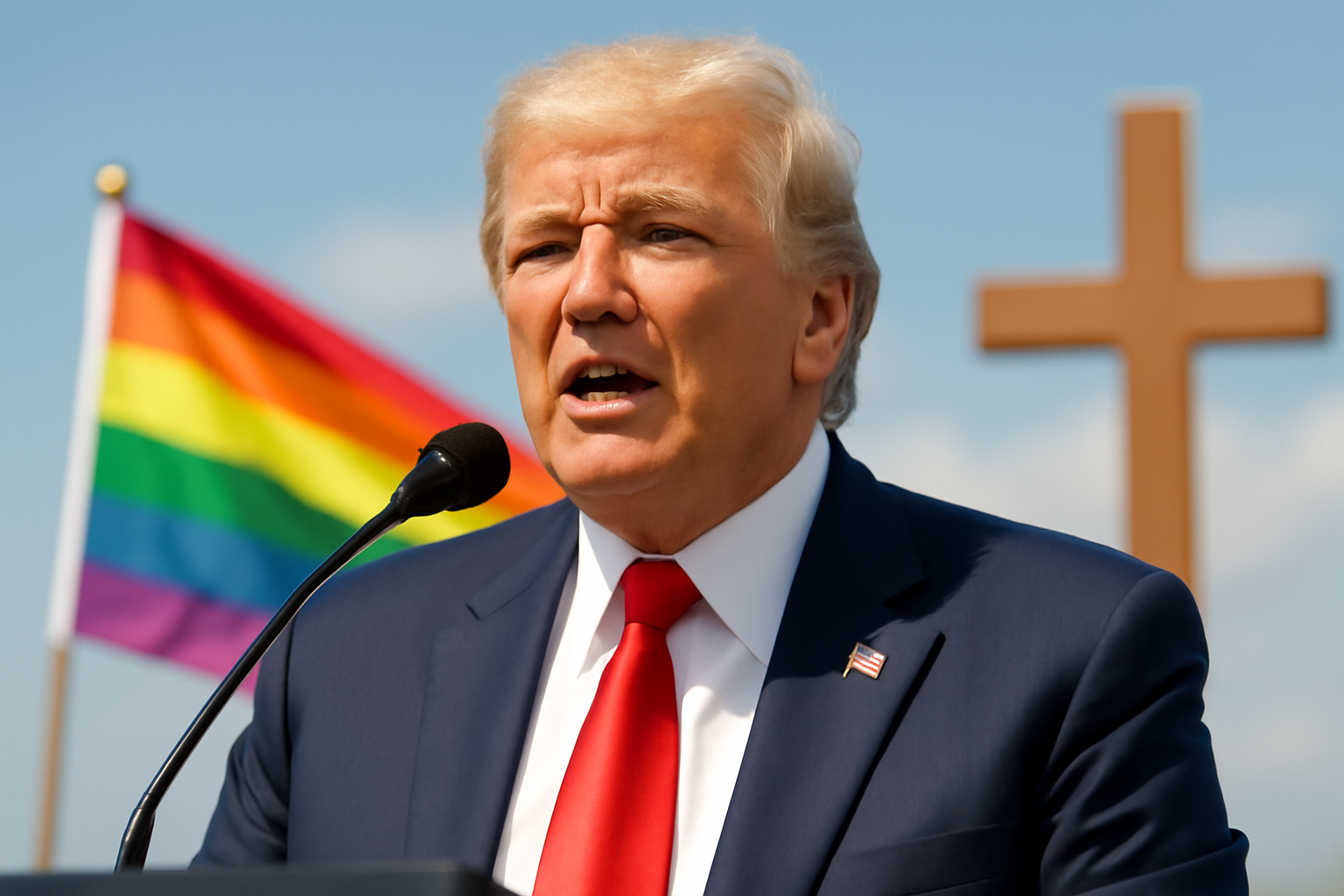
Former President Donald Trump is back in the spotlight, with a controversial plan that could significantly influence the political landscape of the United States and beyond. His strategy is centered around amplifying the role of Christian nationalism at the highest echelons of government. This development has sparked widespread discussion and concern among various communities, including those advocating for LGBTQ+ rights.
Trump’s intentions became clearer during his appearance at the National Prayer Breakfast, an event that, despite its interfaith claims, has often been a platform for Christian political advocacy. "We want to bring religion back—stronger, bigger, better than ever before," Trump declared, suggesting a series of measures designed to increase the influence of religious conservativism within the federal government.
One of the proposed actions includes the establishment of a Presidential Commission on Religious Liberty. Trump described this initiative as "a very big deal," though he did not elaborate on its specific mandate or how it would operate within the framework of existing constitutional protections for religious freedom.
Further, Trump announced an executive order to direct newly-appointed Attorney General Pam Bondi to "eradicate anti-Christian bias" within the federal government. This directive raises critical questions about its implications for religious neutrality in public institutions and whether it might lead to preferential treatment for certain religious groups over others.
In addition, Trump intends to establish a new Faith Office in the White House. This office, he suggests, will be headed by televangelist Rev. Paula White, a figure associated with the New Apostolic Reformation movement. This movement is known for its belief in direct communication from God and its advocacy for Christians to gain control over governmental and societal institutions.
Critics argue that these measures could blur the lines between church and state. They express concern that such policies might prioritize the interests of certain religious groups, undermining the secular principles that underpin democratic governance.
At the Prayer Breakfast, Trump also highlighted the case of Paulette Harlow, a long-time anti-abortion activist whom he recently pardoned. Harlow was convicted for her role in obstructing access to an abortion clinic, an act which violated the FACE Act, a federal law safeguarding clinic access. Trump's portrayal of Harlow's conviction as a case of religious persecution has drawn criticism, as it misrepresents the enforcement of a law that applies equally to all sides of the abortion debate.
Throughout his speech, Trump revisited several contentious themes from his presidency, including claims about electoral victories and critiques of political opponents. His rhetoric frequently invoked religious imagery and themes, appealing to a base that views his presidency as divinely sanctioned.
The broader implications of Trump's plans are of concern to many, particularly in the context of potential impacts on social policies affecting LGBTQ+ communities. The possible reshaping of religious liberty policies could affect how issues of discrimination and civil rights are addressed, raising fears of increased marginalization.
Moreover, Trump’s comments about a potential third term, while delivered with a hint of levity, also underscore the seriousness with which observers are treating his latest political maneuvers. For those invested in maintaining a separation of church and state, his recent actions signal a significant shift towards religiously motivated governance.
As this situation develops, it is crucial for communities, particularly those that might be adversely affected, to stay informed and engaged. The intersection of religion, politics, and civil rights remains a critical area of focus, and it is imperative to consider how these dynamics play out in future policy decisions.
To keep abreast of these and other issues affecting the LGBTQ+ community, consider subscribing to our newsletter. Stay connected and informed about the events and policies that shape our world.
Related Posts
Supreme Court to Address State Bans on Trans Women in Female Sports
The upcoming U.S. Supreme Court term promises to be a pivotal moment for transgender rights, as the nation's highest court has agreed to evaluate whether states have the authority to prohibit transgender women from participating in female sports competitions. This case, scheduled to be argued in the next term beginning October, is expected to have a significant impact on the future of sports inclu [...]
Megan Rapinoe and Sue Bird Announce Amicable Separation After Ten Years Together
In a heartfelt announcement that resonated deeply within the sports and LGBTQ+ communities, soccer star Megan Rapinoe and basketball legend Sue Bird have revealed their decision to part ways after nearly a decade together. The couple, who have been icons both on and off the field, shared the news with their fans through a joint statement on social media, expressing that the choice was made with mu [...]
Groundbreaking Ruling Ends Sodomy Ban for Police and Military in the Dominican Republic
The Constitutional Court of the Dominican Republic recently delivered a landmark decision on November 18th, ruling that the nation’s police and armed forces are not permitted to criminalize consensual same-sex relations among their personnel. This pivotal ruling is a significant stride towards equality and the protection of LGBTQ+ rights within these institutions. A Resounding Victory for Equal [...]