
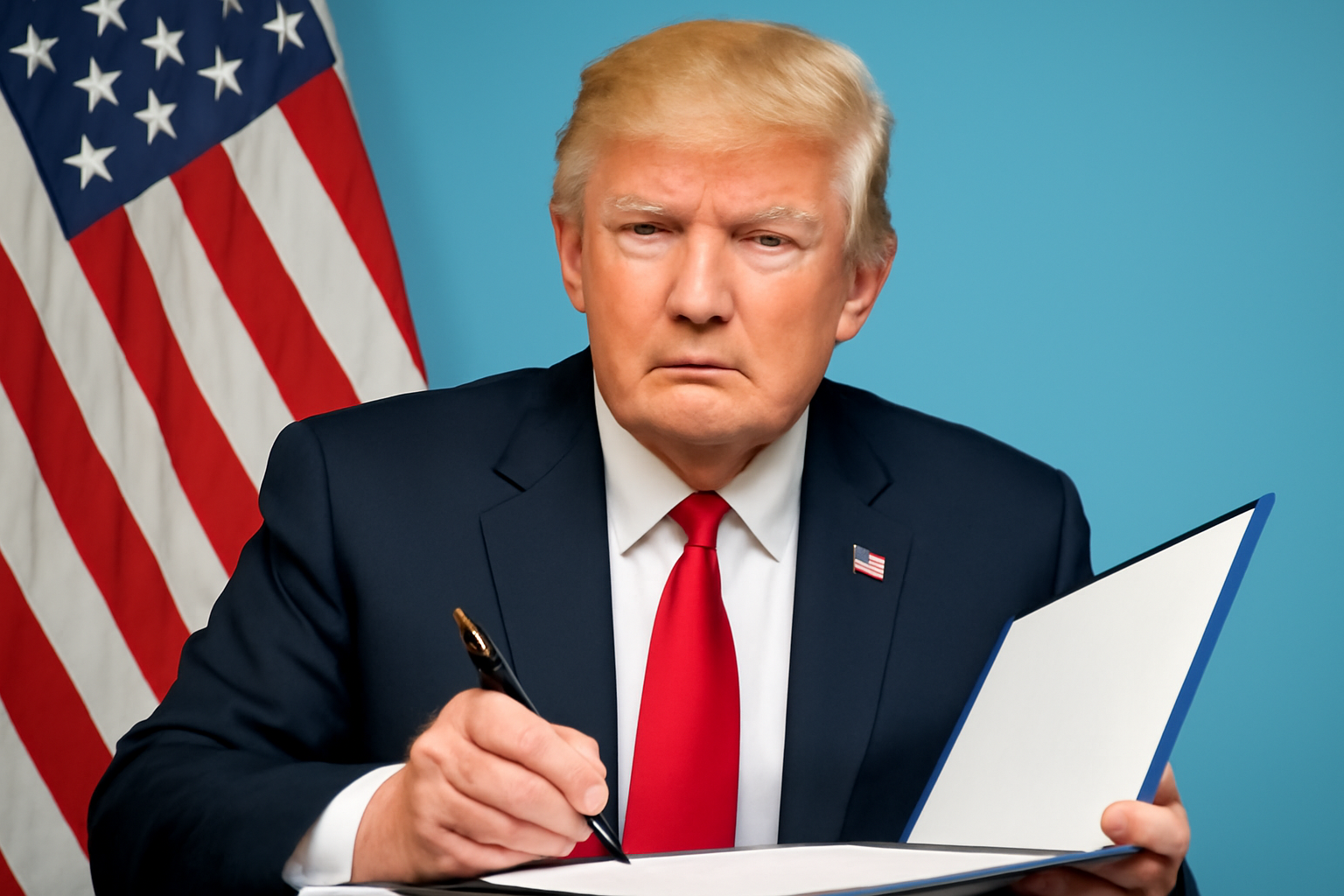
In the initial days of his second presidency, President Donald Trump has issued a series of executive actions that specifically target LGBTQ communities, reversing several protections put in place by the previous administration. These measures have raised significant concerns among advocacy groups and highlight a marked shift in federal policy towards LGBTQ rights.
According to reports from prominent civil rights organizations, one of the executive orders, which has been informally referred to as "Defending Women From Gender Ideology Extremism and Restoring Biological Truth to the Federal Government," seeks to curtail the recognition of gender identity in various aspects of public life. This order mandates that the federal government only recognize a person's birth sex, and it opens doors for discrimination against individuals whose gender identity does not align with their assigned birth sex.
Implications for Workplaces and Public Spaces
The order grants authority to the Attorney General to permit individuals to opt out of using correct pronouns for transgender or nonbinary persons. Furthermore, it allows individuals to use sex-segregated facilities, such as bathrooms, based on their sex assigned at birth rather than their gender identity, in all workplaces covered by the Civil Rights Act of 1964, as well as in federally funded spaces.
The U.S. Departments of State and Homeland Security are instructed to cease issuing documents such as passports and visas that reflect a gender identity differing from the person's birth sex. This change significantly affects transgender individuals who have previously been able to obtain identification documents that align with their gender identity.
Restrictions on Federal Resources and Support
Additionally, the executive order limits federal funding for any programs or content perceived to advance "gender ideology," halts the collection of data concerning gender identity, and implements restrictions on the use of federal resources for such purposes. These measures bear significant consequences for data-driven approaches to understanding and supporting LGBTQ communities.
Particularly vulnerable populations, such as transgender individuals, face additional risks under this order. For instance, transgender women could be denied access to domestic violence shelters or be forced to be housed with men in prisons and detention facilities. Correctional facilities might also face restrictions on providing gender-affirming healthcare.
Ending Diversity, Equity, and Inclusion Initiatives
A second executive order further attacks LGBTQ rights by terminating diversity, equity, and inclusion (DEI) programs across all federal agencies. Although the order mentions "gender ideology," it leaves the term "DEI" undefined, creating potential confusion and stalling efforts that might be interpreted as falling under DEI initiatives.
Among the rescinded policies from the previous administration is President Biden's directive for federal agencies to implement the Supreme Court's decision in Bostock v. Clayton County. This ruling, which remains legally binding, confirmed that Title VII's prohibition against sex discrimination also applies to sexual orientation and gender identity.
Response from Advocacy Groups
Prominent organizations have raised alarms about these sweeping changes, emphasizing the potential harm to LGBTQ individuals and the chilling effect on ongoing efforts to promote equality and non-discrimination. The revocation of Biden-era executive actions, particularly those aimed at broadening LGBTQ rights, represents a significant step backward in the fight for equality and justice.
As these executive orders begin to take effect, the impact on various sectors, including education, healthcare, and employment, will likely become more evident. Advocacy groups continue to monitor the situation closely, urging communities and allies to remain vigilant and advocate for the protection and advancement of LGBTQ rights.
These developments serve as a reminder of the ongoing struggle for LGBTQ acceptance and equality, as well as the need for continued advocacy and support at both the national and grassroots levels.
Related Posts
Supreme Court to Address State Bans on Trans Women in Female Sports
The upcoming U.S. Supreme Court term promises to be a pivotal moment for transgender rights, as the nation's highest court has agreed to evaluate whether states have the authority to prohibit transgender women from participating in female sports competitions. This case, scheduled to be argued in the next term beginning October, is expected to have a significant impact on the future of sports inclu [...]
Megan Rapinoe and Sue Bird Announce Amicable Separation After Ten Years Together
In a heartfelt announcement that resonated deeply within the sports and LGBTQ+ communities, soccer star Megan Rapinoe and basketball legend Sue Bird have revealed their decision to part ways after nearly a decade together. The couple, who have been icons both on and off the field, shared the news with their fans through a joint statement on social media, expressing that the choice was made with mu [...]
Groundbreaking Ruling Ends Sodomy Ban for Police and Military in the Dominican Republic
The Constitutional Court of the Dominican Republic recently delivered a landmark decision on November 18th, ruling that the nation’s police and armed forces are not permitted to criminalize consensual same-sex relations among their personnel. This pivotal ruling is a significant stride towards equality and the protection of LGBTQ+ rights within these institutions. A Resounding Victory for Equal [...]