
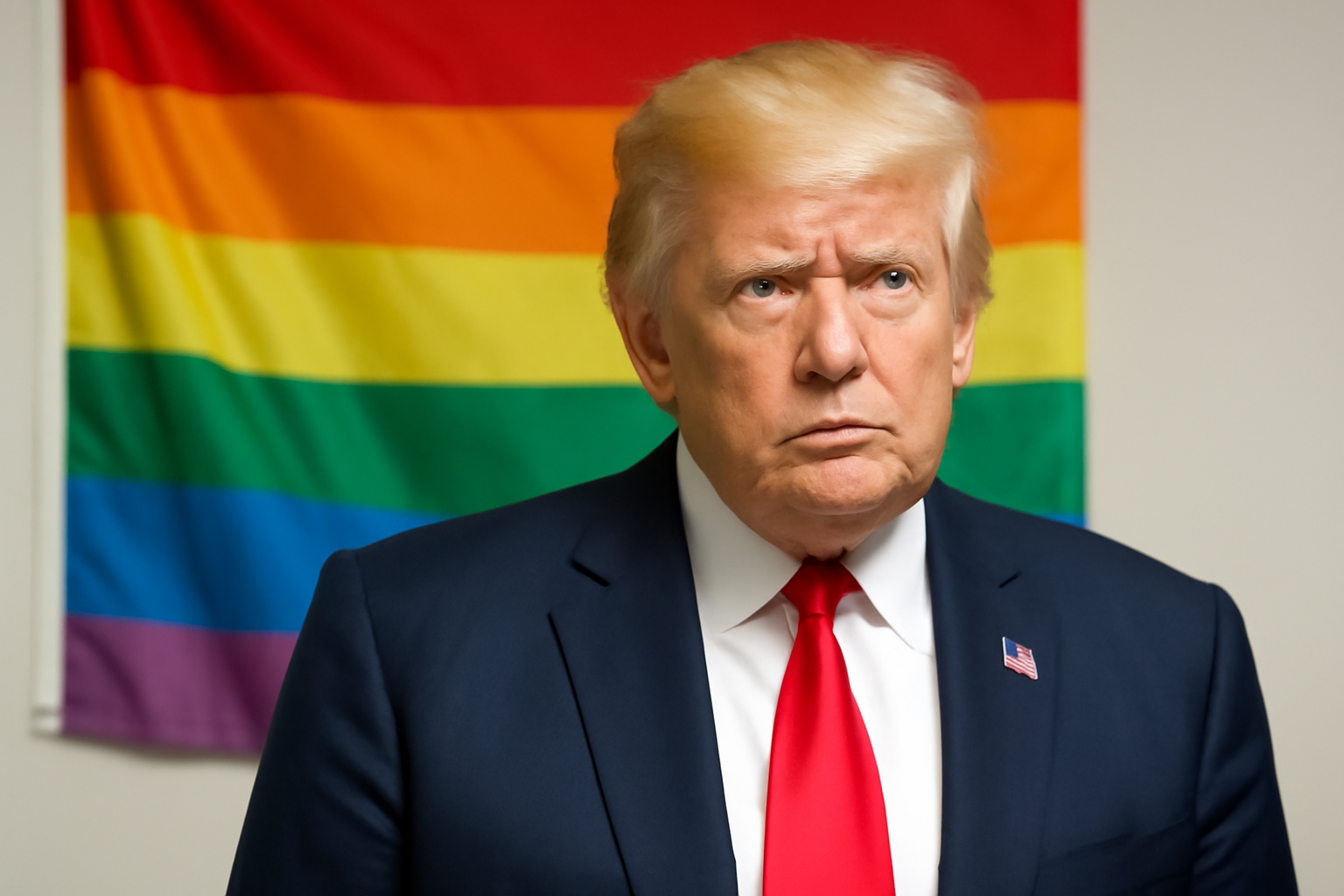
In a controversial move, former President Donald Trump has signed an executive order aimed at limiting access to gender-affirming care for both minors and adults under the age of 19. This sweeping order prohibits the use of puberty blockers, hormone therapy, and surgical procedures for transgender youth, referring to these treatments as "chemical or surgical mutilation." The executive order also poses a threat of legal action against sanctuary states that have laws in place to protect such care.
The American Civil Liberties Union (ACLU) has announced its intention to challenge the order in court. The order states, "Across the country today, medical professionals are maiming and sterilizing a growing number of impressionable children under the radical and false claim that adults can change a child’s sex through a series of irreversible medical interventions." This statement ignores the fact that gender-affirming care has received widespread endorsement from major American medical and psychological associations as a best practice for both cisgender and transgender children.
The executive order further instructs federal agencies to stop issuing documents that reflect a person's gender identity, essentially rolling back protections and rights that have been fought for over the years. It defines "child" as any individual under the age of 19, though the age of majority varies by state, such as Alabama and Nebraska considering 19 as the age of adulthood, and Mississippi at 21.
Moreover, the order dismisses supportive studies on gender-affirming care as "junk science" and demands a review by the Department of Health and Human Services (HHS) to examine the existing literature on best practices for children with gender dysphoria. This directive appears to parallel the Cass Review in the United Kingdom, which has been used to curtail gender-affirming care for minors in the UK.
The directive also orders the cessation of federal funding to medical institutions that provide, teach about, or research gender-affirming care. This could cause significant financial strain on these institutions and impact the education of future medical professionals about gender dysphoria treatment.
In addition, HHS is instructed to disregard any rights to gender-affirming care outlined in Section 1557 of the Affordable Care Act and other related guidelines. Federal health insurance programs like Medicare and Medicaid are also impacted, as they will no longer cover gender-affirming care.
Public health lawyer Matthew Cortland has expressed concerns that the order could classify hormones and puberty blockers as abusive, utilizing Medicaid's drug utilization review program to scrutinize prescriptions. This could mean that every prescription would be evaluated to determine if it is intended for a cisgender individual.
The order directs the Department of Justice (DOJ) to prioritize investigations against sanctuary states and use existing laws to prosecute adults who transport children across state lines for gender-affirming care. This could affect the 16 states and Washington D.C. that currently offer sanctuary protections.
Furthermore, the order allows for lawsuits against healthcare providers by parents who disapprove of gender-affirming care, even if their child is satisfied with the treatment received. It also includes measures to prosecute for false advertising regarding the long-term effects of gender-affirming care.
Rodrigo Heng-Lehtinen, executive director for Advocates for Trans Equality, condemned the order, stating that it "criminalizes the provision of safe, evidence-based, medically necessary gender-affirming care, endangering the lives of transgender adolescents." He emphasized that the absence of such care significantly increases risks of mental health issues among trans youth.
Heng-Lehtinen criticized the order as being grounded in misinformation and ignoring the expert consensus on transgender healthcare. GLAAD also denounced the order as "illegal, discriminatory, and unconstitutional," accusing the administration of a relentless campaign against transgender rights.
The ACLU has vowed to fight the order, asserting that it is a "dangerous and sweeping attempt to control our bodies, our families, and our lives." The organization is committed to ensuring that gender-affirming care remains available and that the order's directives are challenged legally.
This executive order marks a significant escalation in the ongoing battle over transgender rights in the United States, and its implications could have far-reaching consequences for transgender individuals and their families seeking access to necessary healthcare.
Related Posts
Supreme Court to Address State Bans on Trans Women in Female Sports
The upcoming U.S. Supreme Court term promises to be a pivotal moment for transgender rights, as the nation's highest court has agreed to evaluate whether states have the authority to prohibit transgender women from participating in female sports competitions. This case, scheduled to be argued in the next term beginning October, is expected to have a significant impact on the future of sports inclu [...]
Megan Rapinoe and Sue Bird Announce Amicable Separation After Ten Years Together
In a heartfelt announcement that resonated deeply within the sports and LGBTQ+ communities, soccer star Megan Rapinoe and basketball legend Sue Bird have revealed their decision to part ways after nearly a decade together. The couple, who have been icons both on and off the field, shared the news with their fans through a joint statement on social media, expressing that the choice was made with mu [...]
Groundbreaking Ruling Ends Sodomy Ban for Police and Military in the Dominican Republic
The Constitutional Court of the Dominican Republic recently delivered a landmark decision on November 18th, ruling that the nation’s police and armed forces are not permitted to criminalize consensual same-sex relations among their personnel. This pivotal ruling is a significant stride towards equality and the protection of LGBTQ+ rights within these institutions. A Resounding Victory for Equal [...]