
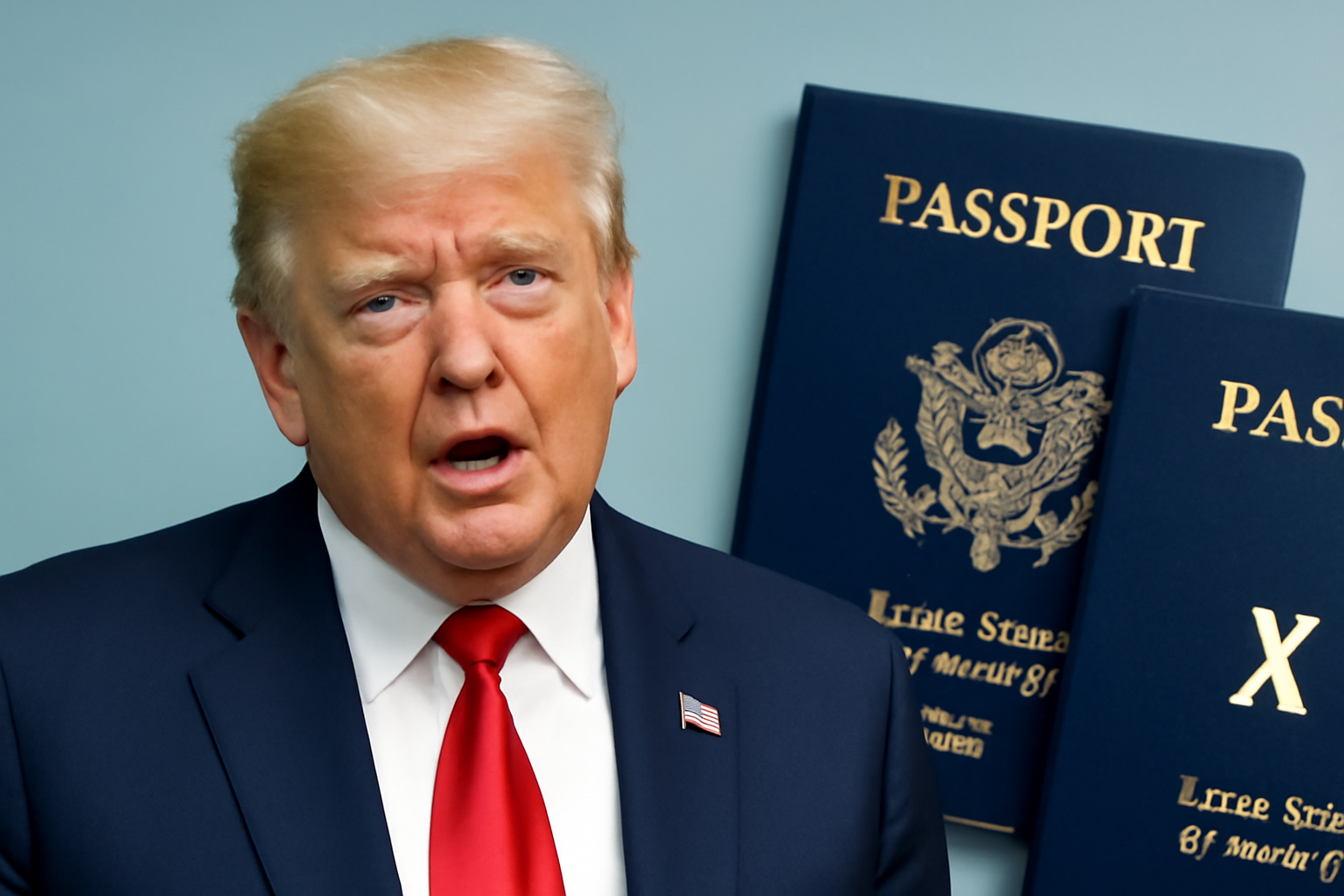
In a significant policy shift, an executive order issued by President Donald Trump on Monday has eliminated the option for the State Department to issue passports with an "X" gender marker. This change has sparked concern among LGBTQ+ advocates who argue that gender-neutral identification is crucial for nonbinary and intersex individuals.
During the previous administration, former Secretary of State Antony Blinken had announced in June 2021 that the State Department would begin issuing passports and other documents that include a gender-neutral "X" marker, as part of an effort to recognize and accommodate the identities of all American citizens, including those born overseas. This initiative was applauded by many as a step towards inclusivity and recognition of diverse gender identities.
One pivotal case that brought attention to the need for gender-neutral identification was that of Dana Zzyym, an intersex U.S. Navy veteran who identifies as nonbinary. In 2015, Zzyym filed a lawsuit against the State Department after they were denied a passport with an "X" gender marker. Their case highlighted the challenges faced by individuals whose gender identity does not fit within the traditional binary categories of male and female.
It was not until October 2021 that Zzyym received the first gender-neutral American passport, marking a historic moment for gender identity rights in the U.S. The policy change officially took effect on April 11, 2022, allowing for more inclusive federal identification options.
However, the recent executive order from President Trump has reversed these advancements. The order mandates that all government-issued identification documents, including passports, visas, and Global Entry cards, must "accurately reflect the holder’s sex" as either male or female. This directive is part of a broader executive order titled "Defending women from gender ideology extremism and restoring biological truth to the federal government," which Trump has championed as a return to traditional gender distinctions.
In his inaugural speech, President Trump declared that the federal government's "official policy" is to recognize only "two genders, male and female," which critics argue is a move that disregards the existence and rights of nonbinary and intersex individuals. This policy change has been met with backlash from LGBTQ+ rights groups, who view it as a step backward in the fight for equality and recognition.
Impact on the LGBTQ+ Community
The elimination of the "X" gender marker is expected to have wide-ranging effects on the LGBTQ+ community, particularly those who identify outside the gender binary. For individuals like Dana Zzyym and others who have fought for recognition, this decision represents a profound setback.
LGBTQ+ advocacy organizations are concerned that the policy will increase the challenges faced by nonbinary and intersex individuals when traveling or engaging with federal institutions. It also raises questions about the future of other gender-inclusive policies and practices at the federal level.
Efforts to challenge and reverse this executive order are anticipated, with advocacy groups likely to pursue legal avenues to restore the option for gender-neutral markers on federal identification documents.
The discussion surrounding gender identity and federal recognition continues to be a contentious issue in the United States. As the nation grapples with these changes, it is clear that the conversation around gender identity and civil rights remains critical to ensuring that all individuals are acknowledged and respected.
The response from the LGBTQ+ community and its allies will be a significant factor in shaping the future of gender identity policies in the U.S. The ongoing dialogue underscores the importance of understanding and embracing diversity in gender identity and expression.
Related Posts
Supreme Court to Address State Bans on Trans Women in Female Sports
The upcoming U.S. Supreme Court term promises to be a pivotal moment for transgender rights, as the nation's highest court has agreed to evaluate whether states have the authority to prohibit transgender women from participating in female sports competitions. This case, scheduled to be argued in the next term beginning October, is expected to have a significant impact on the future of sports inclu [...]
Megan Rapinoe and Sue Bird Announce Amicable Separation After Ten Years Together
In a heartfelt announcement that resonated deeply within the sports and LGBTQ+ communities, soccer star Megan Rapinoe and basketball legend Sue Bird have revealed their decision to part ways after nearly a decade together. The couple, who have been icons both on and off the field, shared the news with their fans through a joint statement on social media, expressing that the choice was made with mu [...]
Groundbreaking Ruling Ends Sodomy Ban for Police and Military in the Dominican Republic
The Constitutional Court of the Dominican Republic recently delivered a landmark decision on November 18th, ruling that the nation’s police and armed forces are not permitted to criminalize consensual same-sex relations among their personnel. This pivotal ruling is a significant stride towards equality and the protection of LGBTQ+ rights within these institutions. A Resounding Victory for Equal [...]