
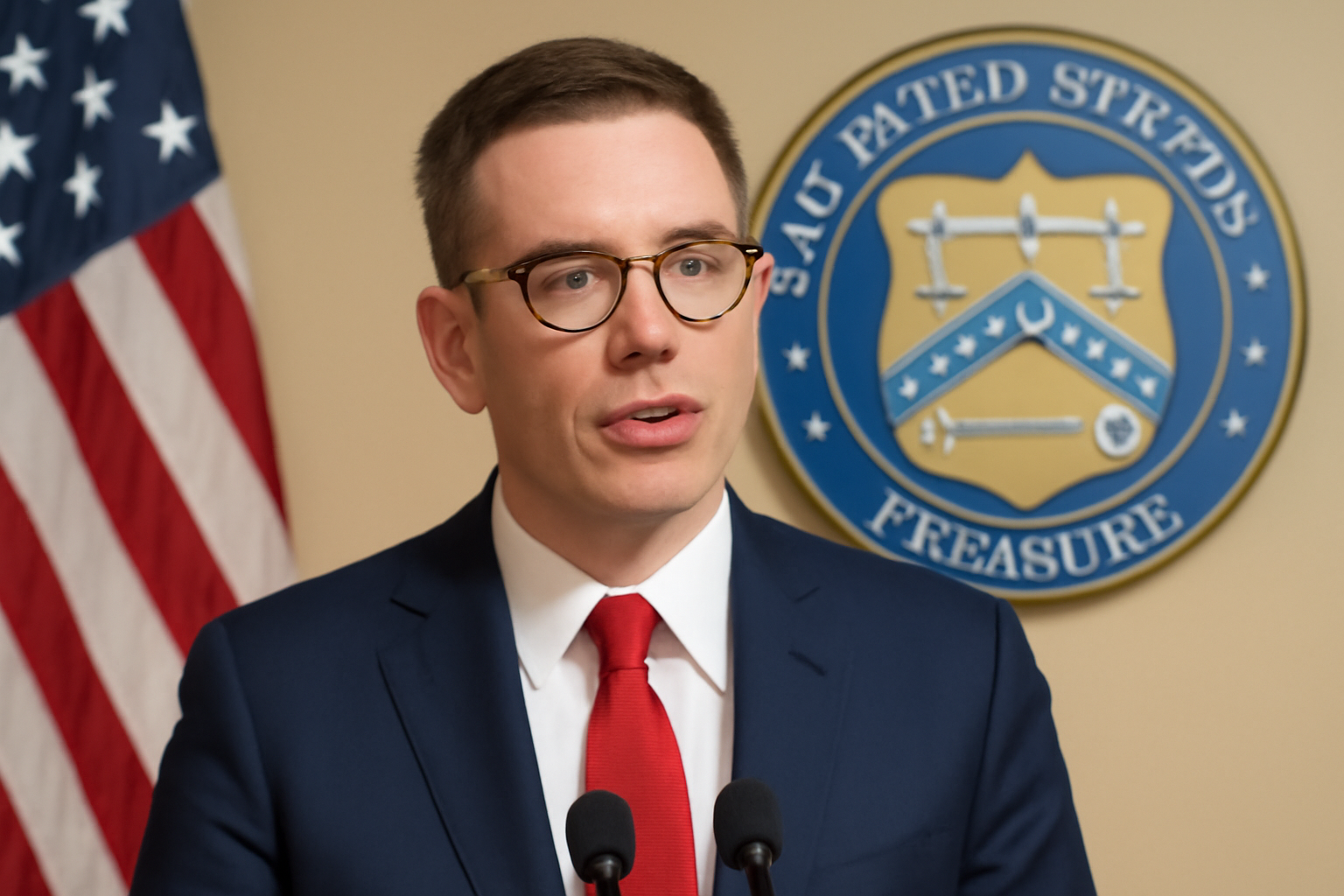
The current situation regarding the U.S. Treasury Department has taken a dramatic turn as reports surface about Treasury Secretary Scott Bessent. The out gay Cabinet member is in the spotlight for allegedly facilitating a scenario that could result in a constitutional crisis. Central to this controversy is the involvement of billionaire Elon Musk, a noted supporter of former President Donald Trump.
The Allegations
It has been reported that Secretary Bessent allowed Musk and his team access to the federal government's payment system. This system is responsible for handling crucial financial operations such as Social Security payments, government employee salaries, tax refunds, and payments to government contractors.
Musk has reportedly threatened to halt government spending, which is mandated by Congress, and has attempted to close down the U.S. Agency for International Development (USAID)—an agency that plays a pivotal role in delivering humanitarian aid. The authority to make such sweeping changes rests with Congress, not individual members of the executive branch, including the President or any of his appointees.
Response from the Treasury
The situation escalated when Deputy Secretary of the Treasury David Lebryk was placed on administrative leave following his attempts to block Musk's access to the payment system. Lebryk, known for his deep understanding of the system, has been in charge of it for 15 years. His unexpected leave has raised concerns about the internal dynamics and decision-making processes within the Treasury.
Senator Ron Wyden, a senior member of the Senate Finance Committee, expressed grave concerns over these developments. He emphasized the critical nature of the payment systems and warned that political interference could damage the U.S. economy and its global standing.
Security Concerns and Political Implications
Further complicating the scenario is the revelation by Reuters that Musk's team, called the Department of Government Efficiency (DOGE), was granted access to sensitive federal employee data. Reports suggest that DOGE is not a legitimate federal department but a group of young, inexperienced individuals lacking necessary security clearances.
This move has sparked fears of data breaches and improper handling of sensitive information. Additionally, reports indicate that Musk aims to reduce federal spending by $4 billion daily until the end of the fiscal year, a move that lacks legal backing and could have severe implications for federally funded programs.
The potential for a constitutional crisis looms large as questions arise about the legality of Musk's actions and the possible repercussions if these actions are challenged in court. The authority to halt payments lies strictly with Congress, and any attempt to bypass this could set a dangerous precedent.
Potential Outcomes and Political Reactions
The situation has drawn widespread attention and criticism from political leaders. Senator Elizabeth Warren has called for a thorough congressional investigation to examine the events and the roles of all involved parties.
The Wall Street Journal reports that, under the agreement, Musk would not have the power to stop individual payments or alter the payment system directly. However, the access he has been given raises concerns about potential future alterations to the system's code, which could undermine its apolitical nature and make it susceptible to external influence.
The Treasury's payment system, managed by the Bureau of Fiscal Service, has historically maintained a non-partisan stance, ensuring the uninterrupted processing of government payments. Any shift toward a politically controlled system could undermine the checks and balances inherent in the federal financial system.
Public and Political Backlash
Musk's claims on social media, alleging misuse of funds sent to fraudulent or terrorist groups, lack substantiation, as the Bureau has robust measures to prevent such scenarios. His comments have been met with skepticism, given the complexity and security of the payment systems.
The unfolding events have put Secretary Bessent at the center of a political storm, raising questions about his decisions and their alignment with national interests. As the situation develops, it remains to be seen how Congress and the judicial system will respond to this unprecedented challenge.
As the investigation proceeds, the LGBTQ+ community and allies are watching closely, given Bessent's historic role as one of the few openly gay Cabinet members. The outcome of this situation could have broader implications for the fight for equality and representation within the government.
Stay informed by subscribing to our newsletter for insights into how political actions impact the LGBTQ+ community and more.
Related Posts
Supreme Court to Address State Bans on Trans Women in Female Sports
The upcoming U.S. Supreme Court term promises to be a pivotal moment for transgender rights, as the nation's highest court has agreed to evaluate whether states have the authority to prohibit transgender women from participating in female sports competitions. This case, scheduled to be argued in the next term beginning October, is expected to have a significant impact on the future of sports inclu [...]
Megan Rapinoe and Sue Bird Announce Amicable Separation After Ten Years Together
In a heartfelt announcement that resonated deeply within the sports and LGBTQ+ communities, soccer star Megan Rapinoe and basketball legend Sue Bird have revealed their decision to part ways after nearly a decade together. The couple, who have been icons both on and off the field, shared the news with their fans through a joint statement on social media, expressing that the choice was made with mu [...]
Groundbreaking Ruling Ends Sodomy Ban for Police and Military in the Dominican Republic
The Constitutional Court of the Dominican Republic recently delivered a landmark decision on November 18th, ruling that the nation’s police and armed forces are not permitted to criminalize consensual same-sex relations among their personnel. This pivotal ruling is a significant stride towards equality and the protection of LGBTQ+ rights within these institutions. A Resounding Victory for Equal [...]