
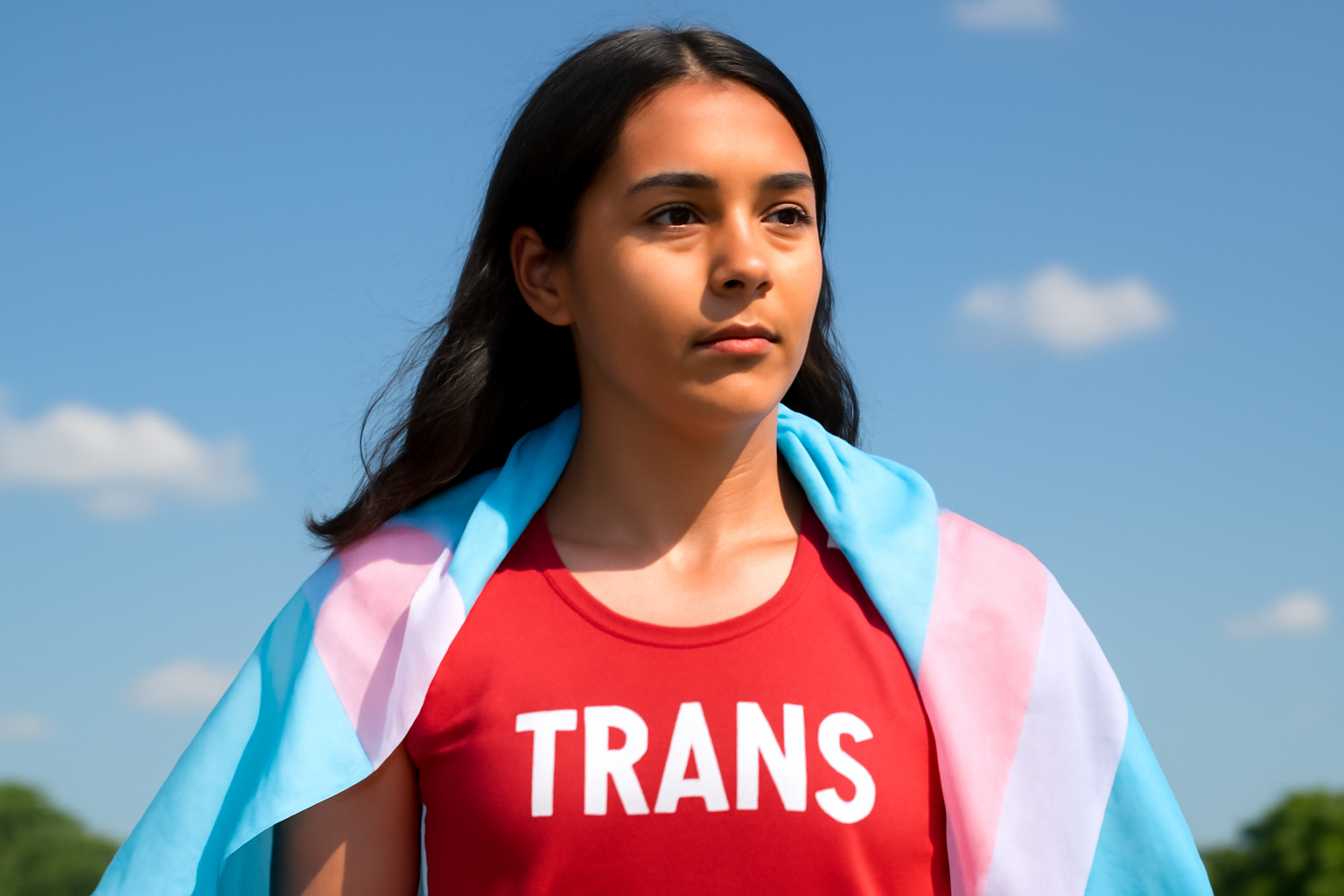
The issue of transgender athletes participating in sports has sparked significant debate across the United States. Recently, the House of Representatives passed a bill aimed at prohibiting transgender student athletes from competing in girls’ sports. This legislation, known as the Protection of Women and Girls in Sports Act, seeks to amend Title IX, a critical civil rights law that prohibits sex discrimination in education. The Act would prevent schools receiving federal funds from allowing transgender girls and women to compete in sports designated for female athletes.
This legislative move has been heavily promoted by Republican lawmakers as a measure to protect women’s sports. However, the backdrop of this push includes a broader cultural discourse where transgender rights have frequently come under attack, especially during election cycles.
Political Context and Rhetoric
During the recent election cycle, rhetoric targeting transgender individuals was rampant. Former President Trump’s campaign events were marked by inflammatory statements, including baseless claims about transgender operations and gender-affirming procedures in schools. These remarks contributed to a charged atmosphere, with transgender rights becoming a focal point of political discourse.
Following the election, the narrative continued, with promises from the president-elect to prioritize what he termed "ending transgender lunacy." This included intentions to issue executive orders targeting the presence of transgender individuals in the military and educational institutions, and policies regarding transgender athletes.
The Reality of Transgender Athletes in Schools
Despite the heated political discussions, the actual number of transgender athletes in the United States is remarkably small. According to data from the Williams Institute at UCLA's Law School, approximately 1.3 million adults and 300,000 young people aged 13 to 17 identify as transgender in the US. This equates to about half a percent and 1.4 percent of the population, respectively.
However, not all these individuals identify as women, nor do they all participate in sports. Specifically, the legislation in question targets transgender women in sports. Researcher and medical physicist Joanna Harper estimated in an interview with Newsweek that there are likely fewer than 100 transgender women competing in NCAA sports in the women’s category.
The numbers are even smaller among younger athletes. According to Gillian Branstetter from the American Civil Liberties Union (ACLU), only five transgender athletes were identified as participating in girls’ school sports teams across grades K through 12, as reported by Save Women’s Sports, an advocacy group supporting the legislation. This tiny number underscores the disproportionate attention and legislative efforts aimed at restricting their participation.
Legislative Implications and Future Prospects
The Protection of Women and Girls in Sports Act passed the House with a 218 to 206 vote, largely supported by Republicans. However, the bill's future remains uncertain in the Senate, which is controlled by Democrats. Senator Tommy Tuberville is championing the bill in the Senate, but with other legislative priorities, including presidential cabinet confirmations, the bill may face delays.
This situation highlights the complex interplay between politics, legislation, and the lived realities of transgender individuals in sports. The intense focus on this small group of athletes raises questions about the motivations behind such legislative measures and the broader impact on transgender rights in the US.
In conclusion, while the participation of transgender athletes in sports has become a highly politicized issue, the empirical data suggests that their numbers are exceedingly small. The legislative efforts to restrict their participation appear disproportionate to the scale of the issue, pointing to a broader cultural and political struggle over transgender rights in America.
Related Posts
Supreme Court to Address State Bans on Trans Women in Female Sports
The upcoming U.S. Supreme Court term promises to be a pivotal moment for transgender rights, as the nation's highest court has agreed to evaluate whether states have the authority to prohibit transgender women from participating in female sports competitions. This case, scheduled to be argued in the next term beginning October, is expected to have a significant impact on the future of sports inclu [...]
Megan Rapinoe and Sue Bird Announce Amicable Separation After Ten Years Together
In a heartfelt announcement that resonated deeply within the sports and LGBTQ+ communities, soccer star Megan Rapinoe and basketball legend Sue Bird have revealed their decision to part ways after nearly a decade together. The couple, who have been icons both on and off the field, shared the news with their fans through a joint statement on social media, expressing that the choice was made with mu [...]
Groundbreaking Ruling Ends Sodomy Ban for Police and Military in the Dominican Republic
The Constitutional Court of the Dominican Republic recently delivered a landmark decision on November 18th, ruling that the nation’s police and armed forces are not permitted to criminalize consensual same-sex relations among their personnel. This pivotal ruling is a significant stride towards equality and the protection of LGBTQ+ rights within these institutions. A Resounding Victory for Equal [...]