
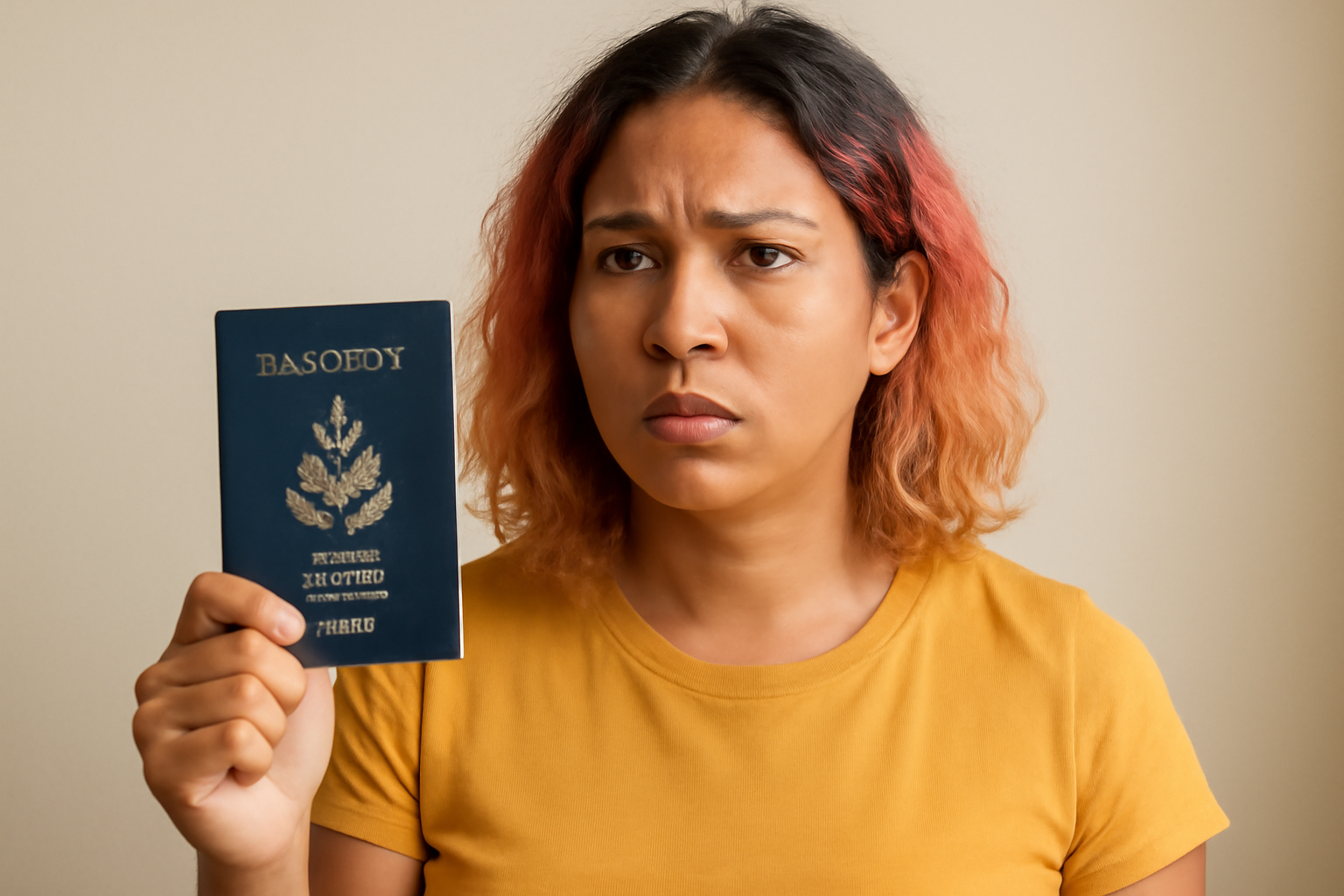
Transgender Americans Face New Challenges with Passport Policies
Under the recent policies instituted by the Trump administration, transgender Americans are facing significant hurdles when it comes to obtaining or renewing their passports. This has led many in the community to describe it as an effective "travel ban."
The controversy arose following an executive order signed by President Donald Trump, which mandates federal recognition of only two biological sexes: male and female. The order stipulates that these sexes are immutable, forcing government agencies, including the State Department, to adhere strictly to these definitions in all government-issued identifications.
As a result, any passport applications from individuals whose gender identity does not match their assigned sex at birth are currently not being processed. This has sparked widespread concern among transgender individuals about their ability to access vital services and freedoms.
For many, the inability to obtain a passport equates to being unable to leave the United States, should they need to seek asylum from increasing discrimination at home. A spokesperson for the State Department conveyed that passport issuance would comply with the executive order, requiring the gender marker to align with the sex assigned at birth.
This suspension has also affected those who were seeking a non-binary gender marker, such as "X" on their passports—a provision introduced in 2022 to accommodate those who identify outside the binary categories of male and female.
Previously, applicants could self-select their gender marker, including the option for "X", thus facilitating access to identification for those whose birth certificates did not reflect their gender identity.
Advocacy groups have condemned the executive order, labeling it as "cruel" and "discriminatory." They argue that it unfairly targets transgender, nonbinary, and intersex people, potentially leading to increased harassment and discrimination. This measure is seen as part of a broader agenda by the administration to curtail LGBTQ+ rights.
The change is expected to impact over two million transgender or nonbinary Americans, as well as approximately 5.6 million intersex individuals. Activists assert that such policies not only hinder the freedom of movement but also strip away fundamental rights.
A transgender woman, speaking to a major news outlet, highlighted that this issue extends beyond bureaucratic delays. She believes this is a deliberate attack on marginalized groups.
Trans advocate and TikTok user @gentlereality has taken to social media to raise awareness about these issues. She described the situation as a "travel ban" in all but name, stating, "They will not give me any passport with any name, gender, or sex of any form. This is the reality we're facing in the United States."
Her video resonated widely, amassing over 800,000 views. She has since updated her followers, expressing gratitude for the overwhelming support and advice she has received. Additionally, she noted that her local congressman has reached out with an offer of assistance.
For the transgender community, a passport is often a primary form of identification. Without it, individuals may find themselves unable to access essential services, travel internationally, or even perform basic activities like obtaining employment or housing.
The suspension also brings uncertainty about the return of critical documents required for the application process, such as birth certificates or previous passports. This lack of clarity only adds to the challenges faced by transgender individuals trying to navigate these new obstacles.
The implementation of these policies marks a significant shift in the rights and freedoms previously expanded for the LGBTQ+ community. As the situation evolves, many are calling for a reevaluation and reversal of these measures to ensure that all individuals can exercise their rights without fear of discrimination.
The community continues to rally for change, urging lawmakers to stand against policies that they deem as regressive and discriminatory. As this issue gains more attention, the hope is for a future where everyone's identity is respected and recognized.
Related Posts
Supreme Court to Address State Bans on Trans Women in Female Sports
The upcoming U.S. Supreme Court term promises to be a pivotal moment for transgender rights, as the nation's highest court has agreed to evaluate whether states have the authority to prohibit transgender women from participating in female sports competitions. This case, scheduled to be argued in the next term beginning October, is expected to have a significant impact on the future of sports inclu [...]
Megan Rapinoe and Sue Bird Announce Amicable Separation After Ten Years Together
In a heartfelt announcement that resonated deeply within the sports and LGBTQ+ communities, soccer star Megan Rapinoe and basketball legend Sue Bird have revealed their decision to part ways after nearly a decade together. The couple, who have been icons both on and off the field, shared the news with their fans through a joint statement on social media, expressing that the choice was made with mu [...]
Groundbreaking Ruling Ends Sodomy Ban for Police and Military in the Dominican Republic
The Constitutional Court of the Dominican Republic recently delivered a landmark decision on November 18th, ruling that the nation’s police and armed forces are not permitted to criminalize consensual same-sex relations among their personnel. This pivotal ruling is a significant stride towards equality and the protection of LGBTQ+ rights within these institutions. A Resounding Victory for Equal [...]