
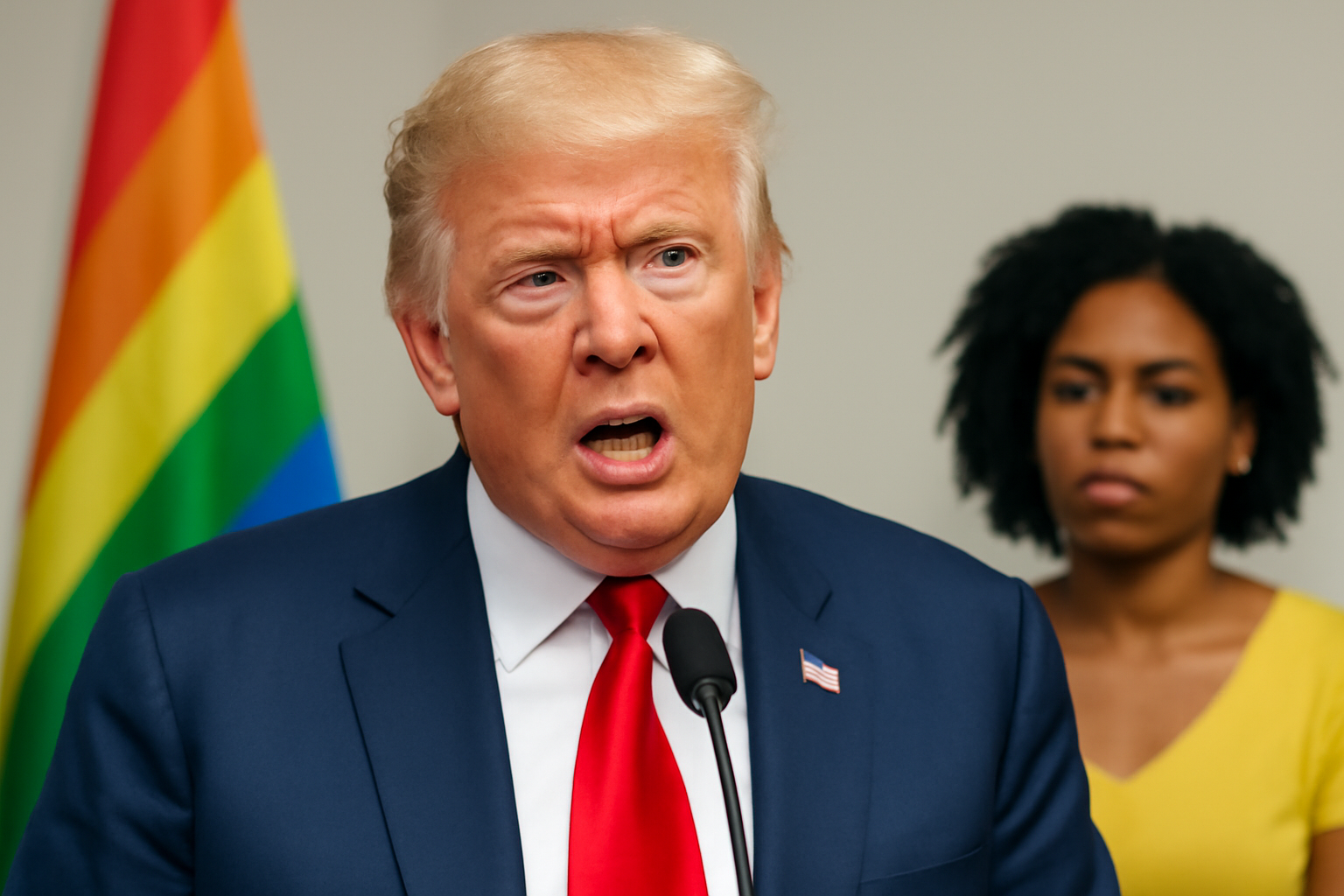
In a recent address, former President Donald Trump articulated a vision that has sparked significant debate and criticism, particularly among marginalized communities. His pronouncements on race and gender reflect an agenda that many perceive as reinforcing systemic inequities rather than addressing them.
On "Meritocracy"
Trump's call for a "merit-based" society is ostensibly appealing, yet his policies and cabinet selections reveal the contradictions underlying this rhetoric. The composition of his administration, notably marked by the inclusion of numerous billionaires, underscores a version of meritocracy that privileges wealth and connections over genuine qualifications.
Critics argue that this approach undermines the principles of true meritocracy, where individuals succeed based on their capabilities and contributions rather than socioeconomic status or political allegiance. The prevalence of affluent individuals in key government roles suggests a system skewed towards preserving existing power structures rather than providing equal opportunities for all.
The "Colorblind" Fallacy
The concept of a "colorblind" society is frequently touted by conservatives as a goal, yet it often serves to obscure the ongoing realities of racial inequality. Trump's dismissal of policies aimed at addressing racial disparities reflects a misunderstanding of the systemic nature of racism.
Invoking the legacy of civil rights leaders without acknowledging the unfulfilled aspirations of racial justice movements distorts their messages. The notion that the election of Barack Obama marked the end of racism in America fails to account for persistent structural inequities that continue to disadvantage communities of color.
"Colorblindness" in this context becomes a tool not for achieving equality but for denying the lived experiences and historical legacies of marginalized groups. It inadvertently perpetuates a status quo that privileges whiteness and ignores the nuanced realities of diverse identities.
Gender Identity and the Binary
Trump's assertion that there are "only two genders" disregards the complexities of human identity. This perspective marginalizes intersex, transgender, and nonbinary individuals whose experiences challenge traditional gender binaries.
The natural world and human society reflect a spectrum of gender identities, which cannot be neatly categorized within a binary framework. Efforts to enforce such a dichotomy not only invalidate the existence of non-conforming identities but also perpetuate harm against those who do not fit conventional norms.
Recent initiatives under the Biden administration highlight the importance of recognizing and supporting gender diversity. Reports on intersex health equity emphasize the need for medical practices that respect the autonomy and dignity of individuals, rather than enforcing rigid gender assignments.
Challenging Patriarchal Structures
Within patriarchal systems, traditional gender roles are often used to maintain control and suppress dissent. By framing gender and race issues within a binary and hierarchical context, these structures perpetuate inequalities that disproportionately affect marginalized communities.
Social norms that dictate gender roles and racial hierarchies are socially constructed and have been historically used to oppress those who deviate from prescribed norms. Challenging these constructs is essential for advancing equity and justice.
The push for a more inclusive understanding of gender and race involves dismantling these oppressive systems and creating spaces for honest dialogue and reflection. It requires acknowledging the interconnectedness of various forms of identity and oppression, and working towards a society that values diversity in all its forms.
As we move forward, it is crucial to engage in conversations that confront these issues directly and explore pathways to more equitable and inclusive policies. This involves not only recognizing the harm caused by exclusionary rhetoric but actively working to create a society where all individuals can thrive regardless of race, gender, or identity.
Related Posts
Supreme Court to Address State Bans on Trans Women in Female Sports
The upcoming U.S. Supreme Court term promises to be a pivotal moment for transgender rights, as the nation's highest court has agreed to evaluate whether states have the authority to prohibit transgender women from participating in female sports competitions. This case, scheduled to be argued in the next term beginning October, is expected to have a significant impact on the future of sports inclu [...]
Megan Rapinoe and Sue Bird Announce Amicable Separation After Ten Years Together
In a heartfelt announcement that resonated deeply within the sports and LGBTQ+ communities, soccer star Megan Rapinoe and basketball legend Sue Bird have revealed their decision to part ways after nearly a decade together. The couple, who have been icons both on and off the field, shared the news with their fans through a joint statement on social media, expressing that the choice was made with mu [...]
Groundbreaking Ruling Ends Sodomy Ban for Police and Military in the Dominican Republic
The Constitutional Court of the Dominican Republic recently delivered a landmark decision on November 18th, ruling that the nation’s police and armed forces are not permitted to criminalize consensual same-sex relations among their personnel. This pivotal ruling is a significant stride towards equality and the protection of LGBTQ+ rights within these institutions. A Resounding Victory for Equal [...]