
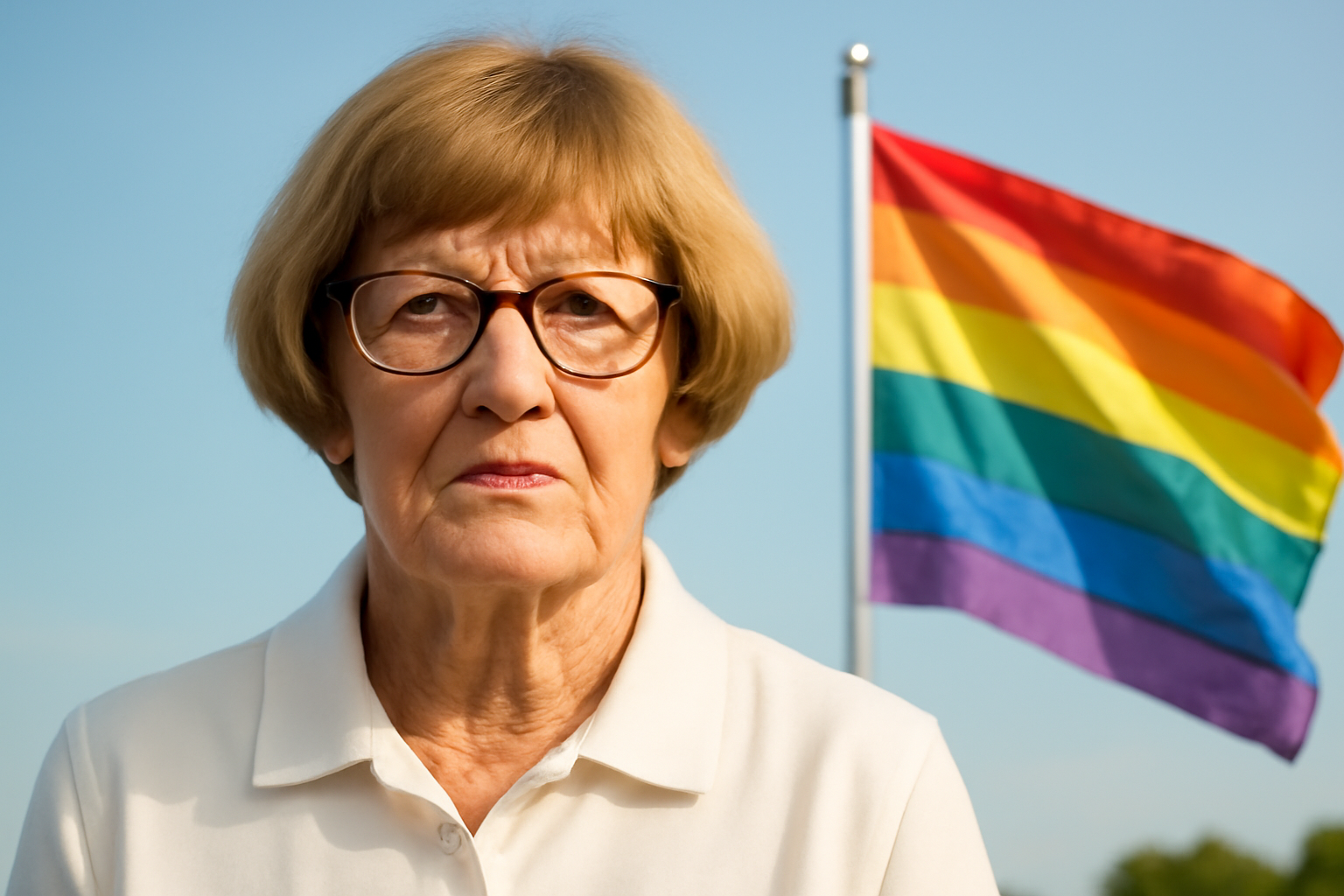
Margaret Court, a tennis legend with an unparalleled record of 24 Grand Slam singles titles, has been a polarizing figure in the sporting world, particularly when it comes to her views on LGBTQ issues. Her history of controversial comments targeting LGBTQ tennis players and broader LGBTQ rights has sparked significant backlash over the years.
Court has made several incendiary statements, such as comparing the teaching of LGBTQ topics in schools to the philosophy of Hitler, describing women's tennis as being "full of lesbians," and suggesting that LGBTQ tendencies are influenced by evil forces. She claims these views are grounded in her responsibilities as a Pentecostal Christian minister to "follow the Bible," which has only fueled the public outcry against her.
In response to her remarks, prominent tennis figures like Andy Murray, John McEnroe, Martina Navratilova, and Billie Jean King have publicly called for the renaming of Margaret Court Arena, a key venue for the Australian Open. Martina Navratilova, a vocal advocate for LGBTQ rights, went so far as to accuse Court of "hiding behind her Bible."
The Decline of Protests and Court’s Silence
While the initial wave of protests was fervent, the intensity of the backlash has waned over time, partly due to Court's decision to refrain from making further public statements on LGBTQ issues since 2022. The last notable controversy involving her occurred when she expressed feeling "bullied" for her views, yet she continues to receive accolades, including being honored as a Companion of the Order of Australia in 2021.
This situation draws parallels to debates about historical monuments, where there's a fine line between commemorating individuals for their achievements and acknowledging their contributions to society's values. Margaret Court's legacy as a tennis player remains undisputed, but the question of whether she deserves the honor of having an arena named after her is more complex. It's about embodying the values of tennis both as an athlete and as a prominent figure in the community.
Tennis Australia's Stance and the Call for Change
Tennis Australia has consistently maintained that Court’s personal views do not reflect the values of their organization and that her recognition is solely based on her tennis achievements. However, separating her sporting legacy from her public persona is challenging for many who believe a higher standard should be applied to those receiving such honors.
The official Twitter page for Margaret Court Arena issued a statement declaring, “Melbourne & Olympic Parks does not support Margaret Court’s comments and we remain an organization committed to embracing equality, diversity and inclusion; from our fans to our colleagues who deliver the events that people love to attend.” Yet, this commitment could arguably be better demonstrated by selecting an athlete who more fully represents the inclusive values of the sport.
After being recognized with her recent award, Margaret Court addressed the calls for renaming the arena by stating, “I’m not going to change my opinions and views, and I think it’s very important for freedom of speech that we can say our beliefs.”
A Call to Action: Honoring Inclusive Values
Freedom of speech is a cherished principle, and while expressions of hate might fall under this protection, organizations like the Australian Open can exercise their own freedom by deciding whom they choose to honor. Changing the name of the arena is not about erasing history. Instead, it’s about choosing to celebrate individuals for their contributions both on and off the court.
The discussion on whether to rename Margaret Court Arena continues to be a contentious topic. It raises important questions about whose values we choose to elevate and honor in the public sphere, and how we reconcile an individual’s professional achievements with their personal beliefs.
As the sports world grapples with these issues, it’s crucial to engage in this dialogue and consider the broader implications of whom we choose to celebrate and why. Perhaps the future of Margaret Court Arena will set a precedent for how similar conflicts are resolved in sports and beyond.
Colby Grey, a seasoned writer covering sports, travel, lifestyle, politics, and finance, shares insights on these issues. A former college tennis player, Grey has a unique perspective on the intersection of sports and social issues, having publicly shared his coming-out story in 2019.
Related Posts
Supreme Court to Address State Bans on Trans Women in Female Sports
The upcoming U.S. Supreme Court term promises to be a pivotal moment for transgender rights, as the nation's highest court has agreed to evaluate whether states have the authority to prohibit transgender women from participating in female sports competitions. This case, scheduled to be argued in the next term beginning October, is expected to have a significant impact on the future of sports inclu [...]
Megan Rapinoe and Sue Bird Announce Amicable Separation After Ten Years Together
In a heartfelt announcement that resonated deeply within the sports and LGBTQ+ communities, soccer star Megan Rapinoe and basketball legend Sue Bird have revealed their decision to part ways after nearly a decade together. The couple, who have been icons both on and off the field, shared the news with their fans through a joint statement on social media, expressing that the choice was made with mu [...]
Groundbreaking Ruling Ends Sodomy Ban for Police and Military in the Dominican Republic
The Constitutional Court of the Dominican Republic recently delivered a landmark decision on November 18th, ruling that the nation’s police and armed forces are not permitted to criminalize consensual same-sex relations among their personnel. This pivotal ruling is a significant stride towards equality and the protection of LGBTQ+ rights within these institutions. A Resounding Victory for Equal [...]