
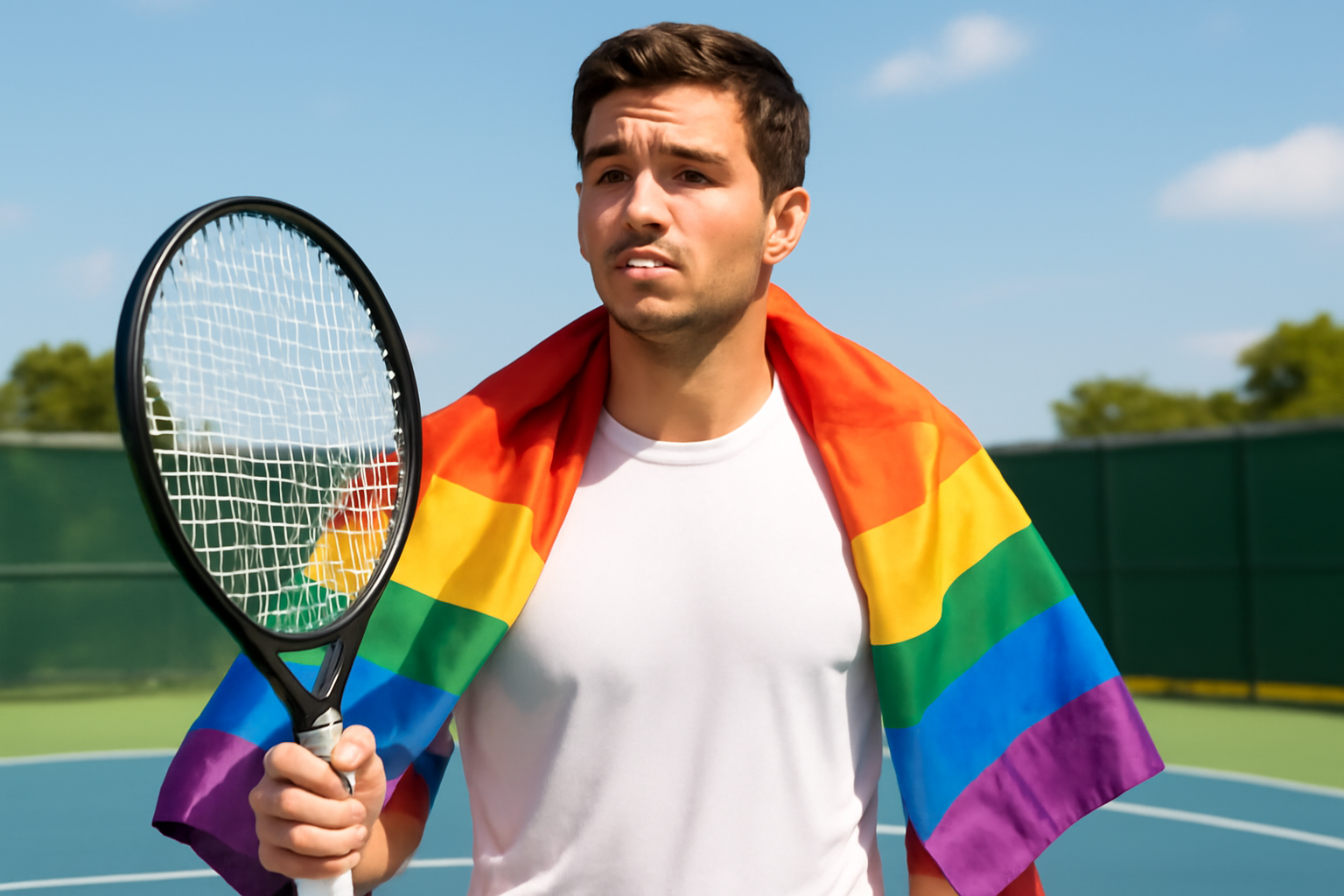
Professional tennis stands as one of the sports with a notable absence of openly gay male players. Currently, Joao Lucas Reis da Silva is the sole player who has come out, ranking 400th in the world. This raises the question: why aren't there more openly gay players in men's tennis?
Support from Tennis Stars
Many top ATP stars have expressed their support for openly gay players. Tennis legends like Roger Federer, Novak Djokovic, and Andy Murray have publicly stated their encouragement. Other stars such as Liam Brody, Kevin Anderson, and Daniil Medvedev also stand in support. Despite this backing, the presence of openly gay players remains scarce.
Historically, tennis has been a leader in social issues like equal pay and disability access, yet it lags behind other sports in LGBTQ representation. In contrast, sports like soccer and basketball have seen players such as Robbie Rogers, Collin Martin, and Jason Collins come out while still active. So why does tennis trail in this aspect?
The Individual Nature of Tennis
One explanation might lie in the individualistic nature of tennis. Unlike team sports, tennis players often lead solitary careers. The focus on personal achievement and continuous travel can make the decision to come out publicly more daunting. The absence of team camaraderie might make it harder for players to find the support they need.
Gender Dynamics
Gender differences also play a role. The tennis world has seen several openly gay women, including icons Billie Jean King and Martina Navratilova. Currently, five openly gay women are competing in major tournaments like the Australian Open. Generally, women are more likely to identify as LGBTQ, partly due to greater acceptance and fluidity in gender identity. For men, especially in sports, reconciling masculinity with homosexuality can be particularly challenging.
Institutional Challenges
The ATP tour's presence in countries where homosexuality is illegal is another obstacle. The ATP continues to host events in places like the United Arab Emirates, Qatar, and Saudi Arabia, where the legal environment poses risks to gay athletes. While the ATP markets itself as inclusive, this contradiction makes it difficult for players to come out.
Players ranked outside the top 100, who may not have the financial flexibility to skip these tournaments, face a significant dilemma. The economic structure within tennis is such that players receive a small percentage of sports revenue compared to other sports. This financial pressure can deter players from coming out due to potential restrictions on where they can compete.
The Way Forward
For true inclusivity, the ATP needs to reevaluate its priorities. Reforming the pay structure and avoiding tournaments in countries where homosexuality is criminalized are critical steps. Real inclusivity involves more than just statements and educational initiatives; it requires creating safe and equitable environments for all players.
Ultimately, if the ATP genuinely supports LGBTQ rights, it should lead by example. The support from fellow players suggests that the culture within the locker rooms is not the barrier. Instead, the ATP should champion change at the organizational level, ensuring that all players, regardless of sexual orientation, can compete safely and openly.
Related Posts
Supreme Court to Address State Bans on Trans Women in Female Sports
The upcoming U.S. Supreme Court term promises to be a pivotal moment for transgender rights, as the nation's highest court has agreed to evaluate whether states have the authority to prohibit transgender women from participating in female sports competitions. This case, scheduled to be argued in the next term beginning October, is expected to have a significant impact on the future of sports inclu [...]
Megan Rapinoe and Sue Bird Announce Amicable Separation After Ten Years Together
In a heartfelt announcement that resonated deeply within the sports and LGBTQ+ communities, soccer star Megan Rapinoe and basketball legend Sue Bird have revealed their decision to part ways after nearly a decade together. The couple, who have been icons both on and off the field, shared the news with their fans through a joint statement on social media, expressing that the choice was made with mu [...]
Groundbreaking Ruling Ends Sodomy Ban for Police and Military in the Dominican Republic
The Constitutional Court of the Dominican Republic recently delivered a landmark decision on November 18th, ruling that the nation’s police and armed forces are not permitted to criminalize consensual same-sex relations among their personnel. This pivotal ruling is a significant stride towards equality and the protection of LGBTQ+ rights within these institutions. A Resounding Victory for Equal [...]