
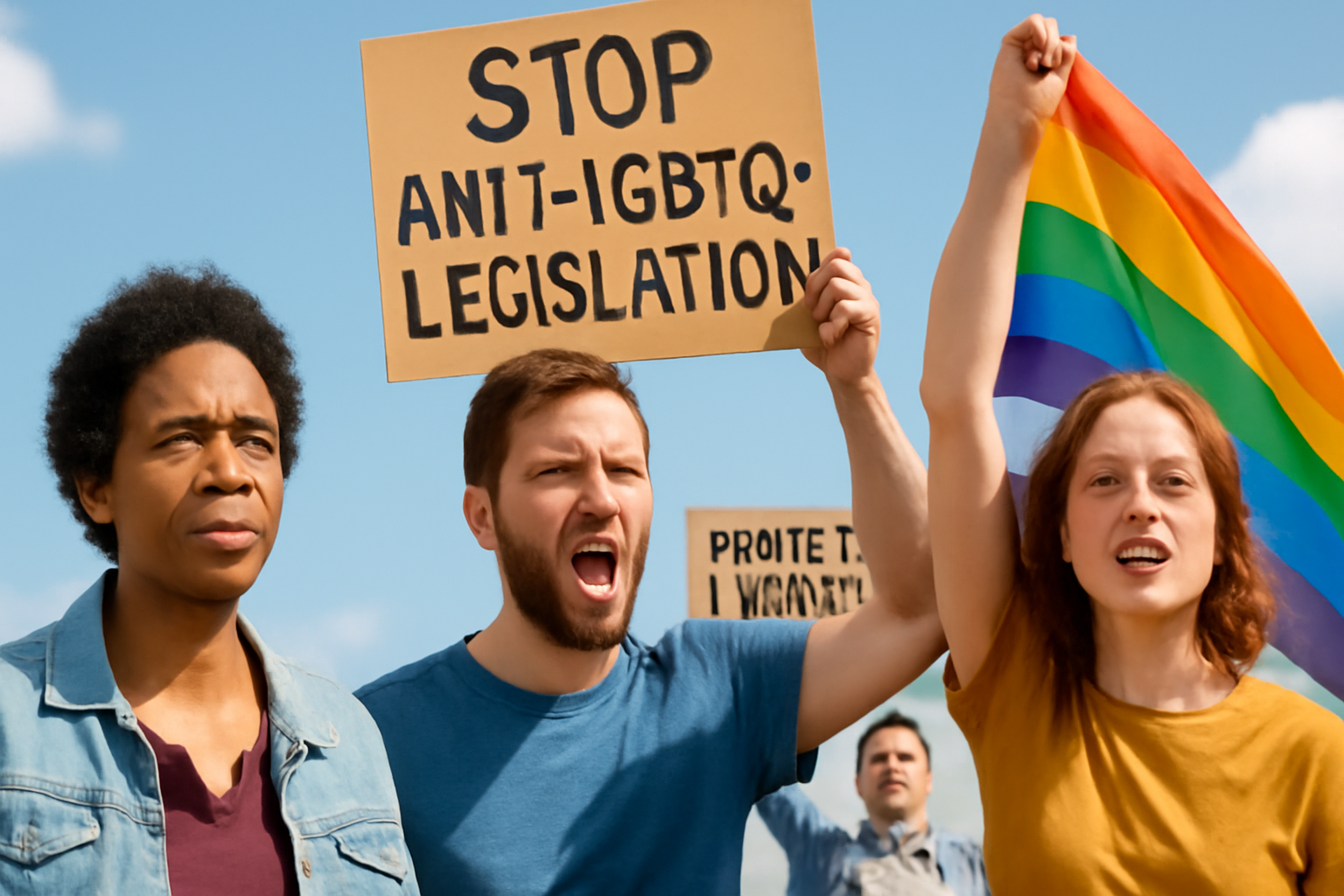
The increasing legislative attacks on LGBTQ+ rights have had profound effects on the mental health and well-being of LGBTQ+ adults across the United States. A comprehensive study conducted by the Human Rights Campaign (HRC) Foundation highlights not only the personal toll on these individuals but also the broader economic consequences for states enacting such legislation.
According to the HRC Foundation’s 2024 LGBTQ+ Climate Survey, a significant 71.5% of LGBTQ+ adults reported experiencing a negative impact on their health or well-being due to anti-LGBTQ+ legislation over the past year.
Emotional and Mental Health Impact
The survey further reveals that 44.3% of LGBTQ+ adults and an alarming 63.5% of transgender adults have suffered harm to their mental health or that of their loved ones due to these laws. In addition, 66.1% of LGBTQ+ adults and 83.4% of transgender adults have expressed feeling less safe in their current environments.
This state of constant vigilance and fear is not only emotionally taxing but can also translate into significant lifestyle changes. The survey notes that one in five LGBTQ+ adults is considering relocating to a different state, while one in 20 are attempting to change jobs.
Relocation and Economic Decisions
Half of the LGBTQ+ respondents indicated that anti-LGBTQ+ legislation has already influenced their decisions regarding where to live and work in the past year. Alarmingly, one in five have refused job offers or housing opportunities in states with such legislation. Additionally, 4% reported having already moved or taken steps to do so, and another 5% are in the process of changing jobs as a result.
One participant, a cisgender lesbian, shared, “It is mentally exhausting to live in a state where the legislature and governor bully communities of color and LGBTQ+ communities. It takes a toll. We will be moving from this state.” Her sentiment is echoed by many others who feel the need to leave hostile environments.
Professional Impact and Personal Sacrifices
A New York-based physician stated, “I purposely turned down a dream job in a state where these laws were passed. Also, the laws affect my work, as I am a physician and cannot practice the full spectrum medicine I would like to.” These personal decisions are not made lightly, as they involve significant sacrifices in career and lifestyle.
Another respondent, a cis queer woman, mentioned that the laws have “radically impacted my queer & trans household,” prompting her family to seek relocation to more supportive states like Michigan or Maine. This decision involves leaving behind a business, a beautiful home, a high-income career, and a nonprofit organization dedicated to the queer community.
Economic Consequences for States
Shoshana Goldberg, the public education and research program director at the HRC Foundation, emphasized the potential economic ramifications for states choosing to uphold discriminatory laws. She noted, “States stand to lose economically by continuing to support these laws. They risk losing tourism and business travel dollars, such as those from the 30% of LGBTQ+ adults who have avoided, canceled, or refused to travel to states with anti-LGBTQ+ legislation.”
Goldberg warned that states could lose taxable income from LGBTQ+ adults and families of LGBTQ+ youth looking to move to more welcoming environments. Businesses headquartered in these states risk losing customers and potentially valuable employees as well.
Purchasing Power and Corporate Responsibility
The LGBTQ+ community wields a significant $1.4 trillion in purchasing power, and companies that do not support equality risk losing this substantial market. Furthermore, they may lose allies, especially among Millennials and Gen Z, who prioritize spending their money with companies that align with their values of equality.
Companies that abandon Diversity, Equity, and Inclusion (DEI) practices not only risk alienating their customer base but also face challenges in attracting and retaining top talent.
In conclusion, the ongoing legislative assaults on LGBTQ+ rights are not only a human rights issue but also a pressing economic concern. The well-being of LGBTQ+ individuals is intricately linked to the health of the country’s economy, and it is imperative for lawmakers to recognize the far-reaching consequences of their policies.
Related Posts
Supreme Court to Address State Bans on Trans Women in Female Sports
The upcoming U.S. Supreme Court term promises to be a pivotal moment for transgender rights, as the nation's highest court has agreed to evaluate whether states have the authority to prohibit transgender women from participating in female sports competitions. This case, scheduled to be argued in the next term beginning October, is expected to have a significant impact on the future of sports inclu [...]
Megan Rapinoe and Sue Bird Announce Amicable Separation After Ten Years Together
In a heartfelt announcement that resonated deeply within the sports and LGBTQ+ communities, soccer star Megan Rapinoe and basketball legend Sue Bird have revealed their decision to part ways after nearly a decade together. The couple, who have been icons both on and off the field, shared the news with their fans through a joint statement on social media, expressing that the choice was made with mu [...]
Groundbreaking Ruling Ends Sodomy Ban for Police and Military in the Dominican Republic
The Constitutional Court of the Dominican Republic recently delivered a landmark decision on November 18th, ruling that the nation’s police and armed forces are not permitted to criminalize consensual same-sex relations among their personnel. This pivotal ruling is a significant stride towards equality and the protection of LGBTQ+ rights within these institutions. A Resounding Victory for Equal [...]