
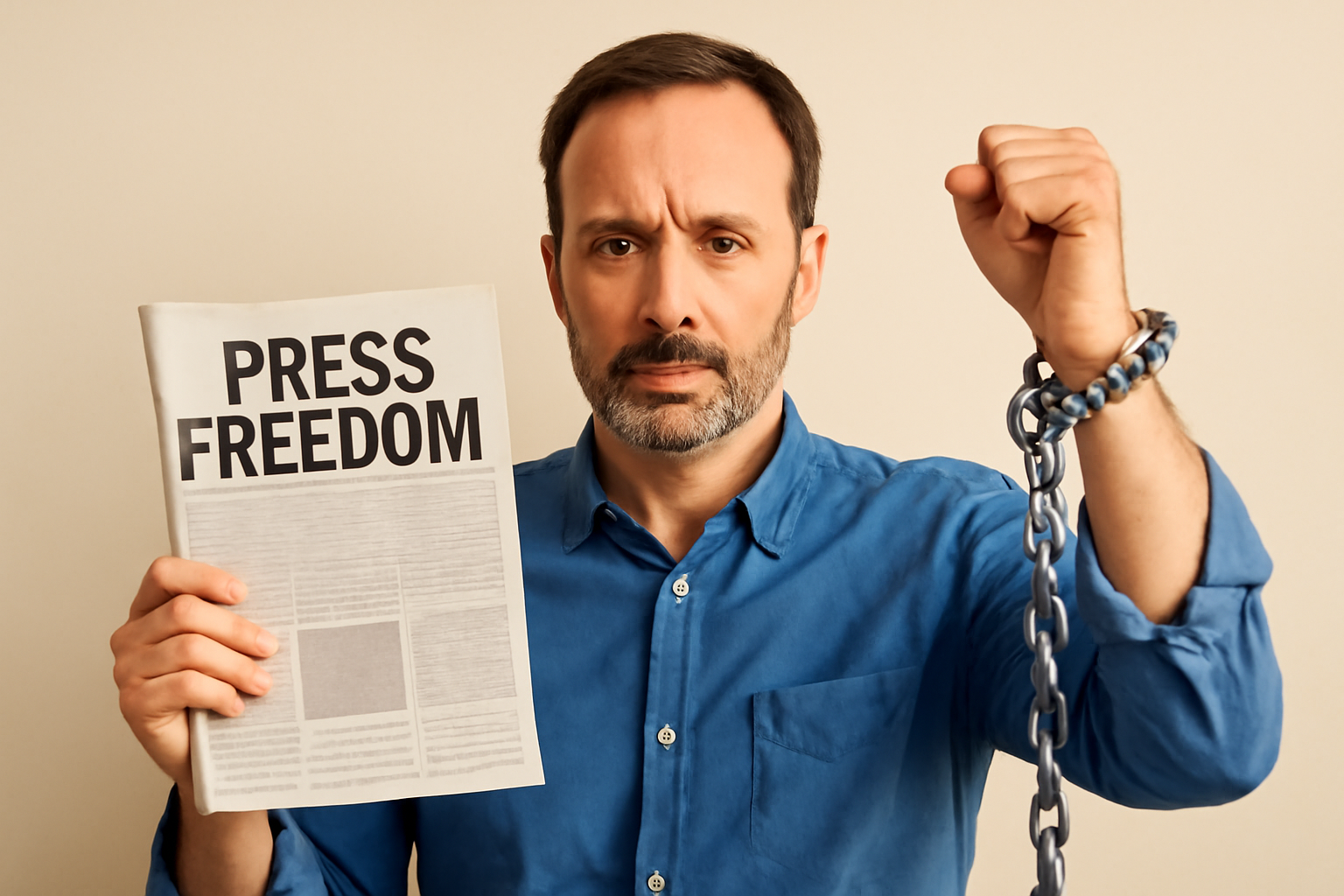
"Congress shall make no law respecting an establishment of religion, or prohibiting the free exercise thereof; or abridging the freedom of speech, or of the press; or the right of the people peaceably to assemble, and to petition the Government for a redress of grievances." These words from the First Amendment to the United States Constitution underscore the fundamental importance of a free press in a functioning democracy.
Thomas Jefferson, one of the Founding Fathers, believed that a free press was among the most crucial elements of democracy. As Walter Cronkite, the esteemed CBS Evening News anchor, once said, "Freedom of the press is not just important to democracy, it is democracy." For countless autocracies around the world, the free press is often the first institution to be attacked and dismantled.
The Role of a Free Press
Author and philosopher Albert Camus noted, "A free press can, of course, be both good and bad, but, most certainly, without freedom, the press will never be anything but bad." Jefferson himself, despite his frustrations with inaccuracies in the media of his time, maintained that a free press was vital for an informed public.
In a letter to Edward Carrington in 1787, Jefferson famously stated that he would prefer "newspapers without government" to "government without newspapers." This sentiment highlights the belief that the press serves as a watchdog, keeping citizens informed and holding those in power accountable.
However, Jefferson also acknowledged the challenges posed by inaccuracies in the media. In an 1807 letter to John Norvell, Jefferson expressed his skepticism, writing that "Nothing can now be believed which is seen in a newspaper." Despite this, he continued to defend the potential of a free and truthful press.
Threats to Press Freedom
In recent years, concerns have been raised about efforts to undermine the credibility and financial stability of the press. Lawsuits and threats of litigation have been used as tools to intimidate and silence media outlets. These tactics disproportionately affect smaller organizations that rely on volunteers and operate on limited budgets, often leading to self-censorship or even closure.
During press conferences, confrontations with journalists have become more common. Accusations of "fake news" and "lying press" echo troubling historical precedents, where authoritarian regimes sought to suppress dissenting voices.
Philosopher Umberto Eco identified characteristics of "Ur-Fascism," or "Eternal Fascism," which include the rejection of modernism and the portrayal of disagreement as treason. These features can coalesce into a regime that stifles freedom of expression and undermines democratic institutions.
The Importance of Vigilance
Throughout political campaigns and presidencies, the media has been a target for those seeking to consolidate power. The constant barrage of attacks on the press serves to erode public trust in journalism, making it easier for misinformation to spread.
Thomas Jefferson's words from 1799 remind us of the need to defend our freedoms, including the freedom of the press. "To preserve the freedom of the human mind... and freedom of the press," he wrote, "every spirit should be ready to devote itself to martyrdom." His call to action emphasizes the enduring struggle to maintain a free and vibrant press, essential for the progress and improvement of society.
As debates about freedom and democracy continue, it is crucial for individuals and institutions to stand firm in support of a free press. The health of our democracy depends on it.
Subscribe to our newsletter to stay informed about the latest developments that shape our communities and impact our lives.
Related Posts
Supreme Court to Address State Bans on Trans Women in Female Sports
The upcoming U.S. Supreme Court term promises to be a pivotal moment for transgender rights, as the nation's highest court has agreed to evaluate whether states have the authority to prohibit transgender women from participating in female sports competitions. This case, scheduled to be argued in the next term beginning October, is expected to have a significant impact on the future of sports inclu [...]
Megan Rapinoe and Sue Bird Announce Amicable Separation After Ten Years Together
In a heartfelt announcement that resonated deeply within the sports and LGBTQ+ communities, soccer star Megan Rapinoe and basketball legend Sue Bird have revealed their decision to part ways after nearly a decade together. The couple, who have been icons both on and off the field, shared the news with their fans through a joint statement on social media, expressing that the choice was made with mu [...]
Groundbreaking Ruling Ends Sodomy Ban for Police and Military in the Dominican Republic
The Constitutional Court of the Dominican Republic recently delivered a landmark decision on November 18th, ruling that the nation’s police and armed forces are not permitted to criminalize consensual same-sex relations among their personnel. This pivotal ruling is a significant stride towards equality and the protection of LGBTQ+ rights within these institutions. A Resounding Victory for Equal [...]