
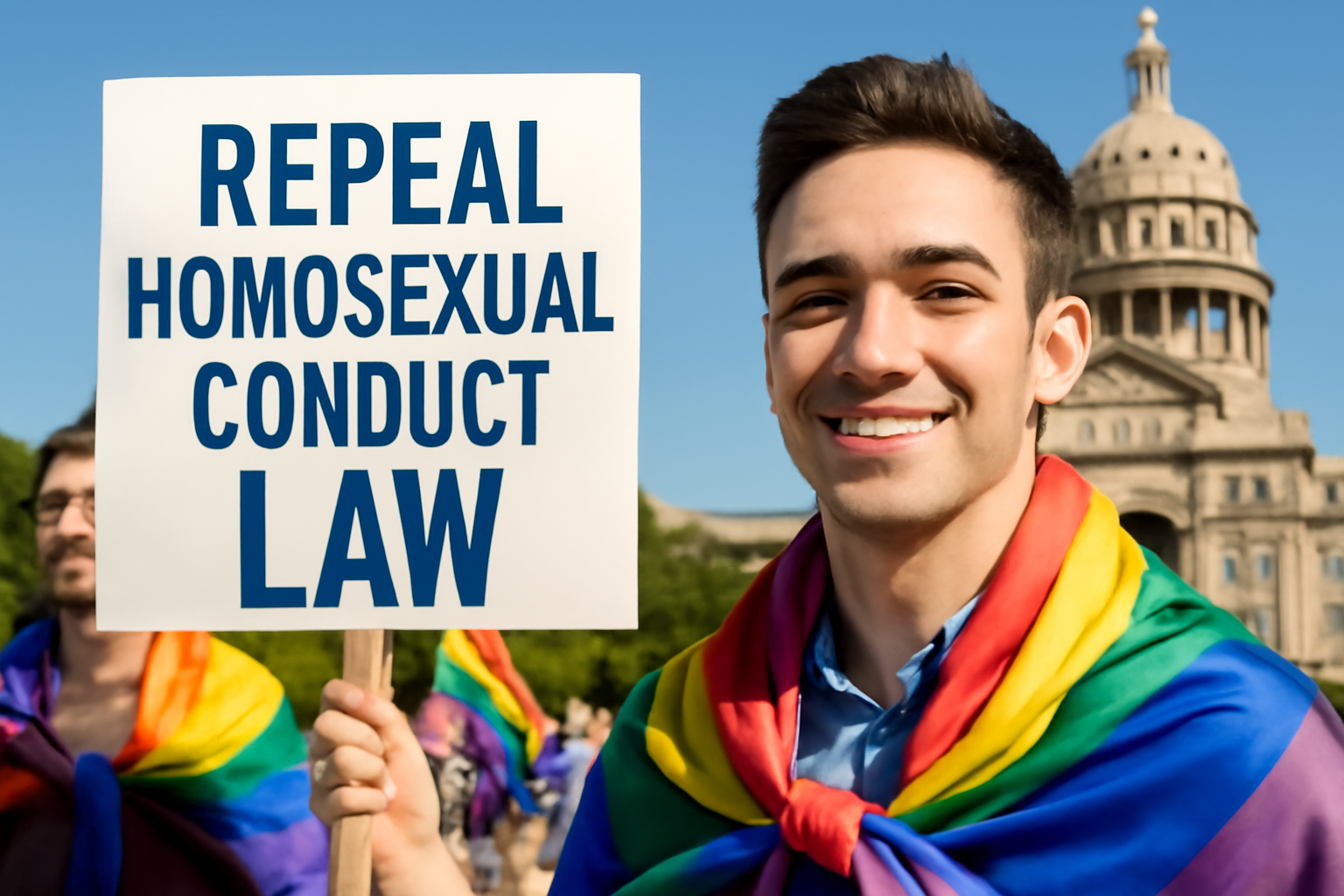
In a significant move toward justice and equality, lawmakers in Texas have taken decisive action to repeal an obsolete law targeting the LGBTQ+ community. This law, which has long been a point of contention, criminalized consensual intimate conduct between same-sex adults under the guise of "homosexual conduct." Despite being ruled unconstitutional by the United States Supreme Court in the landmark 2003 case Lawrence vs. Texas, the law has lingered on the Texas statute books. Now, over two decades later, Texas legislators are actively working to remove this outdated legislation once and for all.
The Supreme Court's decision in 2003 was a pivotal moment in the fight for LGBTQ+ rights, effectively nullifying sodomy laws across 13 states. However, in Texas, the infamous law dating back to 1973 continued to exist as a "zombie law," meaning it could not be enforced but remained in the legal code, a symbol of past discrimination. This type of legislation serves as a stark reminder of the systemic challenges faced by LGBTQ+ individuals in securing legal recognition and protection.
At the forefront of this movement to repeal the law is Texas Democrat Venton Jones, who has been instrumental in drafting and advocating for the bill's passage. Jones, along with co-authors Democrat Joe Moody and Republican Brian Harrison, has worked tirelessly to see the bill through the Texas House of Representatives. The legislation passed with a narrow vote margin of 59 to 56, following an initial approval with 72 in favor and 55 opposed. This bipartisan effort demonstrates a growing recognition that such laws have no place in modern society.
Brian Harrison, a Republican co-author of the bill, expressed his support for its passage, stating on social media that "Criminalizing homosexuality is not the role of government, and I support repealing it. I will continue fighting for limited government and individual liberty." His statement highlights an emerging consensus that government should not interfere in the personal lives of consenting adults, regardless of political affiliation.
Prominent figures such as Texas Senator Ted Cruz and Supreme Court Justice Clarence Thomas have also voiced their support for the repeal, adding to the chorus of voices calling for change. The outdated sodomy law has been criticized as a "harmful and unnecessary relic" by many, including Jones, who emphasized the importance of aligning Texas law with constitutional standards of liberty and dignity.
"This bill finally takes a stand for liberty, dignity, and constitutional clarity," Jones remarked. "We've now sent the strongest message yet: this law has no place in Texas statute. I am standing on the shoulders of people who have carried this bill before me, and that’s where I get my strength." His words reflect the determination and resilience of those who have long advocated for equal rights.
The bill now awaits consideration by the Texas Senate, although it remains uncertain when it will be brought to debate or whether Governor Greg Abbott, known for his conservative views, will ultimately sign it into law. Nonetheless, the passage of this bill through the House marks a significant step forward and offers hope for further progress in the fight for LGBTQ+ rights.
This development is a pivotal moment for LGBTQ+ individuals in Texas and across the United States, signaling a shift toward greater acceptance and equality. As the conversation continues, it is crucial to maintain respect and understanding, recognizing the diverse perspectives and experiences within the community.
We invite you to share your thoughts and engage in this dialogue. Let us know what you think about this legislative change and how it might impact the broader fight for LGBTQ+ rights. Remember, respectful and thoughtful conversation is key to building a more inclusive future for everyone.
Related Posts
Supreme Court to Address State Bans on Trans Women in Female Sports
The upcoming U.S. Supreme Court term promises to be a pivotal moment for transgender rights, as the nation's highest court has agreed to evaluate whether states have the authority to prohibit transgender women from participating in female sports competitions. This case, scheduled to be argued in the next term beginning October, is expected to have a significant impact on the future of sports inclu [...]
Megan Rapinoe and Sue Bird Announce Amicable Separation After Ten Years Together
In a heartfelt announcement that resonated deeply within the sports and LGBTQ+ communities, soccer star Megan Rapinoe and basketball legend Sue Bird have revealed their decision to part ways after nearly a decade together. The couple, who have been icons both on and off the field, shared the news with their fans through a joint statement on social media, expressing that the choice was made with mu [...]
Groundbreaking Ruling Ends Sodomy Ban for Police and Military in the Dominican Republic
The Constitutional Court of the Dominican Republic recently delivered a landmark decision on November 18th, ruling that the nation’s police and armed forces are not permitted to criminalize consensual same-sex relations among their personnel. This pivotal ruling is a significant stride towards equality and the protection of LGBTQ+ rights within these institutions. A Resounding Victory for Equal [...]