
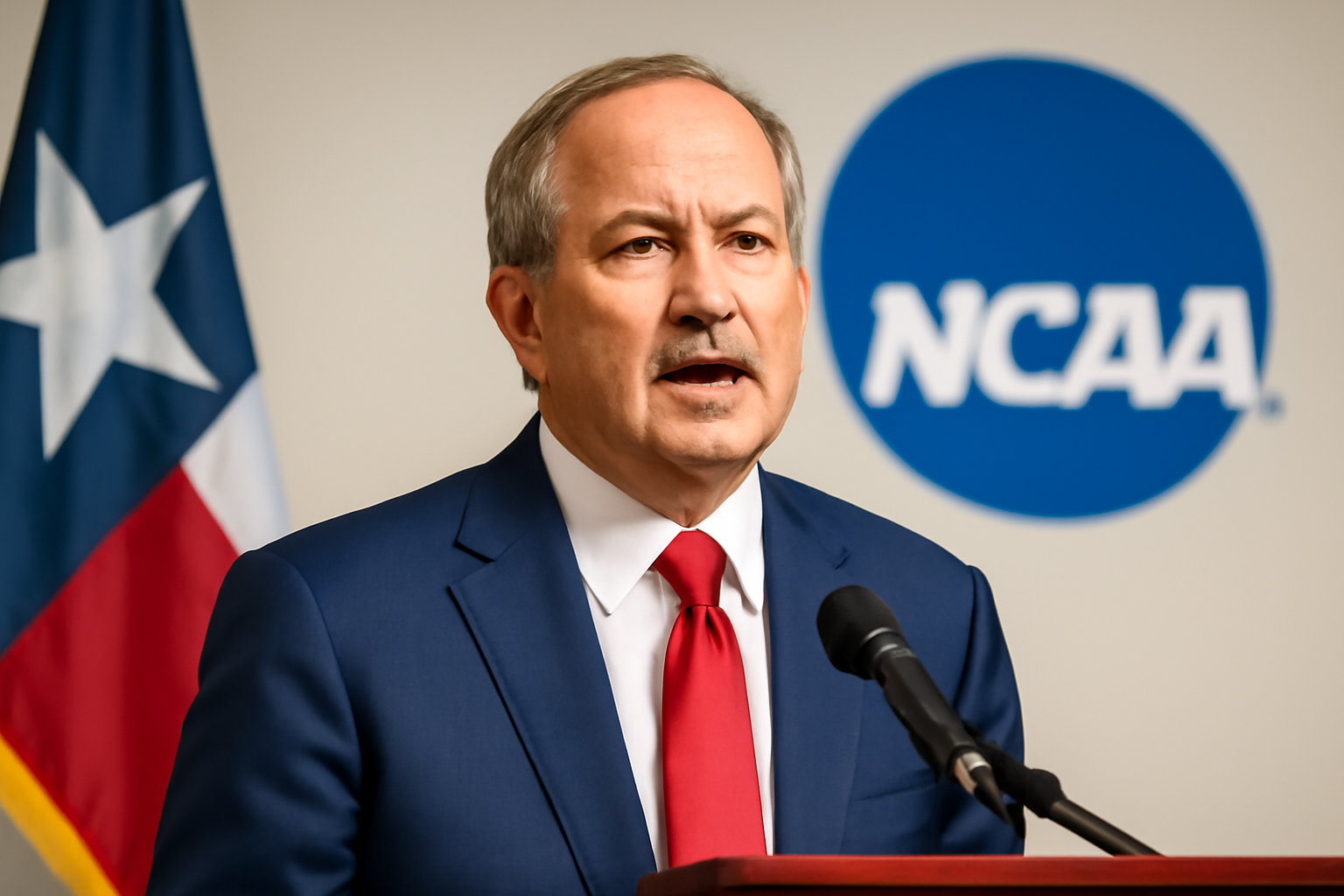
Texas Attorney General Ken Paxton has initiated a legal challenge against the National Collegiate Athletic Association (NCAA), demanding that the organization conduct medical examinations to verify the biological sex of college athletes. The specifics of how such examinations would be conducted remain vague, raising numerous questions and concerns.
The NCAA recently enacted policies prohibiting transgender women from participating on women’s sports teams, aligning with a perceived need to maintain fairness in women’s sports. However, Paxton's lawsuit argues that the NCAA's current lack of sex verification could allow individuals he describes as "biological males" to compete in women’s sports categories.
Paxton's statements reflect a broader political backdrop: the NCAA’s policy changes came amidst pressure from an executive order issued during Donald Trump's presidency. This order warned educational institutions against allowing transgender athletes to compete in women's sports, and called for sports bodies to establish anti-transgender guidelines.
Nevertheless, Paxton and other critics maintain that the NCAA has not fully complied with these directives and continue to accuse the organization of misleadingly suggesting that its competitions are exclusive to "biological women." Paxton claims that this misrepresentation deceives the public and calls for judicial intervention to prevent perceived "deceptive schemes" that he argues undermine women’s sports.
The NCAA has countered these accusations, emphasizing that their policy explicitly restricts athletes assigned male at birth from competing on women’s teams, irrespective of any amended identity documents. They note that a very small fraction, only ten out of over half a million student-athletes, identify as transgender.
Broader Implications for Transgender Athletes
This legal battle is part of a wider national discussion about the inclusion of transgender athletes in sports. Proponents of trans inclusion argue that denying transgender individuals the opportunity to participate in sports contradicts the core values of fairness and equality. An open letter signed by over 400 current and former NCAA athletes, including notable figures like Megan Rapinoe and Sue Bird, urged the NCAA to uphold these principles by supporting transgender athletes.
Critics of gender testing policies argue that such measures can be invasive and discriminatory, disproportionately affecting transgender and intersex athletes. Additionally, policies based on chromosomal testing could face significant scrutiny, given the complexities surrounding biological sex characteristics. Intersex athletes, for example, may not fit neatly into binary gender categories due to natural variations in their chromosome patterns.
The Ongoing Debate
The controversy surrounding Paxton's lawsuit reflects a broader societal debate about gender, identity, and fairness in sports. While supporters of sex verification argue it ensures fair competition, opponents contend that it perpetuates harmful stereotypes and discrimination against transgender and non-binary individuals.
The debate is further complicated by international developments in sports governance. Organizations like World Athletics have introduced new guidelines for gender testing, reviving discussions about the ethics and efficacy of such practices. Critics argue that these measures are reminiscent of outdated policies that failed to respect athletes' privacy and autonomy.
As the legal proceedings unfold, the NCAA and its member institutions face the challenge of balancing regulatory compliance with inclusivity. Navigating these complex issues requires careful consideration of the rights and dignity of all athletes, regardless of gender identity.
In the meantime, the conversation continues to evolve, as athletes, policymakers, and advocates work towards solutions that honor the principles of fairness and respect for all individuals involved in collegiate sports.
Stay informed about the latest developments affecting LGBTQ+ communities by subscribing to our newsletter. Stay connected with important issues that impact you and the world around you.
Related Posts
Supreme Court to Address State Bans on Trans Women in Female Sports
The upcoming U.S. Supreme Court term promises to be a pivotal moment for transgender rights, as the nation's highest court has agreed to evaluate whether states have the authority to prohibit transgender women from participating in female sports competitions. This case, scheduled to be argued in the next term beginning October, is expected to have a significant impact on the future of sports inclu [...]
Megan Rapinoe and Sue Bird Announce Amicable Separation After Ten Years Together
In a heartfelt announcement that resonated deeply within the sports and LGBTQ+ communities, soccer star Megan Rapinoe and basketball legend Sue Bird have revealed their decision to part ways after nearly a decade together. The couple, who have been icons both on and off the field, shared the news with their fans through a joint statement on social media, expressing that the choice was made with mu [...]
Groundbreaking Ruling Ends Sodomy Ban for Police and Military in the Dominican Republic
The Constitutional Court of the Dominican Republic recently delivered a landmark decision on November 18th, ruling that the nation’s police and armed forces are not permitted to criminalize consensual same-sex relations among their personnel. This pivotal ruling is a significant stride towards equality and the protection of LGBTQ+ rights within these institutions. A Resounding Victory for Equal [...]