
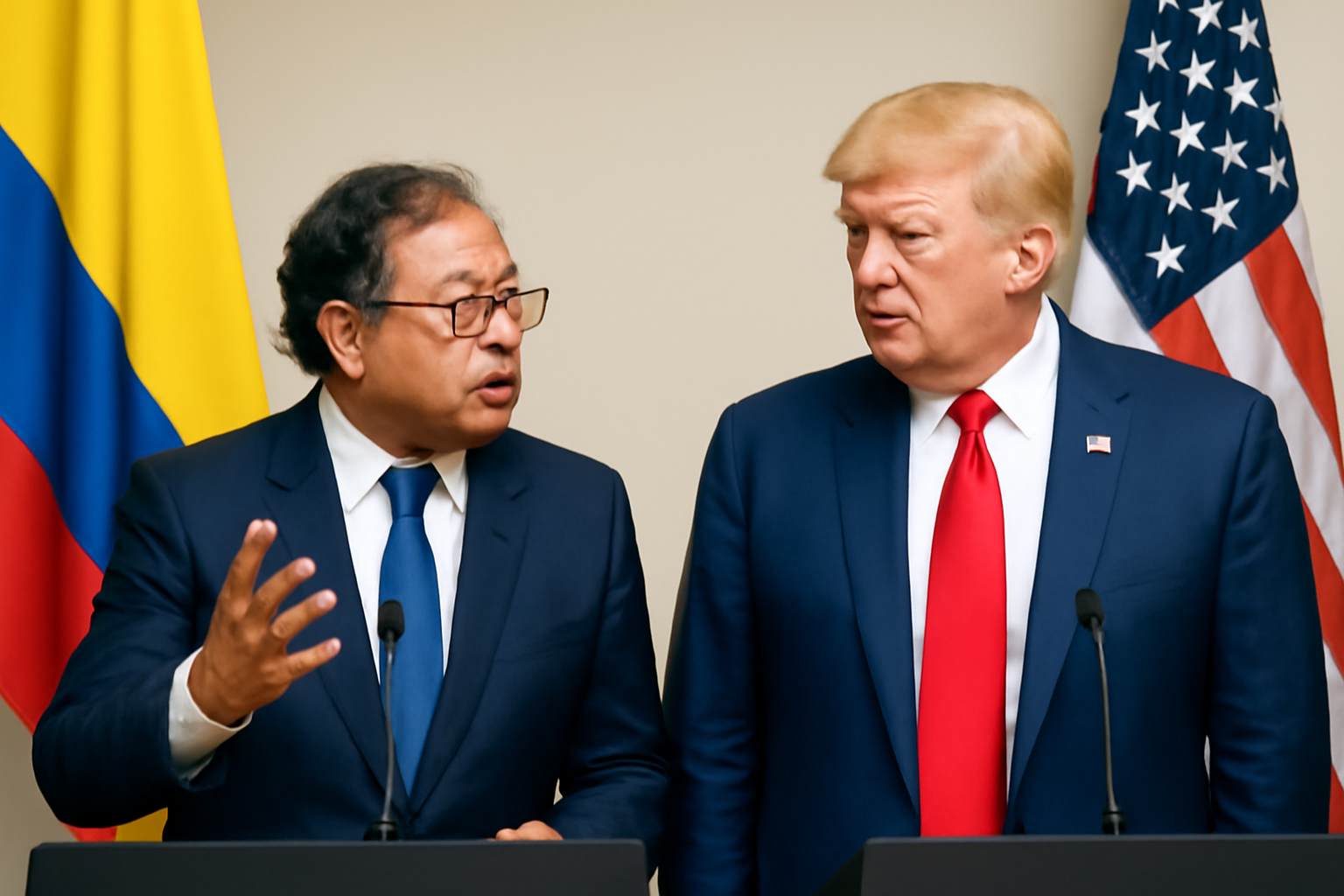
In a recent turn of events, the President of Colombia, Gustavo Petro, has made bold claims regarding former US President Donald Trump, accusing him of actions that could "wipe out the human species due to greed." This assertion comes amidst a heated disagreement between the two nations concerning tariffs and immigration policies.
The Root of the Conflict
The conflict began when Donald Trump, then the President of the United States, imposed a 25 percent tariff on all goods imported from Colombia. This was in retaliation for Colombia's decision to refuse the landing of two US military deportation flights within their borders. These flights were intended to deport individuals back to Colombia.
Colombian President Gustavo Petro initially responded to the situation by stating that Colombia would only accept deported citizens transported by civilian aircraft, as a way to ensure they were not treated as criminals. However, following Trump's implementation of tariffs, Colombia eventually conceded to accept deportees on US military flights, leading to the removal of the tariffs.
Petro's Strong Words
On social media, Petro directed a fierce critique towards Trump, arguing that Trump's actions were motivated by greed and could lead to catastrophic outcomes for humanity. He expressed disdain for certain American policies, stating that he did not care for their oil or the notion of traveling to the United States, which he described as "a bit boring."
Petro's comments went further, as he suggested that Trump was akin to "white slavers" and that any attempt by Trump to overthrow him would be met with resistance from "the Americas and humanity." He urged unity among communities, noting his admiration for the solidarity he witnessed among Black and Latino communities in Washington, D.C.
Future Relations and Dialogue
Despite the harsh rhetoric, Petro extended an olive branch, proposing a meeting with Trump "over a glass of whiskey" to discuss their differences. Nonetheless, he expressed skepticism about Trump's respect for Colombia and its people, and emphasized a resistance to any attempts to undermine Colombia's independence.
Petro's stance reflects a broader sentiment of asserting national sovereignty and dignity in the face of what he perceives as external pressures and exploitation.
LGBTQ+ Rights in Colombia
Amidst the political tensions, the issue of LGBTQ+ rights in Colombia surfaces as a parallel topic of interest. Colombia has made significant strides in terms of LGBTQ+ equality, having legalized same-sex marriage and adoption, and recognizing non-binary genders legally. However, challenges remain, such as the absence of a ban on conversion therapy.
In contrast, under Trump's administration, LGBTQ+ rights in the United States faced setbacks, with executive orders limiting the recognition of non-binary identities and reducing protections for LGBTQ+ individuals. These actions have been met with criticism from various advocacy groups, who see them as a step backward for human rights.
The Global Implications
The discourse between Colombia and the United States underlines broader themes of how immigration, trade policies, and human rights intersect in global politics. The tension is emblematic of the challenges faced when nations navigate complex relationships influenced by socioeconomic and cultural factors.
As the situation develops, it remains to be seen how both leaders and their respective countries will address these challenges, balancing national interests with international relations and human rights considerations.
In the comments below, we invite you to share your thoughts on this unfolding situation. Please keep the conversation respectful and considerate of different perspectives.
Related Posts
Supreme Court to Address State Bans on Trans Women in Female Sports
The upcoming U.S. Supreme Court term promises to be a pivotal moment for transgender rights, as the nation's highest court has agreed to evaluate whether states have the authority to prohibit transgender women from participating in female sports competitions. This case, scheduled to be argued in the next term beginning October, is expected to have a significant impact on the future of sports inclu [...]
Megan Rapinoe and Sue Bird Announce Amicable Separation After Ten Years Together
In a heartfelt announcement that resonated deeply within the sports and LGBTQ+ communities, soccer star Megan Rapinoe and basketball legend Sue Bird have revealed their decision to part ways after nearly a decade together. The couple, who have been icons both on and off the field, shared the news with their fans through a joint statement on social media, expressing that the choice was made with mu [...]
Groundbreaking Ruling Ends Sodomy Ban for Police and Military in the Dominican Republic
The Constitutional Court of the Dominican Republic recently delivered a landmark decision on November 18th, ruling that the nation’s police and armed forces are not permitted to criminalize consensual same-sex relations among their personnel. This pivotal ruling is a significant stride towards equality and the protection of LGBTQ+ rights within these institutions. A Resounding Victory for Equal [...]