
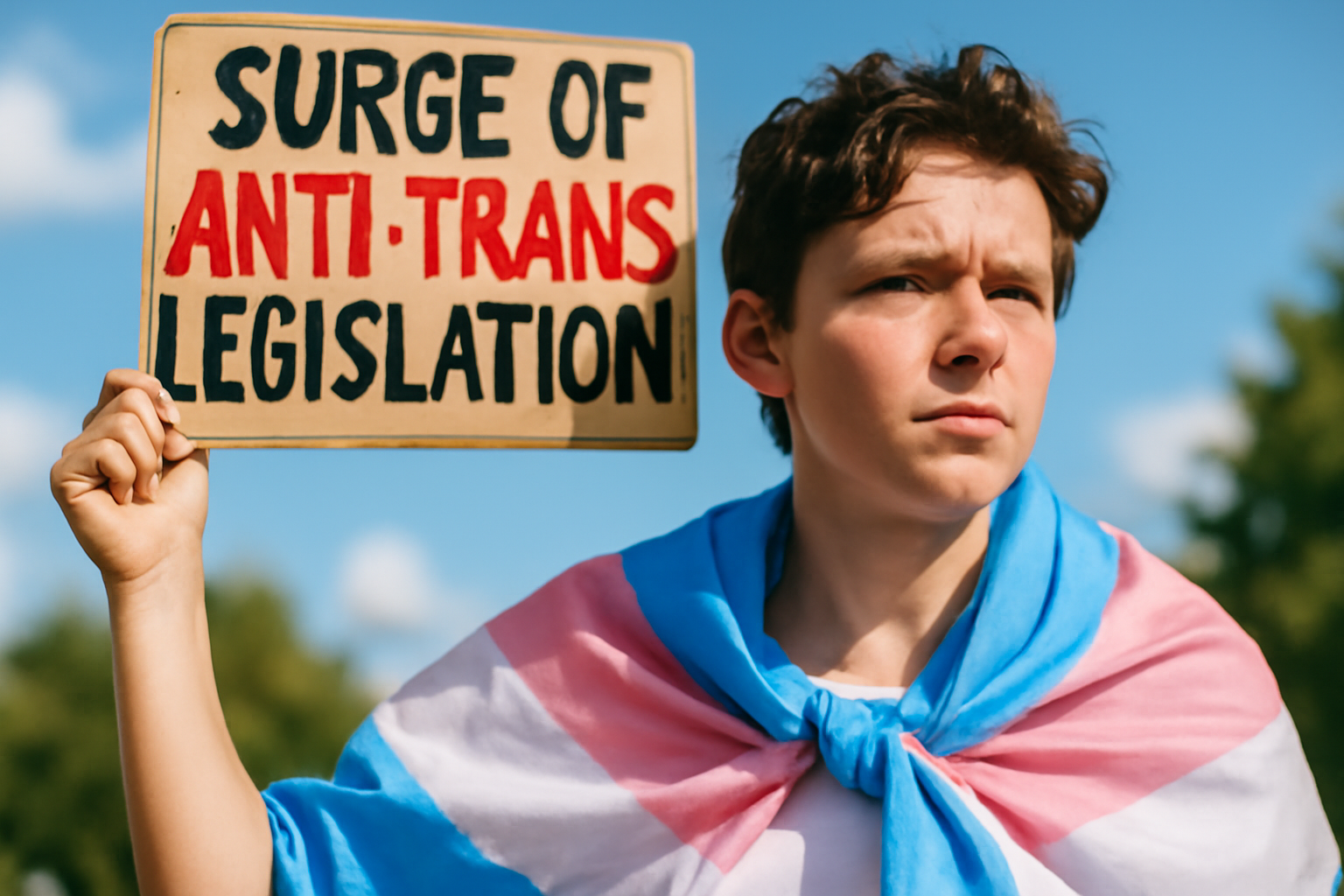
The landscape of transgender rights in the United States is facing unprecedented challenges as lawmakers push a wave of anti-trans bills. As noted by independent journalist Erin Reed, a record number of these bills have been introduced by Republican legislators before the dawn of 2025. This surge in legislative activity marks a significant increase in attempts to restrict the rights and recognition of transgender individuals, with nearly 120 bills proposed in just the past few months. In comparison, the same timeframe last year saw the introduction of approximately 80 such bills.
Reed, who collaborates with volunteers to track LGBTQ+ legislation nationwide, highlights that the majority of these bills originate from Texas and Missouri. However, the trend is not confined to these states alone. Other states, including Alabama, Arizona, Georgia, Indiana, Montana, Nevada, New Hampshire, Ohio, South Carolina, Washington, and Wyoming, have also filed similar bills.
Impact and Implications of Anti-Trans Legislation
The proposed bills vary in scope and severity, but all share a common theme of undermining the rights of transgender individuals. Some aim to revoke the legal recognition of transgender people, effectively forcing a detransition by barring them from updating gender markers on official documents like driver's licenses. In extreme cases, states such as Kansas have considered reverting gender marker changes that were made years ago, stripping away hard-won rights.
Bathroom bans have also emerged as a significant concern. These bills propose allowing legal action against transgender individuals who use restrooms that align with their gender identity. Such measures are viewed by many as blatant acts of discrimination and have sparked outrage among civil rights advocates.
In addition to bathroom bans, the wave of legislation includes book bans and sports bans. Many of these bills expand upon existing restrictions, further marginalizing transgender youth by restricting their participation in school sports or access to educational materials that affirm their identities.
Additional types of anti-trans legislation highlighted by Reed include bans on drag performances, mandates for forcibly outing transgender students, and "don't say gay" bills that seek to silence discussions of LGBTQ+ topics in educational settings. Restrictions on changing birth certificate and driver's license gender markers are also prevalent.
The Broader Context of Anti-Trans Rhetoric
This legislative push is symptomatic of a broader pattern of anti-trans rhetoric gaining momentum across the country. A recent study underscores the detrimental impact of such laws, revealing a direct correlation between these legislative actions and increased suicide attempts among transgender youth. As Republican lawmakers intensify their efforts to curtail transgender rights, the mental health and well-being of affected individuals are at risk.
President-elect Donald Trump has openly stated his intention to target transgender rights upon taking office, further exacerbating concerns about the future of LGBTQ+ protections in the United States. The potential rollback of rights poses a grave threat to the safety and dignity of millions of transgender Americans.
Resources and Support for the Transgender Community
In light of these challenges, support and resources for those affected by anti-trans legislation are more critical than ever. If you or someone you know is struggling or in crisis, help is available through various support networks. The National Suicide Prevention Lifeline can be reached by calling or texting 988, or through online chat at 988lifeline.org. The Trans Lifeline, accessible at 1-877-565-8860, is manned by transgender individuals and guarantees confidentiality without involving law enforcement. Additionally, The Trevor Project offers a safe space for LGBTQ+ youth via chat, text (678-678), or phone (1-866-488-7386), with services available in both English and Spanish.
Staying informed and engaged is crucial for those who wish to support the LGBTQ+ community during these challenging times. Subscribing to updates from LGBTQ advocacy organizations can help you stay connected to the issues and events that impact our community both at home and beyond. Together, we can work towards a future that respects and upholds the rights of all individuals, regardless of their gender identity.
Related Posts
Supreme Court to Address State Bans on Trans Women in Female Sports
The upcoming U.S. Supreme Court term promises to be a pivotal moment for transgender rights, as the nation's highest court has agreed to evaluate whether states have the authority to prohibit transgender women from participating in female sports competitions. This case, scheduled to be argued in the next term beginning October, is expected to have a significant impact on the future of sports inclu [...]
Megan Rapinoe and Sue Bird Announce Amicable Separation After Ten Years Together
In a heartfelt announcement that resonated deeply within the sports and LGBTQ+ communities, soccer star Megan Rapinoe and basketball legend Sue Bird have revealed their decision to part ways after nearly a decade together. The couple, who have been icons both on and off the field, shared the news with their fans through a joint statement on social media, expressing that the choice was made with mu [...]
Groundbreaking Ruling Ends Sodomy Ban for Police and Military in the Dominican Republic
The Constitutional Court of the Dominican Republic recently delivered a landmark decision on November 18th, ruling that the nation’s police and armed forces are not permitted to criminalize consensual same-sex relations among their personnel. This pivotal ruling is a significant stride towards equality and the protection of LGBTQ+ rights within these institutions. A Resounding Victory for Equal [...]