
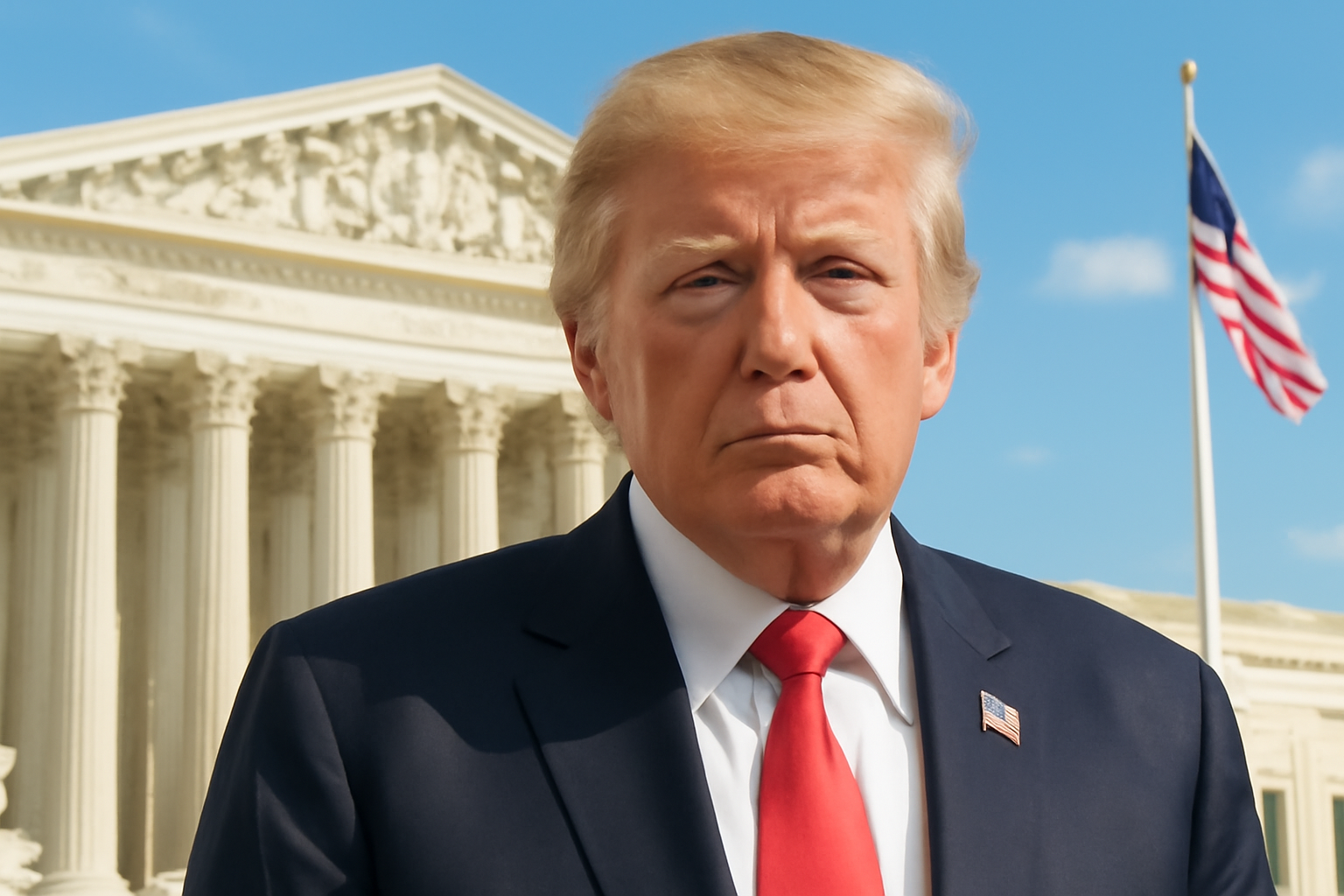
The Supreme Court has made a decisive judgment regarding former President Donald Trump's legal battles, denying a request to delay his sentencing. This decision solidifies his status as a convicted felon, raising numerous questions about the potential implications for his political future, particularly concerning any aspirations to return to the Oval Office.
A Landmark Decision
This momentous ruling from the nation's highest court marks a significant chapter in the ongoing legal saga surrounding Trump. The decision not to postpone the sentencing comes after months of intense legal maneuvers and public scrutiny. Observers from across the political spectrum have been keenly watching the developments, given the high stakes involved.
Legal experts suggest that the Supreme Court's refusal to grant a delay underscores the seriousness of the charges and the judicial system's commitment to uphold its decisions, irrespective of political stature. The implications of this ruling resonate beyond the courtroom, potentially affecting the broader political landscape.
Implications for Trump's Political Ambitions
With this ruling, Trump enters uncharted territory for a former U.S. president. The prospect of campaigning for office as a convicted felon introduces unprecedented variables into the political equation. Constitutional scholars and political analysts are divided on how this might unfold in practice.
The U.S. Constitution sets forth the qualifications for presidential candidates, focusing on age, residency, and citizenship. Notably, it does not explicitly bar individuals with criminal convictions from running. However, the political, ethical, and public perception dimensions of such a candidacy are complex. Voter trust and the broader political ramifications are likely to be hot topics leading up to the next election cycle.
Public Reaction and Political Ramifications
The news of the Supreme Court's decision has elicited varied reactions from the public, politicians, and commentators. Supporters of the former president argue that the legal proceedings are politically motivated, viewing the decision as part of a broader campaign against Trump. Conversely, critics assert that the ruling is a necessary affirmation of legal accountability and justice.
Analysts anticipate that this development will significantly impact the country's political discourse, influencing both the Republican Party's strategies and the broader electoral landscape. How will conservatives reconcile this reality with their political strategies? Will Trump's legal troubles galvanize his base, or will they fracture conservative support?
Beyond partisanship, the ruling might also reshape how future legal cases involving political figures are perceived and handled by the judiciary and the public alike.
The Road Ahead
As legal experts continue to dissect the ruling, its implications, and the potential subsequent appeals, the nation braces for what promises to be a complex intersection of law, politics, and public opinion. Trump's legal team is expected to explore all available avenues to appeal or mitigate the effects of his conviction, while political strategists on both sides of the aisle prepare for an unpredictable election cycle.
In the months and years to come, the discourse surrounding this ruling and its fallout will likely shape not only the upcoming elections but also the broader narrative of accountability and governance. Whether one views this as a moment of justice served or as a divisive political maneuver, the ramifications of the Supreme Court's decision will undoubtedly reverberate for years to come.
As the nation reflects on this pivotal moment, the fundamental questions of justice, democracy, and leadership are brought to the forefront, prompting a broader conversation about the future of American politics.
Stay tuned as this story develops and its impact unfolds across the political landscape.
Related Posts
Supreme Court to Address State Bans on Trans Women in Female Sports
The upcoming U.S. Supreme Court term promises to be a pivotal moment for transgender rights, as the nation's highest court has agreed to evaluate whether states have the authority to prohibit transgender women from participating in female sports competitions. This case, scheduled to be argued in the next term beginning October, is expected to have a significant impact on the future of sports inclu [...]
Megan Rapinoe and Sue Bird Announce Amicable Separation After Ten Years Together
In a heartfelt announcement that resonated deeply within the sports and LGBTQ+ communities, soccer star Megan Rapinoe and basketball legend Sue Bird have revealed their decision to part ways after nearly a decade together. The couple, who have been icons both on and off the field, shared the news with their fans through a joint statement on social media, expressing that the choice was made with mu [...]
Groundbreaking Ruling Ends Sodomy Ban for Police and Military in the Dominican Republic
The Constitutional Court of the Dominican Republic recently delivered a landmark decision on November 18th, ruling that the nation’s police and armed forces are not permitted to criminalize consensual same-sex relations among their personnel. This pivotal ruling is a significant stride towards equality and the protection of LGBTQ+ rights within these institutions. A Resounding Victory for Equal [...]