
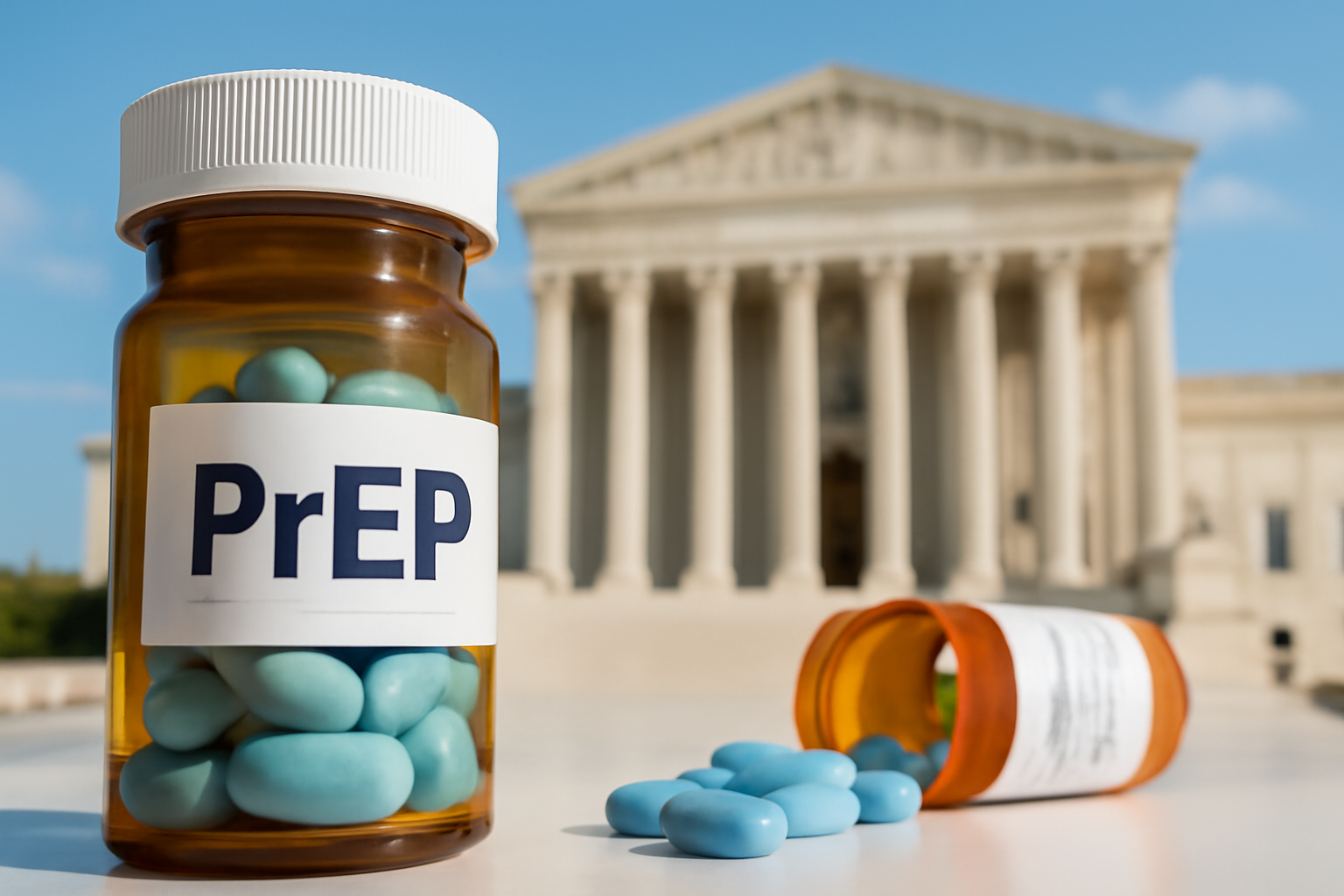
The United States Supreme Court recently engaged in deliberations over a critical case concerning the obligation of private businesses to provide insurance coverage for HIV-prevention medication to their employees. This case, originating from objections raised in Texas regarding the prescription of pre-exposure prophylaxis (PrEP), has now taken on national significance. At stake is the potential dismantling of critical provisions within the Affordable Care Act (ACA), commonly referred to as Obamacare.
Currently, the ACA mandates that health insurers and group health plans offer "preventive health services" without additional costs to patients. However, the act does not explicitly list these services, instead delegating the responsibility to the US Preventive Services Task Force (PSTF), an independent body of experts, to determine which services must be covered by insurers.
Case Brought by Braidwood Management
The initial lawsuit was filed by Braidwood Management, which refused to cover the cost of PrEP for its employees, citing religious objections. The company argued that subsidizing such medication could be seen as endorsing behaviors such as "homosexual activity, intravenous drug use, and sexual relations outside of a heterosexual marriage."
This case has escalated to the Supreme Court and now challenges a wide range of ACA preventive coverage requirements, including vital services like cancer screenings, heart disease prevention, and diabetes testing. If the court rules in favor of Braidwood, the preventive service protection clause within the ACA could be severely weakened, potentially stripping back essential funding for life-saving treatments across a broad spectrum of illnesses and conditions.
Legal Arguments and Implications
Representing Braidwood in court, attorney Jonathan Mitchell, who has previously served under President Donald Trump, contended that the PSTF should operate "independently" and not be influenced by political forces. However, this argument faced skepticism from some justices. Justice Sonia Sotomayor challenged Mitchell’s interpretation, suggesting that "independence" does not equate to complete autonomy from oversight, much like how her own law clerks operate independently but under her guidance.
Justice Neil Gorsuch raised the possibility of remanding the case to a lower court to assess whether the Secretary of Health has the authority to appoint and remove members of the PSTF.
Broader Impact on Public Health
Jose Abrigo, Director of the HIV Project at Lambda Legal, emphasized the broader implications of the case, stating it is fundamentally a question of whether scientific evidence or political ideologies will shape national public health policy. He warned that allowing religious or ideological objections to override scientific consensus could set a dangerous precedent, affecting not just LGBTQ+ individuals but the foundational elements of the ACA.
Sarah Kate Ellis, President and CEO of GLAAD, highlighted the hearing as a "pivotal moment" for the healthcare rights of all Americans, arguing that the case is fueled by discriminatory motives against life-preserving healthcare. She asserted that religious exceptions should not be used to undermine healthcare protections or limit access to essential preventive care for all citizens.
The Stakes for PrEP and Prevention
Jeremiah Johnson, Executive Director of PrEP4All, expressed hope that ACA protections would remain intact but cautioned that the fight was not yet over. He noted that if these protections were rescinded, over 150 million people might face significant financial burdens to maintain access to necessary healthcare services. Johnson cited research indicating that even a small increase in medication costs, such as $10, could dramatically increase the abandonment rates of PrEP, a critical tool in the fight against HIV.
The potential loss of PrEP access could reverse recent strides made in reducing new HIV infections across the United States. This case underscores the importance of maintaining robust prevention measures as part of national healthcare policy.
As the nation awaits the Supreme Court’s decision, the implications for public health, healthcare policy, and the rights of individuals to access preventive care hang in the balance. The court's ruling could redefine the scope of healthcare coverage and influence the future trajectory of public health in America.
Join the discussion and share your thoughts below. We encourage a respectful and constructive dialogue.
Related Posts
Supreme Court to Address State Bans on Trans Women in Female Sports
The upcoming U.S. Supreme Court term promises to be a pivotal moment for transgender rights, as the nation's highest court has agreed to evaluate whether states have the authority to prohibit transgender women from participating in female sports competitions. This case, scheduled to be argued in the next term beginning October, is expected to have a significant impact on the future of sports inclu [...]
Megan Rapinoe and Sue Bird Announce Amicable Separation After Ten Years Together
In a heartfelt announcement that resonated deeply within the sports and LGBTQ+ communities, soccer star Megan Rapinoe and basketball legend Sue Bird have revealed their decision to part ways after nearly a decade together. The couple, who have been icons both on and off the field, shared the news with their fans through a joint statement on social media, expressing that the choice was made with mu [...]
Groundbreaking Ruling Ends Sodomy Ban for Police and Military in the Dominican Republic
The Constitutional Court of the Dominican Republic recently delivered a landmark decision on November 18th, ruling that the nation’s police and armed forces are not permitted to criminalize consensual same-sex relations among their personnel. This pivotal ruling is a significant stride towards equality and the protection of LGBTQ+ rights within these institutions. A Resounding Victory for Equal [...]