
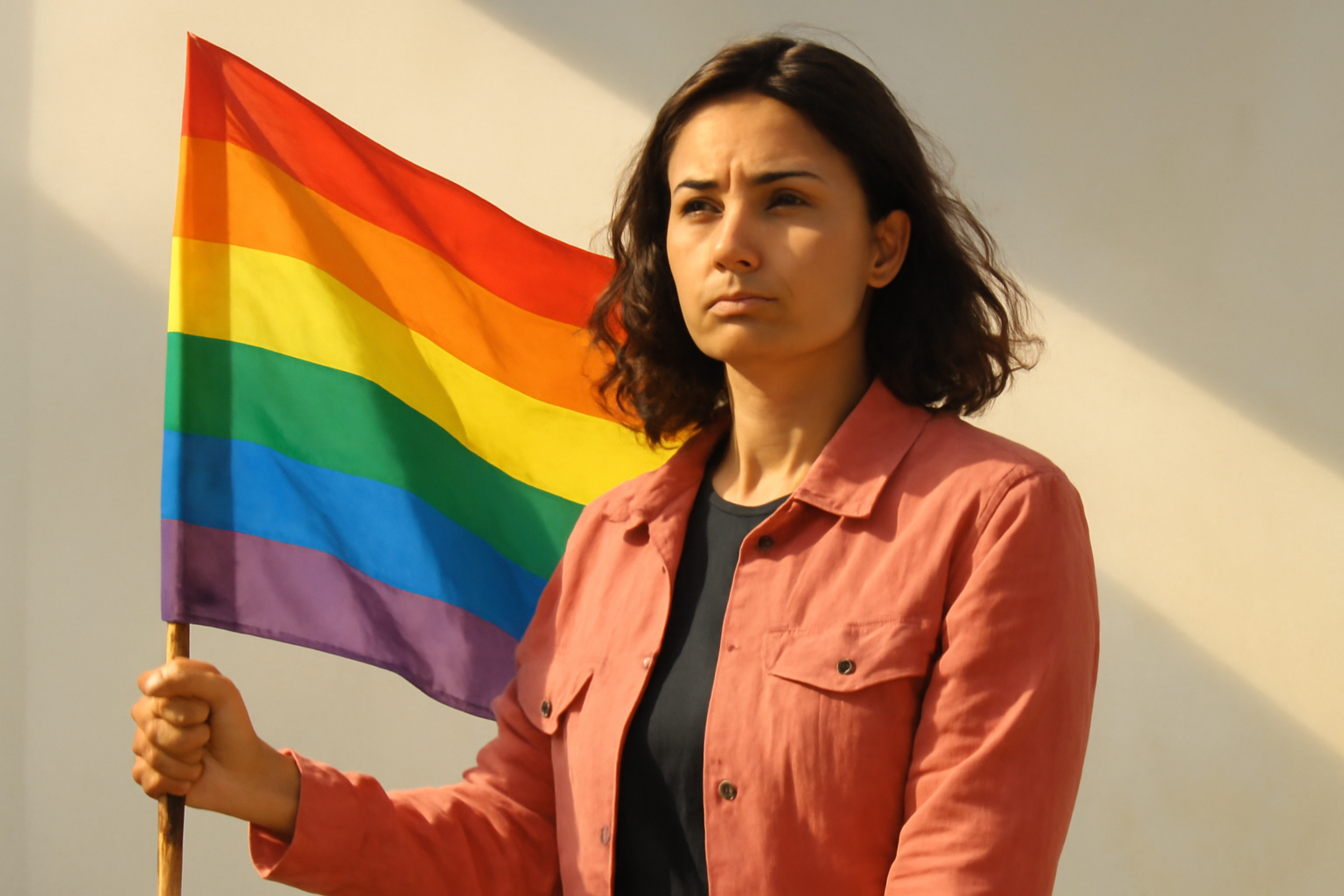
As we unite to honor LGBTQ+ History Month, it is crucial to urge the government to prioritize compassion over cruelty towards LGBTQI+ individuals seeking refuge in the UK, writes Leila Zadeh, executive director of the UK charity Rainbow Migration.
Over the past thirty years, significant milestones have been achieved in establishing protections for LGBTQI+ individuals moving to the UK to escape persecution. Despite these advancements, these protections remain under constant threat.
In the early 1990s, lesbian, gay, and bisexual couples, alongside their legal advocates, campaigned tirelessly to allow partners of British citizens to remain in the UK, leading to the formation of Rainbow Migration, initially called the Stonewall Immigration Group.
Relentless campaigning led to the Unmarried Partners Concession in 1997, marking the first positive legal recognition of same-sex couples in British law. This paved the way for the Civil Partnership Act (2004) and the Marriage Act (2013).
Rainbow Migration provides both practical and emotional support for LGBTQI+ individuals seeking asylum. However, it wasn't until nearly five decades after the 1951 Refugee Convention that LGBTQI+ individuals were recognized as eligible for refugee protection. Restrictive interpretations initially denied them safety until 1999, when UK courts, pressured by advocacy groups, formally acknowledged LGBTQI+ people as a social group eligible for asylum.
Warren, a gay man from Malaysia, became the first LGBTQI+ individual granted refugee status in the UK in 2000 after fleeing years of homophobic abuse. Over twenty years later, he still recalls the joy of that moment: "I was so happy because, for the first time, I felt human and whole again."
In 2010, the UK Supreme Court issued a landmark ruling in the case of HJ (Iran) and HT (Cameroon), affirming that no LGBTQI+ asylum seeker could be expected to hide their sexual orientation to avoid persecution in their home country.
Despite these hard-won protections, challenges persist, especially the daunting task of proving one's sexual orientation or gender identity during the asylum process. Many LGBTQI+ individuals, fleeing violence, only have their testimony as evidence. As Adams, a bisexual man from Ghana, expressed: “All I had was myself and my sexuality, but they said that wasn’t enough. It’s so difficult to get evidence of your sexuality.”
Recent regressive laws have exacerbated these challenges. The Nationality and Borders Act of 2022 introduced a higher standard of proof for refugees, demanding even more evidence from LGBTQI+ individuals, increasing the risk of their return to perilous situations.
The 2023 Illegal Migration Act allows the government to deny refugee protection based on the method of arrival in the UK, enabling indefinite detention deemed ‘reasonable’ by the government before deportation. Detention is a harrowing experience for anyone, but can be even more devastating for LGBTQI+ individuals who face homophobic bullying and abuse.
This law additionally denies refugee protection to individuals from a list of ‘safe’ countries, many of which remain dangerous for LGBTQI+ individuals, such as India, Albania, or Georgia. Noah, a gay man from Georgia granted refugee status in the UK a year ago, stated: “No one can know you are gay in Georgia. If people do, homophobic individuals will try to attack you.”
Time for Real Change
Recently, the government introduced its new Border Security, Immigration and Asylum Bill. While it includes measures like repealing the Safety of Rwanda Act, it largely continues the harsh policies of previous administrations.
However, change is still possible. As the bill moves through Parliament, the government faces a choice: will it transform the UK into a sanctuary for LGBTQI+ asylum seekers, or persist in turning away from the LGBTQI+ community?
Now is the time for genuine change. The government must commit to protecting LGBTQI+ individuals seeking sanctuary in the UK by fully repealing the Illegal Migration Act and the Nationality and Borders Act, and ending the detention of LGBTQI+ asylum seekers.
Leila Zadeh, executive director of Rainbow Migration, leads the charge in advocating for a safe haven for LGBTQI+ individuals seeking asylum in the UK.
Related Posts
Supreme Court to Address State Bans on Trans Women in Female Sports
The upcoming U.S. Supreme Court term promises to be a pivotal moment for transgender rights, as the nation's highest court has agreed to evaluate whether states have the authority to prohibit transgender women from participating in female sports competitions. This case, scheduled to be argued in the next term beginning October, is expected to have a significant impact on the future of sports inclu [...]
Megan Rapinoe and Sue Bird Announce Amicable Separation After Ten Years Together
In a heartfelt announcement that resonated deeply within the sports and LGBTQ+ communities, soccer star Megan Rapinoe and basketball legend Sue Bird have revealed their decision to part ways after nearly a decade together. The couple, who have been icons both on and off the field, shared the news with their fans through a joint statement on social media, expressing that the choice was made with mu [...]
Groundbreaking Ruling Ends Sodomy Ban for Police and Military in the Dominican Republic
The Constitutional Court of the Dominican Republic recently delivered a landmark decision on November 18th, ruling that the nation’s police and armed forces are not permitted to criminalize consensual same-sex relations among their personnel. This pivotal ruling is a significant stride towards equality and the protection of LGBTQ+ rights within these institutions. A Resounding Victory for Equal [...]