
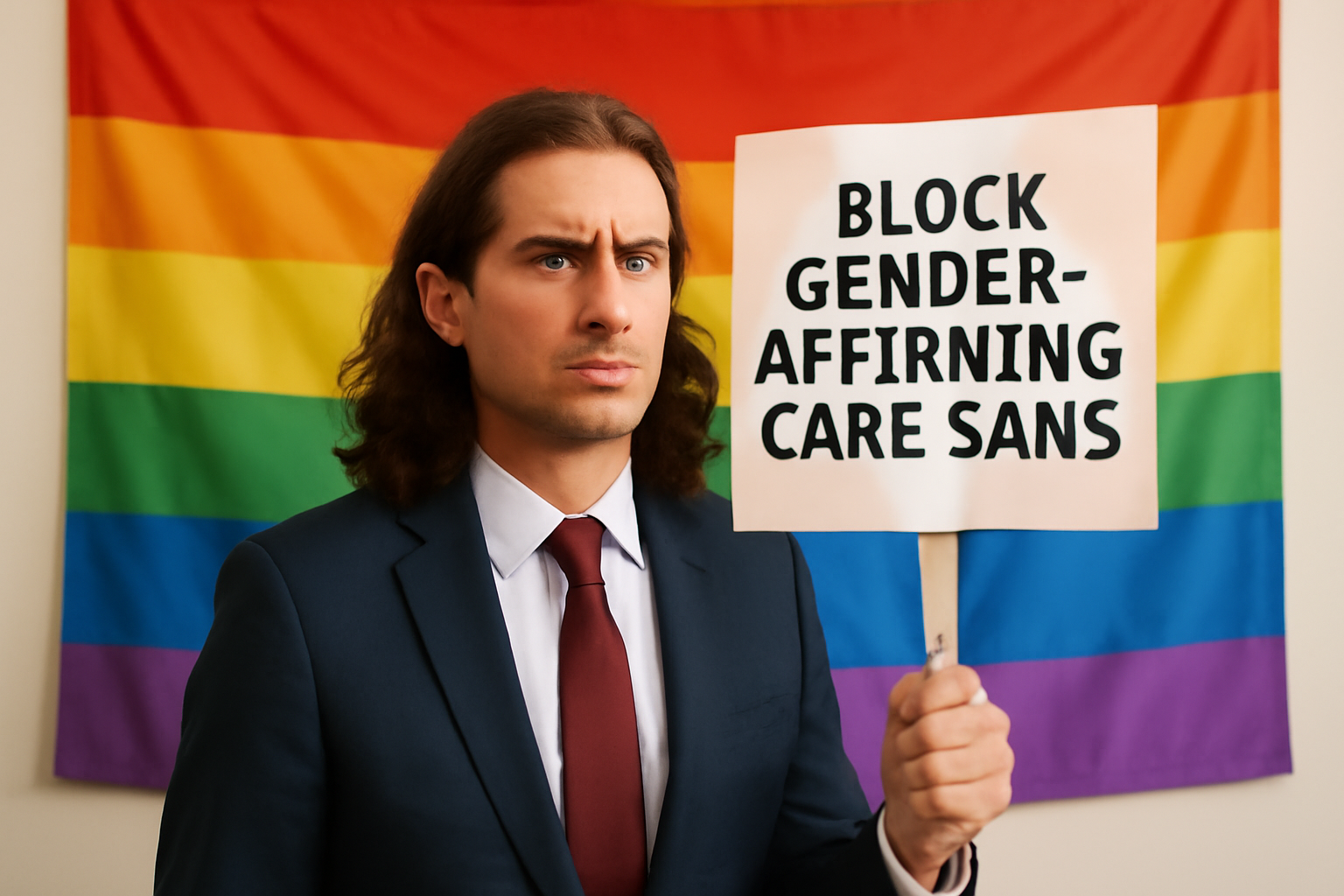
Recent events in U.S. Supreme Court have delivered a major setback in transgender rights, especially impacting minors seeking gender-affirming healthcare. By upholding Tennessee's ban, this 6-3 decision creates significant hurdles not just in Tennessee, but potentially in over 20 other states considering similar laws.
The fight continues
Chase Strangio, a prominent attorney representing those affected, underscores that this ruling doesn't mark an end. It's a bump in a long road, but there are still ways forward legally. The battle isn't over yet.
At University North Carolina School Law, Professor Holning Lau, who's renowned in equality rights, has mapped out strategies in response. He believes it's vital not let this ruling be final word on matter.
One strategy Lau suggests includes a closer look at how these laws are interpreted, especially when it comes exceptions. Lau, along with his colleague Professor Barbara Fedders, points out that exceptions allowing certain medical procedures intersex infants might undermine arguments against gender-affirming care transgender youth. These exceptions expose underlying sex stereotypes and unjustified fears, which could be attacked using animus doctrine.
Unpacking legal precedents and arguments
Animus doctrine has been a game-changer in progress LGBTQ rights before—just look at landmark cases like U.S. v. Windsor and Romer v. Evans, where laws rooted in bias were struck down. However, Lau cautions that today's more conservative Supreme Court might make these arguments riskier.
We also can't forget about 2020's Bostock v. Clayton County decision, where Court acknowledged sex-based discrimination covers gender identity and sexual orientation. Yet, Skrmetti decision didn't support this angle, a position Lau finds hard swallow.
Still, Lau sees room leverage this ruling. Lower courts may interpret Skrmetti as specifically about minors' medical treatment, leaving doors open in areas like military service or passport issues.
State-level moves and power parental rights
Beyond federal courtrooms, Lau highlights state constitutions as promising battlegrounds—Montana's a case success here. Each state's constitution comes with its unique language and judicial takes.
Parental rights are another compelling path. Recently, a federal judge Idaho put state ban on hold, citing parents' fundamental right make healthcare choices their children.
Whether parental rights or animus claims carry more weight varies, depending on evidence and legal nuance in each case.
What lies ahead: The path forward
In post-Skrmetti era, challenges abound. Lau points out past Supreme Court decisions, like Geduldig v. Aiello, which he believes rely on dated logic. Despite hurdles, hope persists among legal minds and activists, who seek new ways challenge these healthcare bans.
Lau stresses ongoing advocacy's importance, exploring how transgender and intersex rights intersect. Specific exceptions in these laws not only reveal legal frailties, but also have significant social ripple effects on transgender and intersex young people.
As legal battles rage on, families find themselves navigating tricky state laws, sometimes needing relocate access necessary care. It's a tough fight, but staying alert and resilient in fight transgender rights remains key.
Tags: Gender-Affirming Healthcare, Transgender Rights, Supreme Court Decision, Legal Strategies, Parental Rights
Related Posts
Supreme Court to Address State Bans on Trans Women in Female Sports
The upcoming U.S. Supreme Court term promises to be a pivotal moment for transgender rights, as the nation's highest court has agreed to evaluate whether states have the authority to prohibit transgender women from participating in female sports competitions. This case, scheduled to be argued in the next term beginning October, is expected to have a significant impact on the future of sports inclu [...]
Megan Rapinoe and Sue Bird Announce Amicable Separation After Ten Years Together
In a heartfelt announcement that resonated deeply within the sports and LGBTQ+ communities, soccer star Megan Rapinoe and basketball legend Sue Bird have revealed their decision to part ways after nearly a decade together. The couple, who have been icons both on and off the field, shared the news with their fans through a joint statement on social media, expressing that the choice was made with mu [...]
Groundbreaking Ruling Ends Sodomy Ban for Police and Military in the Dominican Republic
The Constitutional Court of the Dominican Republic recently delivered a landmark decision on November 18th, ruling that the nation’s police and armed forces are not permitted to criminalize consensual same-sex relations among their personnel. This pivotal ruling is a significant stride towards equality and the protection of LGBTQ+ rights within these institutions. A Resounding Victory for Equal [...]