
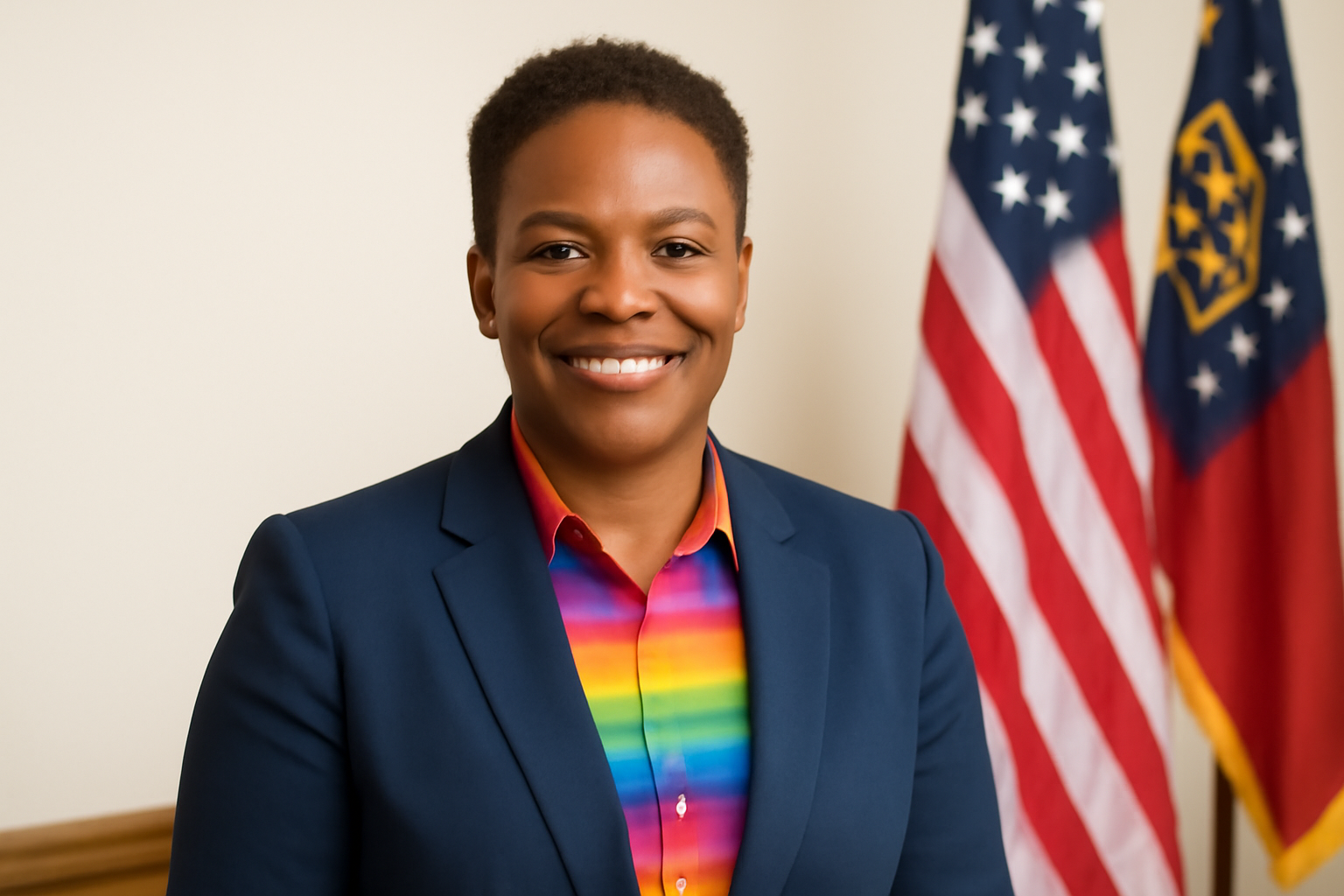
In a bold move to ensure fairness in sports, Georgia State Senator Kimberly Jackson has introduced a new bill that seeks to equalize funding and resources for girls’ and women’s sports teams statewide. This initiative comes against the backdrop of ongoing debates concerning transgender athletes in sports, notably highlighted by former President Donald Trump's executive order aimed at banning transgender women from competing in women's sports.
Senator Jackson, who is the first openly gay senator in Georgia, has positioned her bill as a counter-narrative to the increasingly prevalent "Fair and Safe Athletic Opportunities Act" promoted by the GOP. This act restricts students from joining sports teams that do not align with the gender on their birth certificates. Though ostensibly about fairness, critics argue that it targets transgender athletes unfairly and could inadvertently impact cisgender girls who participate in traditionally male sports.
Introducing "Equal Opportunities in Girls’ Sports"
Jackson's proposed legislation, titled "Equal Opportunities in Girls’ Sports," demands equitable treatment in terms of funding and facilities for girls’ sports teams compared to their male counterparts. This would cover aspects such as salary parity for coaches, adequate equipment provision, and fair scheduling for games and practice sessions.
"We need to have an honest discussion about the real issues affecting women’s sports," Jackson stated. "For instance, in some areas, girls’ soccer teams are given minimal equipment like only six soccer balls, and they often have to fundraise just to get the basics they need. Meanwhile, boys’ teams receive significantly more resources without these hurdles."
The bill also highlights the disparities in coaching roles, where girls’ sports often have non-specialist teacher supervisors due to the lower pay, compared to the professional coaches employed for boys’ teams. "It’s unacceptable that girls’ coaches, who often put in more work, are paid a fraction of what boys’ football coaches receive," Jackson remarked.
The Political Climate and Challenges Ahead
The introduction of this bill places Republican lawmakers in a complex situation where they must decide whether to support a measure that genuinely promotes women’s rights or risk appearing hypocritical. Given the GOP's historical stance on issues like Title IX, which safeguards against gender discrimination in federally funded education, there is skepticism about their commitment to gender equality in sports.
"While they claim to protect women by banning transgender athletes, they consistently overlook fundamental equity issues in sports," Jackson argued. "If they really cared about women’s sports, they would support our efforts to achieve true equality in funding and resources."
Senator Jackson’s background as an Episcopal priest adds a unique dimension to her advocacy. She has often engaged conservatives who oppose LGBTQ+ rights on religious grounds, challenging their interpretations of scripture and highlighting inconsistencies.
"My religious training allows me to counter arguments rooted in manipulated religious narratives," she explained. "I’ve seen a shift where my colleagues now use less explicitly religious rhetoric because they know I can contest it effectively."
The Road Ahead
Despite the slim chances of the bill’s passage through the GOP-dominated legislature, Jackson remains steadfast in her commitment to advocating for equitable treatment in sports. Her bill not only seeks to address gender disparities but also raises broader questions about the sincerity of political claims to support women’s rights.
Jackson's efforts have been met with both support and criticism, highlighting the polarized nature of the current political landscape concerning LGBTQ+ rights and gender equality.
"This is about more than just sports; it’s about sending a message that every young girl deserves the same opportunities as her male peers, without discrimination," Jackson concluded.
As debates continue, the significance of this bill transcends state lines, contributing to the national conversation about fairness, equality, and the role of politics in shaping sports policies.
Stay informed about developments in this story and more by subscribing to updates that explore the intersection of politics and LGBTQ+ issues.
Related Posts
Supreme Court to Address State Bans on Trans Women in Female Sports
The upcoming U.S. Supreme Court term promises to be a pivotal moment for transgender rights, as the nation's highest court has agreed to evaluate whether states have the authority to prohibit transgender women from participating in female sports competitions. This case, scheduled to be argued in the next term beginning October, is expected to have a significant impact on the future of sports inclu [...]
Megan Rapinoe and Sue Bird Announce Amicable Separation After Ten Years Together
In a heartfelt announcement that resonated deeply within the sports and LGBTQ+ communities, soccer star Megan Rapinoe and basketball legend Sue Bird have revealed their decision to part ways after nearly a decade together. The couple, who have been icons both on and off the field, shared the news with their fans through a joint statement on social media, expressing that the choice was made with mu [...]
Groundbreaking Ruling Ends Sodomy Ban for Police and Military in the Dominican Republic
The Constitutional Court of the Dominican Republic recently delivered a landmark decision on November 18th, ruling that the nation’s police and armed forces are not permitted to criminalize consensual same-sex relations among their personnel. This pivotal ruling is a significant stride towards equality and the protection of LGBTQ+ rights within these institutions. A Resounding Victory for Equal [...]