
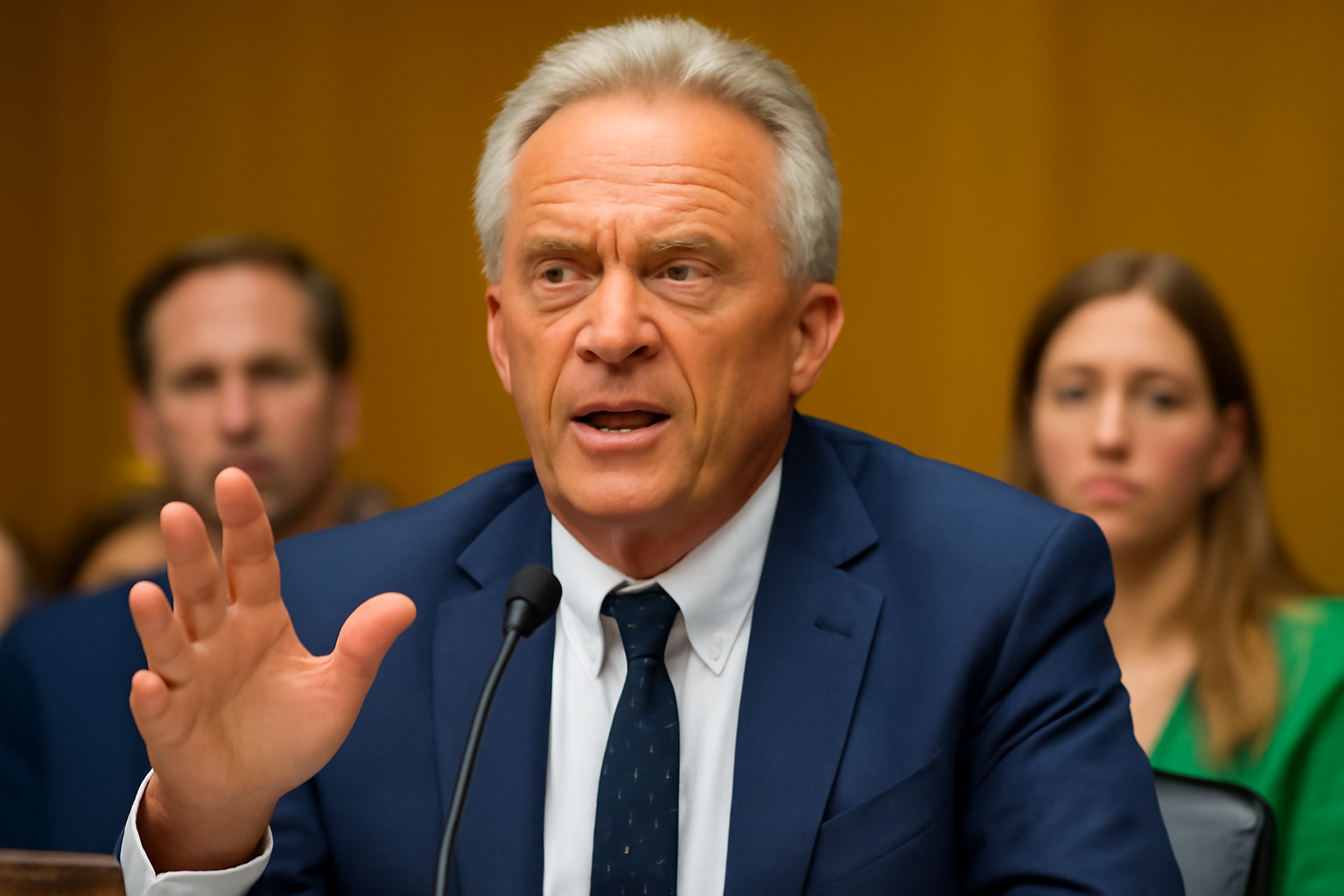
RFK Jr.'s Testimony Sparks Debate in Senate Confirmation Hearing
In a recent Senate confirmation hearing, Robert F. Kennedy Jr. made a series of contentious statements that have since become a topic of heated debate. Kennedy, who is known for his outspoken views on various public health issues, addressed the Senate during the hearing for a nominee to the Department of Health and Human Services (HHS). His remarks, particularly those suggesting a link between pesticide exposure and changes in gender identity, have attracted significant attention and criticism from multiple quarters.
The hearing was intended to evaluate the qualifications of the nominee for a high-ranking position in HHS. However, Kennedy's testimony shifted the focus towards his own controversial assertions. While Kennedy has a history of making claims that challenge established scientific consensus, his latest comments have raised eyebrows among both policymakers and the public. The suggestion that pesticides might influence or determine gender identity has been met with skepticism, as there is no scientific evidence to support such a claim.
The Scientific Perspective on Pesticides and Gender Identity
Experts in environmental science and gender studies have been quick to debunk Kennedy’s assertions. According to Dr. Emily Tran, a leading scientist in toxicology, the claim that pesticides could cause changes in sexual orientation or gender identity is without merit. "Pesticides can have various impacts on health, particularly if exposure levels are high or prolonged. However, there is no credible scientific study that links these chemicals to changes in gender identity," Tran stated.
Gender identity is understood to be a complex interplay of biological, environmental, and personal factors, but the notion that it can be altered by chemical exposure is not supported by current research. The American Psychological Association has also emphasized that gender identity is a deeply personal aspect of a person's identity and should not be trivialized by unsupported claims.
Responses from Advocacy Groups and Senators
Kennedy's comments have sparked outrage among LGBTQ+ advocacy groups, who argue that such statements are not only misleading but also harmful. "The idea that environmental factors like pesticides can influence someone's gender identity is not only scientifically inaccurate, but it also perpetuates harmful stereotypes," said Alex Rivera, spokesperson for the Trans Rights Coalition. "This kind of rhetoric undermines the legitimate experiences of transgender and gender-nonconforming individuals. It suggests that their identities are somehow the result of external influences rather than authentic expressions of self."
Several senators at the hearing also expressed their concerns. Senator Maria Lopez stated, "We must base our public health policies on sound science, not on unfounded theories. It is crucial that we rely on evidence-based research when discussing issues that affect the lives of millions of Americans."
The Broader Implications of Such Claims
Kennedy's remarks have broader implications beyond the immediate controversy. They highlight the ongoing challenges in public discourse around scientific topics, especially those intersecting with social issues. As misinformation can spread rapidly, it is crucial for public figures and policymakers to communicate responsibly, ensuring that their statements are backed by credible evidence.
In the current climate, where misinformation can easily gain traction, statements like Kennedy's can have significant repercussions. They can contribute to misunderstanding and discrimination against marginalized communities. This is why many advocates stress the importance of promoting accurate information and fostering a supportive environment for all individuals, regardless of gender identity.
While Kennedy remains a prominent figure with a platform to influence public opinion, it is essential for the scientific community and advocacy groups to continue their efforts in educating the public and policymakers about the complexities of gender identity and the importance of relying on scientific evidence in policy formulation.
Moving Forward
As the discussions around this hearing continue, it is hoped that the focus will return to the qualifications of the HHS nominee and the policies they aim to implement. In the meantime, Kennedy’s controversial statements serve as a reminder of the need for vigilance against the spread of misinformation and the importance of advocating for marginalized communities.
The ongoing discourse presents an opportunity to reinforce the significance of critical thinking and the role of science in informing policy decisions. Through open dialogue and education, there is potential to foster greater understanding and acceptance across all facets of society.
Related Posts
Supreme Court to Address State Bans on Trans Women in Female Sports
The upcoming U.S. Supreme Court term promises to be a pivotal moment for transgender rights, as the nation's highest court has agreed to evaluate whether states have the authority to prohibit transgender women from participating in female sports competitions. This case, scheduled to be argued in the next term beginning October, is expected to have a significant impact on the future of sports inclu [...]
Megan Rapinoe and Sue Bird Announce Amicable Separation After Ten Years Together
In a heartfelt announcement that resonated deeply within the sports and LGBTQ+ communities, soccer star Megan Rapinoe and basketball legend Sue Bird have revealed their decision to part ways after nearly a decade together. The couple, who have been icons both on and off the field, shared the news with their fans through a joint statement on social media, expressing that the choice was made with mu [...]
Groundbreaking Ruling Ends Sodomy Ban for Police and Military in the Dominican Republic
The Constitutional Court of the Dominican Republic recently delivered a landmark decision on November 18th, ruling that the nation’s police and armed forces are not permitted to criminalize consensual same-sex relations among their personnel. This pivotal ruling is a significant stride towards equality and the protection of LGBTQ+ rights within these institutions. A Resounding Victory for Equal [...]