
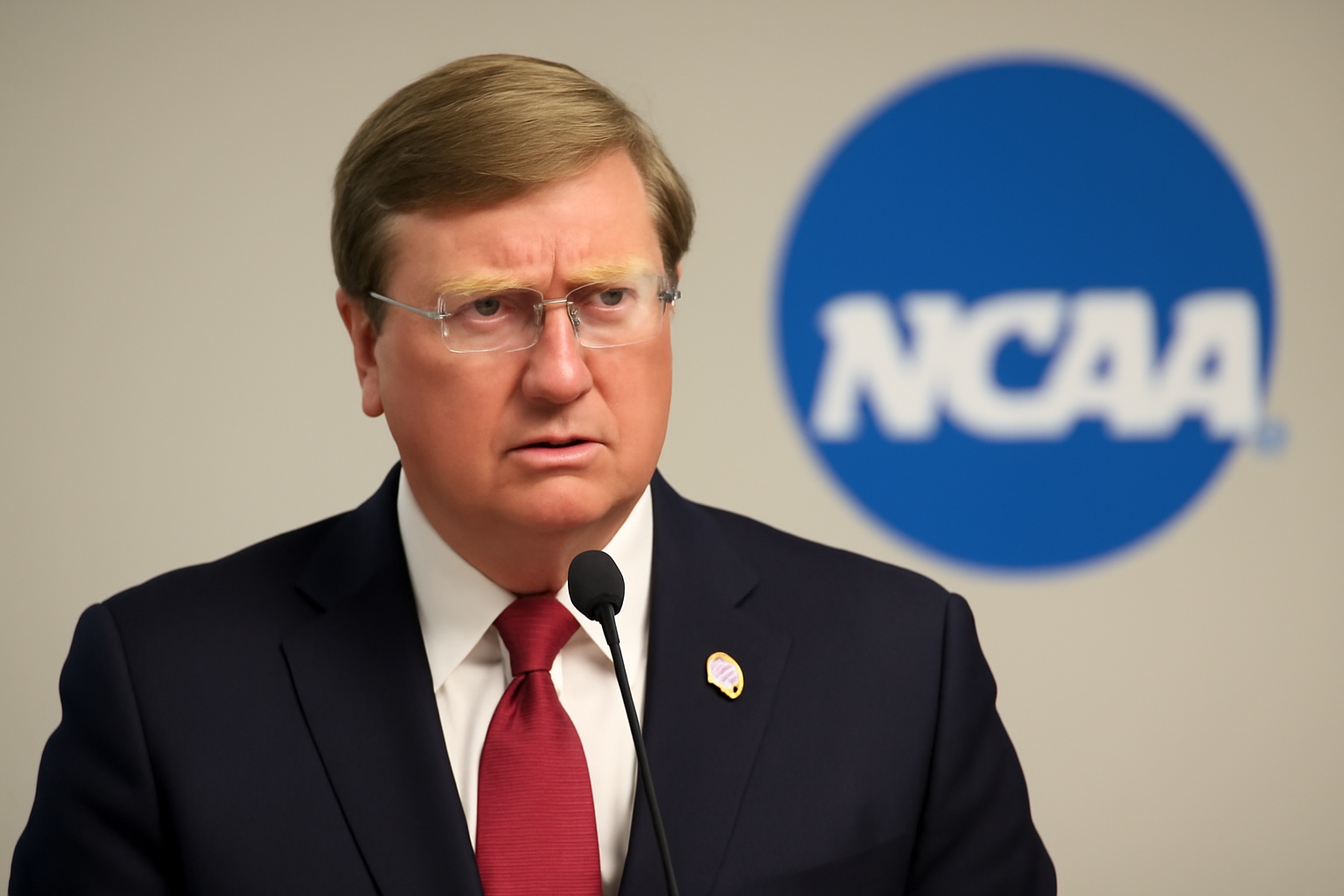
Recently, a group made up mostly by Republican state attorneys general has made a surprising request. They've asked NCAA President Charlie Baker if he could take back medals and titles that were given out in women's sports categories but won by transgender athletes. They want these awards returned back where they believe they belong—with female athletes who were originally in these competitions.
A strong plea from Mississippi
This push comes with Mississippi Attorney General Lynn Fitch leading a charge. The letter makes a straightforward demand: give back all championships, awards, records, and other accolades that were handed out, in their view, incorrectly, in NCAA women-only sports events. This really brings out a growing concern among conservative voices about transgender women joining female athletic competitions. This letter isn't a one-off—it fits with a broad sweep in response as more people grapple with this controversial topic.
What's happening with recent agreements?
Now, this letter didn't come out in isolation; it follows a recent deal involving UPenn and what some call a "Trump-Vance administration action." This led, controversially, perhaps, even painfully, Lia Thomas—a transgender former swimmer's records—being erased. That was part and parcel with a settlement that freed up $175 million in federal funds that had been tied up by alleged Title IX snags. In case you forgot, Title IX stops sex-based discrimination in education if federal money's on board.
What's really heartburn-inducing, though, per some in administration circles, letting transgender athletes play on women's teams might be exactly what's unfair, potentially putting cisgender female athletes at a disadvantage. They've pivoted from old policy and, boy, has this stirred up a hornet's nest.
Are we being fair about competitive fairness?
For those against transgender athletes in women's games, their argument hinges on a single tenet: fairness. Some say, even if transgender women undergo hormone therapy and other medical steps, they might still have a physical edge over cisgender women. Yet, just when you think you have a handle on it, research throws up its hands with mixed results, leaving us in a muddle over what exactly those medical treatments do in terms athletic ability.
On flip side, inclusive folks say, "Let them play!" If your gender identity says you're female, then off you go! They're calling out how essential equal opportunity and non-discrimination are, advocating that decisions here ought jump-off a springboard with scientific backing and established guidelines.
What broader policies mean
With all this swirling around, former President Donald Trump hasn't exactly sat quiet. He had a big spotlight moment, saying transgender athletes in women's sports shouldn't be a thing. Back in action, he put out an executive order with a clear headline: "No Men in Women's Sports," taking aim especially at inclusive states like Maine and California. His angle? It circles back, again, wrapping itself in Title IX, talking women's sports rights protection.
Then, adding another twist, just recently, U.S. Olympic and Paralympic Committee decided they weren't about allowing transgender athletes in women's events, at least not under our flag. It's a move that echoes how sports managing bodies are shifting as they wrestle with gender identity questions.
Legal battles on deck
Upcoming, it looks like things will heat up legally—big time. The U.S. Supreme Court's agreed they'll hear a case from Idaho questioning their ban on transgender athletes in women's events. We're looking at possibly huge ripples across sports policies in America, affecting how we define gender and rights when playing ball.
So, as debate rages on, folks on either side are digging in, championing what feels fair and just in sports arenas. Where sports, law, and gender identity cross paths, it remains a pretty tangled web with major consequences lined up, not just athletes, but all sports bodies alike.
To wrap it up, this move by Republican attorneys general pulls open and throws light on how sensitive and fraught transgender participation in women's sports still seems. As social and legal threads are woven deeper, everyone's keeping eyes peeled on aligning fairness, inclusivity, and competitive purity, whether it's on college fields or pro circuits.
Related Posts
Supreme Court to Address State Bans on Trans Women in Female Sports
The upcoming U.S. Supreme Court term promises to be a pivotal moment for transgender rights, as the nation's highest court has agreed to evaluate whether states have the authority to prohibit transgender women from participating in female sports competitions. This case, scheduled to be argued in the next term beginning October, is expected to have a significant impact on the future of sports inclu [...]
Megan Rapinoe and Sue Bird Announce Amicable Separation After Ten Years Together
In a heartfelt announcement that resonated deeply within the sports and LGBTQ+ communities, soccer star Megan Rapinoe and basketball legend Sue Bird have revealed their decision to part ways after nearly a decade together. The couple, who have been icons both on and off the field, shared the news with their fans through a joint statement on social media, expressing that the choice was made with mu [...]
Groundbreaking Ruling Ends Sodomy Ban for Police and Military in the Dominican Republic
The Constitutional Court of the Dominican Republic recently delivered a landmark decision on November 18th, ruling that the nation’s police and armed forces are not permitted to criminalize consensual same-sex relations among their personnel. This pivotal ruling is a significant stride towards equality and the protection of LGBTQ+ rights within these institutions. A Resounding Victory for Equal [...]