
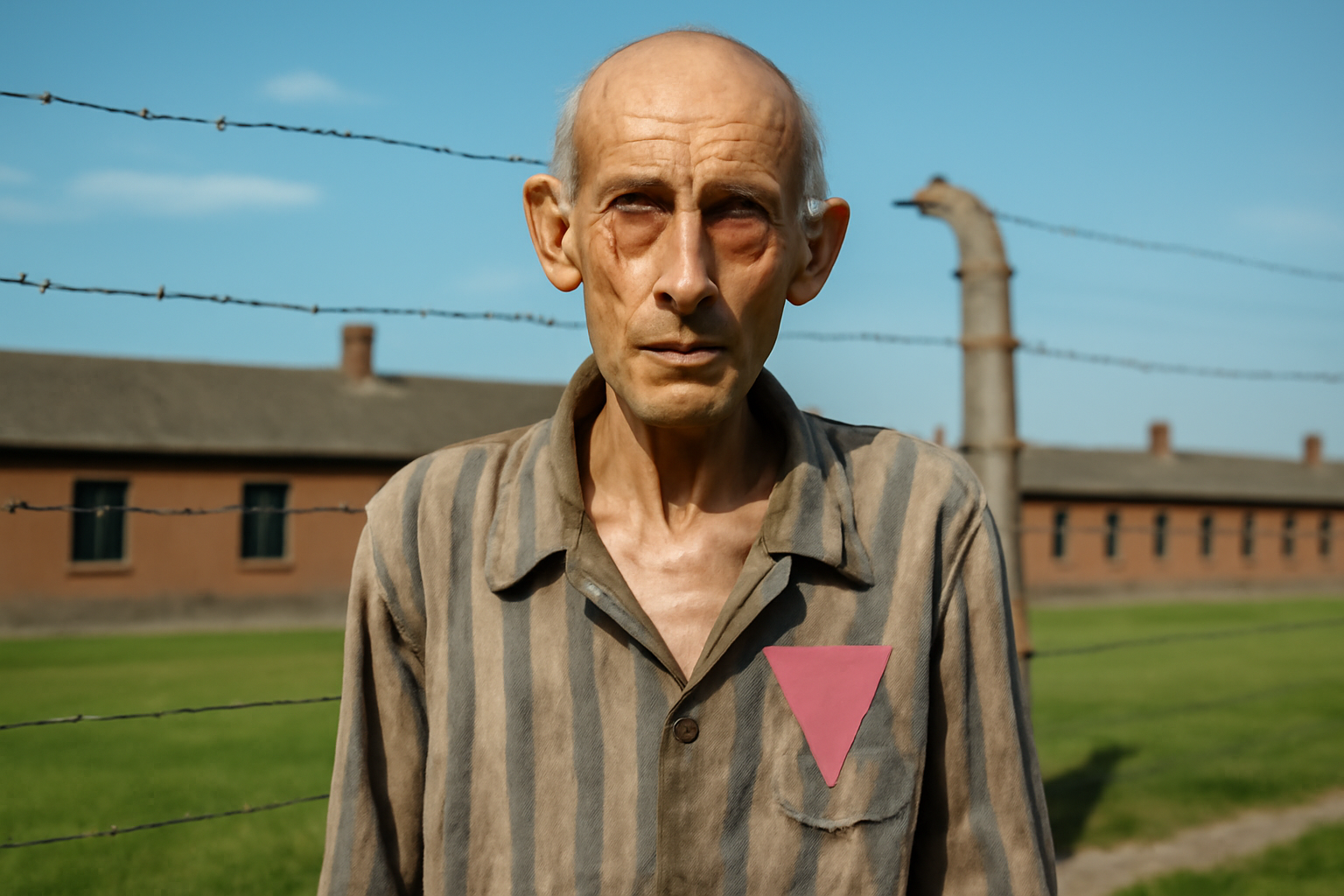
As we approach Holocaust Memorial Day 2025, marking the 80th anniversary of the liberation of Auschwitz, we take time to remember all the victims, including LGBTQ+ individuals, who suffered under Nazi persecution.
On January 27, 1945, Soviet troops liberated Auschwitz, initially finding the camp eerily silent and abandoned by German forces. However, they soon encountered the emaciated survivors who had endured years of unimaginable suffering.
Georgii Elisavetskii, one of the first Red Army soldiers to enter Auschwitz, described the emotional scene: "They rushed toward us shouting, fell on their knees, kissed the flaps of our overcoats, and threw their arms around our legs." This moment marked the end of a horrific chapter as the largest Nazi extermination camp was finally liberated.
Holocaust Memorial Day is observed annually on January 27th to honor the victims who perished and the survivors who lived through the atrocities, forever changed by their experiences.
Persecution of LGBTQ+ People Under the Nazi Regime
The Nazi regime was responsible for the deaths of up to 17 million people, including six million Jews. However, the Holocaust was a broader campaign of terror against minority groups, including LGBTQ+ individuals.
From 1933 to 1945, approximately 100,000 men were arrested on charges of homosexuality in Nazi Germany. Of these, around 50,000 were convicted, and estimates suggest that between 5,000 and 15,000 gay men were sent to concentration camps.
Research by sociologist Rüdiger Lautmann indicates that up to 60 percent of gay men imprisoned in concentration camps died. This estimate only accounts for those persecuted directly for their sexual orientation. Many others, who hid their identities, also perished among the Holocaust's countless victims.
Today, the threat of violence against minority groups remains. In 2025, hate crimes targeting LGBTQ+ individuals are disturbingly prevalent. In the UK, for example, over 22,000 hate crimes based on sexual orientation and nearly 5,000 transphobic crimes were reported in the year ending March 2024.
The Nazi Campaign Against Minorities
When Adolf Hitler and the Nazi Party rose to power in July 1933, they quickly targeted minority groups, including Jews, LGBTQ+ people, Romani individuals, and political dissidents.
The Nazis established a network of concentration camps across Germany, detaining "undesirables." Prisoners were often marked with symbols on their uniforms to denote their perceived "deviancy." Gay men were branded with an upside-down pink triangle, while other prisoners had different symbols.
The treatment of LGBTQ+ prisoners was especially brutal. They faced extreme abuse, including forced "conversion" practices. Gay men were subjected to horrific torture, and many were forced to engage in sexual acts with female prisoners in a twisted attempt at conversion therapy.
Trans individuals were often categorized alongside gay men, forced to wear the pink triangle. Documents from the time show specific targeting of trans people, with orders from authorities to round them up and send them to camps.
Legacy and Reclamation of the Pink Triangle
Sadly, the end of World War II did not bring freedom for all. Many gay men liberated from concentration camps were subsequently imprisoned under the Allies' control due to laws against homosexuality that remained until the late 1960s in Germany.
The stigma surrounding homosexuality meant that first-person accounts from queer survivors are rare. One such account is from Pierre Seel, a survivor of a concentration camp in Strasbourg, who recalled the traumatic death of his lover at the hands of SS guards. Seel’s memoir, "I, Pierre Seel, Deported Homosexual," details the lowest caste status of homosexual prisoners.
In the 1970s, LGBTQ+ activists reclaimed the pink triangle as a symbol of resilience and liberation. Initially a mark of shame, it became a badge of pride and solidarity within the LGBTQ+ community.
In 1972, "The Men with the Pink Triangle" was published, sharing the story of Josef Kohout, a gay concentration camp survivor. A year later, Germany’s first gay rights organization embraced the pink triangle, highlighting the need to address this painful history.
During the AIDS crisis in the 1980s, the pink triangle appeared in activism, notably in the "Silence = Death" campaign by ACT UP.
Today, the pink triangle serves as a powerful reminder of past atrocities against LGBTQ+ people and the ongoing need to combat hatred and intolerance. As hate crimes rise globally, remembering these histories is crucial in preventing future persecutions.
Related Posts
Supreme Court to Address State Bans on Trans Women in Female Sports
The upcoming U.S. Supreme Court term promises to be a pivotal moment for transgender rights, as the nation's highest court has agreed to evaluate whether states have the authority to prohibit transgender women from participating in female sports competitions. This case, scheduled to be argued in the next term beginning October, is expected to have a significant impact on the future of sports inclu [...]
Megan Rapinoe and Sue Bird Announce Amicable Separation After Ten Years Together
In a heartfelt announcement that resonated deeply within the sports and LGBTQ+ communities, soccer star Megan Rapinoe and basketball legend Sue Bird have revealed their decision to part ways after nearly a decade together. The couple, who have been icons both on and off the field, shared the news with their fans through a joint statement on social media, expressing that the choice was made with mu [...]
Groundbreaking Ruling Ends Sodomy Ban for Police and Military in the Dominican Republic
The Constitutional Court of the Dominican Republic recently delivered a landmark decision on November 18th, ruling that the nation’s police and armed forces are not permitted to criminalize consensual same-sex relations among their personnel. This pivotal ruling is a significant stride towards equality and the protection of LGBTQ+ rights within these institutions. A Resounding Victory for Equal [...]