
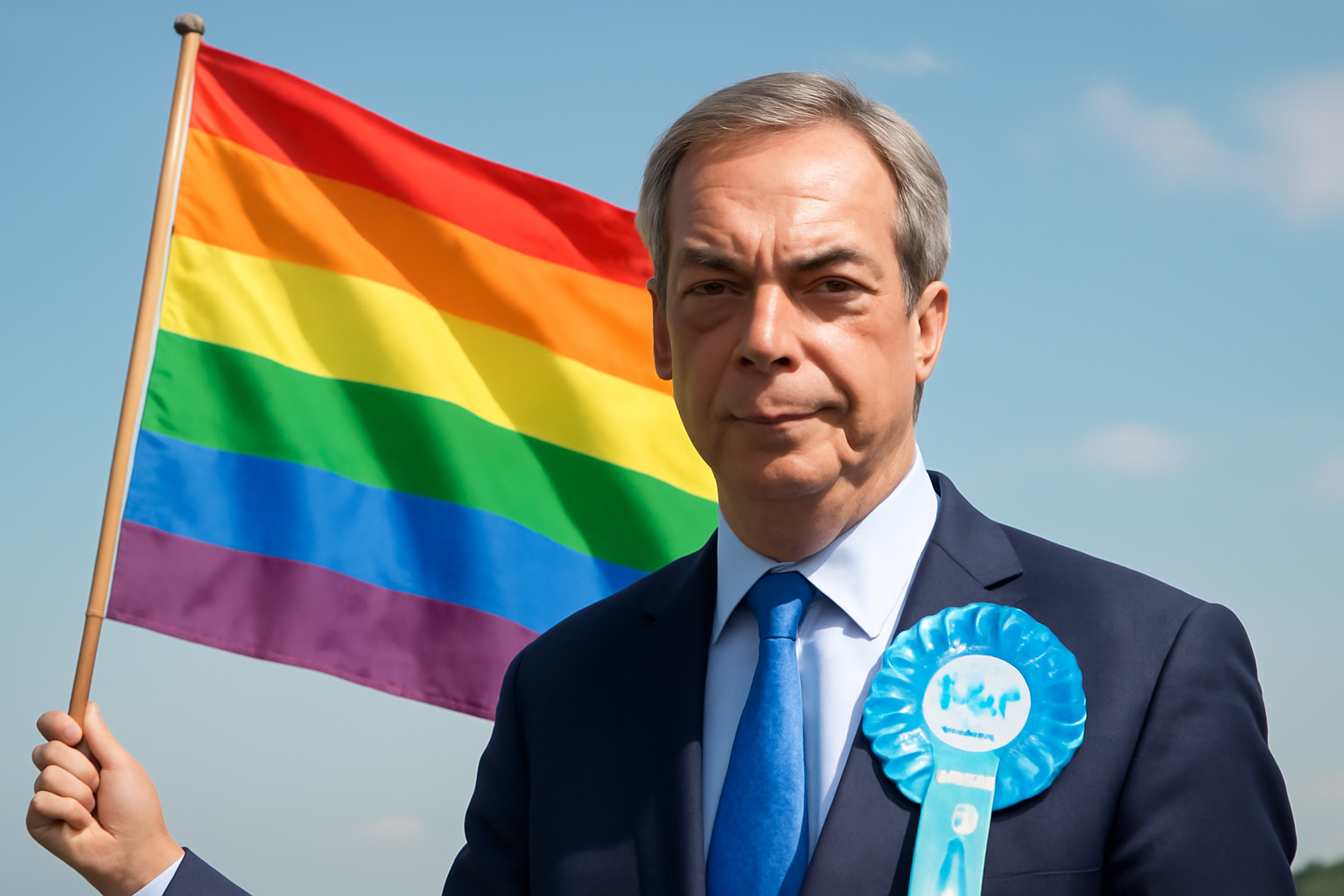
In the recent local elections held on May 2nd, Nigel Farage’s Reform UK party managed to secure another parliamentary seat, raising concerns due to their controversial policies. The party’s hardline stance on issues like LGBTQ+ rights and immigration has been a point of contention and debate.
Reform UK succeeded in the Runcorn & Helsby seat with a narrow victory margin of just six votes. This followed the conviction of the Labour incumbent, Mike Amesbury, which led to a by-election. Reform candidate Sarah Pochin captured 38.7% of the vote, according to the BBC. The Conservatives and the Green Party followed in the subsequent positions.
Campaign Strategies and Electoral Success
Sarah Pochin's campaign was heavily focused on anti-immigration policies, particularly targeting a local asylum hotel, as reported by the Financial Times. This approach resonated with the local electorate, contributing to her narrow victory.
Additionally, Reform UK celebrated another success when former Tory MP Dame Andrea Jenkyns won the mayoral contest in Greater Lincolnshire, securing 42% of the vote. The Conservative candidate placed second with 26%.
Reform UK’s Impact on the Political Landscape
Nigel Farage expressed his view that Labour’s diminishing support had benefited Reform UK, stating, “I think we’ve supplanted the Conservative party now as the main opposition party of the Labour government.” However, these gains have not been well-received by all, especially among marginalized communities.
The party's policies, particularly those targeting the transgender community, have raised alarm among LGBTQ+ advocates and organizations. Reform UK has been accused of promoting policies that could harm trans individuals and undermine existing protections.
Controversial Policies and Statements
The party’s election manifesto includes controversial claims against what it terms “transgender indoctrination,” which they allege is causing irreversible damage to children. They criticize multiculturalism and what they call “divisive, ‘woke’ ideology.”
In the realm of education, Reform UK aims to ban what they refer to as “transgender ideology” in schools. They advocate for informing parents of minors about any gender-related decisions, though the implementation of such measures remains unclear.
Further aiming to review the Online Safety Bill, Reform UK states that social media platforms that support “baseless transgender ideology and divisive Critical Race theory” should not influence free speech regulation. Critical Race Theory, a well-established academic field, examines systemic racial bias in western society.
Reform UK has also pledged to abolish the Equalities Act 2010, which is crucial for safeguarding marginalized groups, including transgender people. They propose to eliminate Diversity, Equality, and Inclusion (DE&I) rules, arguing these have reduced economic productivity.
Despite their official stance that cultural issues such as gay marriage and abortion should not be their primary focus, incidents have surfaced involving Reform candidates making derogatory statements. Nigel Farage himself has faced criticism over the language used by campaign members.
Undercover Investigations and Public Backlash
An investigation revealed troubling behavior within the Reform campaign in Clacton, where a Reform canvasser made racist and Islamophobic remarks. Such incidents have fueled public concern and criticism.
The Channel 4 undercover report highlighted the use of homophobic language by campaign staff. In one instance, a campaign organizer disparaged a Pride flag on a police car, using offensive language to describe it.
These revelations have sparked outrage and highlight the challenges facing marginalized communities in the current political climate. The narrow victory of Reform UK in these elections serves as a reminder of the ongoing struggle for equality and acceptance.
As Reform UK gains traction, the implications for LGBTQ+ rights and other minority groups remain a critical area of concern. The political landscape continues to evolve, and the need for vigilance and advocacy for marginalized communities is more important than ever.
Related Posts
Supreme Court to Address State Bans on Trans Women in Female Sports
The upcoming U.S. Supreme Court term promises to be a pivotal moment for transgender rights, as the nation's highest court has agreed to evaluate whether states have the authority to prohibit transgender women from participating in female sports competitions. This case, scheduled to be argued in the next term beginning October, is expected to have a significant impact on the future of sports inclu [...]
Megan Rapinoe and Sue Bird Announce Amicable Separation After Ten Years Together
In a heartfelt announcement that resonated deeply within the sports and LGBTQ+ communities, soccer star Megan Rapinoe and basketball legend Sue Bird have revealed their decision to part ways after nearly a decade together. The couple, who have been icons both on and off the field, shared the news with their fans through a joint statement on social media, expressing that the choice was made with mu [...]
Groundbreaking Ruling Ends Sodomy Ban for Police and Military in the Dominican Republic
The Constitutional Court of the Dominican Republic recently delivered a landmark decision on November 18th, ruling that the nation’s police and armed forces are not permitted to criminalize consensual same-sex relations among their personnel. This pivotal ruling is a significant stride towards equality and the protection of LGBTQ+ rights within these institutions. A Resounding Victory for Equal [...]