
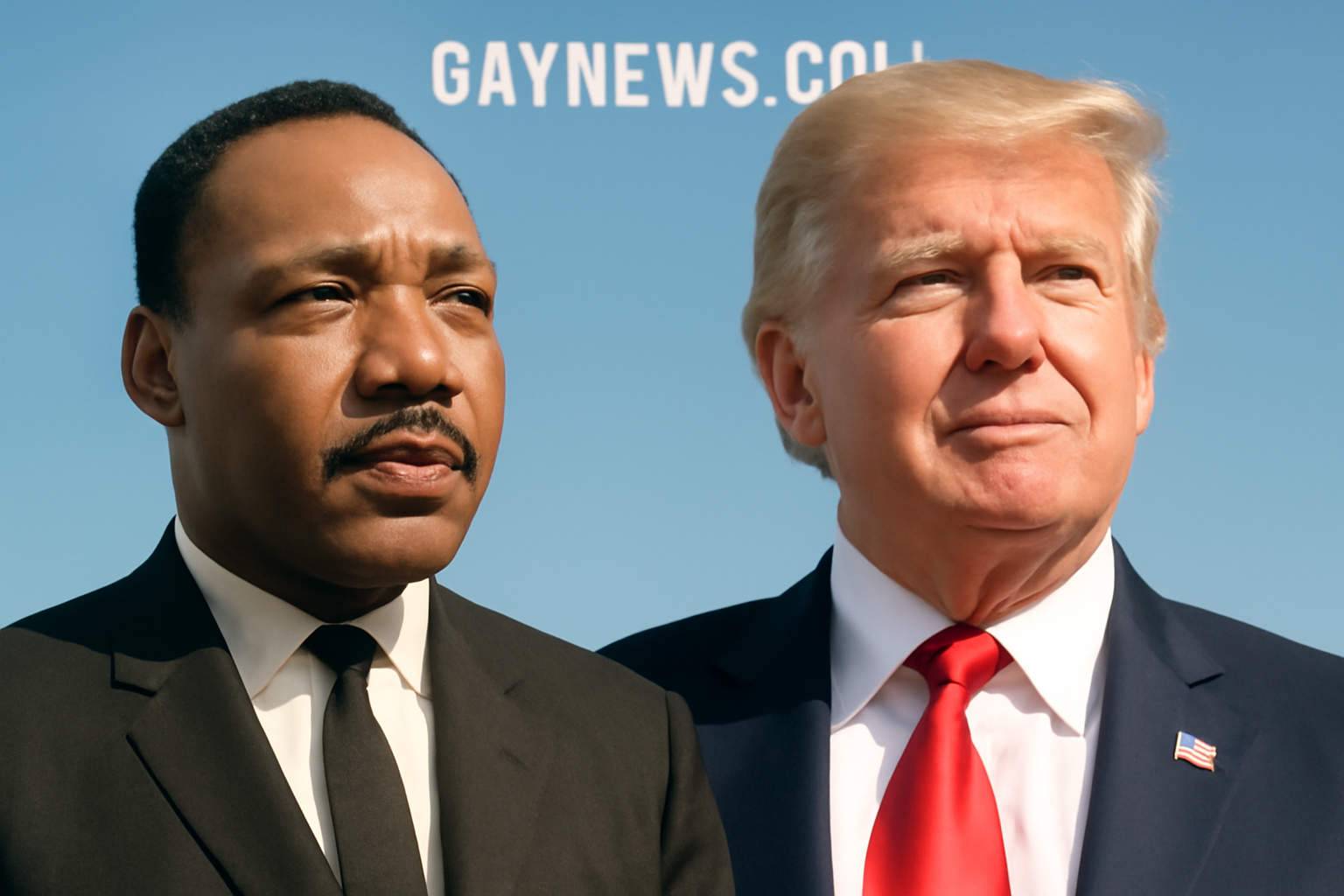
On January 20, 2025, the United States finds itself at a moment of historical and political significance. As the nation commemorates the legacy of Rev. Dr. Martin Luther King Jr. on his national holiday, it simultaneously prepares for the inauguration of Donald John Trump as the 47th president.
This day marks not only the remembrance of a leader who dedicated his life to civil rights and justice, but also a moment of political transition that raises concerns for many marginalized communities. Rev. Dr. Martin Luther King Jr. believed deeply in the interconnectedness of justice and peace, famously stating, "There can be no justice without peace, and there can be no peace without justice." His commitment to equality and nonviolence continues to inspire activists worldwide.
Dr. King’s Legacy of Justice
On December 14, 1967, Dr. King delivered a powerful message outside a California prison holding Vietnam War protesters, highlighting the interconnected struggles for justice. He argued that the United States' actions in Vietnam were inconsistent with the values of justice that he fought for domestically. This principle, "injustice anywhere is a threat to justice everywhere," remains relevant today.
Coretta Scott King, Dr. King’s wife, continued his legacy, advocating for the inclusion of LGBTQ+ individuals in the "garment of destiny." Her words at the 2000 National LGBTQ Task Force Conference reminded us of the importance of embracing diversity and equality for all.
Dr. King and President Jimmy Carter shared a vision for a more just and equitable world. Although Carter came from the deeply segregated South, his presidency was marked by significant advancements in human rights both domestically and internationally. He famously declared the end of racial discrimination, pushing for equal opportunities regardless of race.
Remembering President Jimmy Carter
President Carter’s tenure from 1977 to 1981 was characterized by his dedication to human rights and peace. His involvement in the Camp David Accords and efforts to promote democratic principles left a lasting impact. After leaving office, Carter continued his humanitarian work through projects like Habitat for Humanity and the Carter Center, earning him the Nobel Peace Prize in 2002.
Carter’s commitment to equality extended to increasing representation of Black individuals in government positions during his time as Georgia’s governor. His efforts serve as a reminder of the progress that can be achieved through persistent advocacy for justice.
Contrasting Visions: Trump’s Leadership
In contrast to the values upheld by Dr. King and Carter, Donald Trump’s presidency raises significant concerns. His previous term demonstrated policies that many view as detrimental to marginalized communities. Trump’s rhetoric and policy proposals have often targeted trans rights, reproductive rights, and racial equality, among others.
Trump’s approach is often seen as aligning with authoritarian tendencies, promoting nationalism under the guise of populism. His administration’s actions could further exacerbate divisions, rolling back protections that have been hard-won by activists over decades.
Looking Ahead
As Trump takes the oath of office, many will reflect on Dr. King’s words from his "Letter from a Birmingham Jail," emphasizing the moral responsibility to oppose unjust laws. King’s philosophy of nonviolence and civil disobedience remains a guiding light for those advocating for justice and equality today.
The challenges ahead call for renewed commitment to the ideals of fairness and justice. As communities brace for potential policy shifts, the enduring legacies of Dr. King and President Carter inspire hope and action toward a more equitable future.
In these times of political change, it is essential to uphold the principles of inclusivity and equality. The voices of civil rights leaders past and present encourage us to continue the fight for a world where everyone, regardless of identity, can thrive with dignity and respect.
Subscribe for More Insight
Join our newsletter to stay informed on the latest developments affecting LGBTQ+ communities and allies. Let’s work together to promote justice and equality for all.
Related Posts
Supreme Court to Address State Bans on Trans Women in Female Sports
The upcoming U.S. Supreme Court term promises to be a pivotal moment for transgender rights, as the nation's highest court has agreed to evaluate whether states have the authority to prohibit transgender women from participating in female sports competitions. This case, scheduled to be argued in the next term beginning October, is expected to have a significant impact on the future of sports inclu [...]
Megan Rapinoe and Sue Bird Announce Amicable Separation After Ten Years Together
In a heartfelt announcement that resonated deeply within the sports and LGBTQ+ communities, soccer star Megan Rapinoe and basketball legend Sue Bird have revealed their decision to part ways after nearly a decade together. The couple, who have been icons both on and off the field, shared the news with their fans through a joint statement on social media, expressing that the choice was made with mu [...]
Groundbreaking Ruling Ends Sodomy Ban for Police and Military in the Dominican Republic
The Constitutional Court of the Dominican Republic recently delivered a landmark decision on November 18th, ruling that the nation’s police and armed forces are not permitted to criminalize consensual same-sex relations among their personnel. This pivotal ruling is a significant stride towards equality and the protection of LGBTQ+ rights within these institutions. A Resounding Victory for Equal [...]