
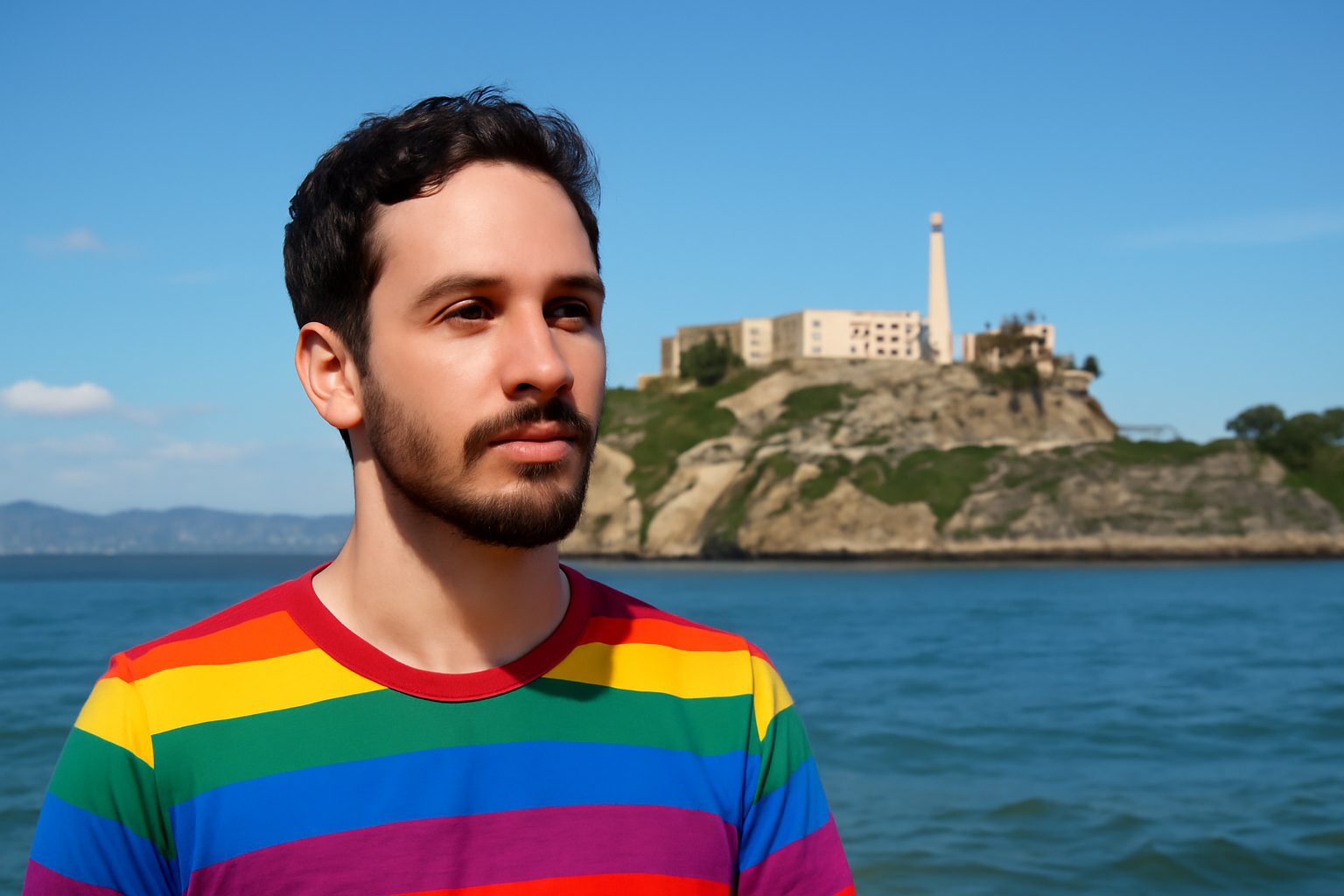
Unmasking Alcatraz: Beyond Its Storied Past
When I first stepped onto Alcatraz Island, I wasn't just struck by its sweeping views or its rich, storied past. What hit me was a sense that beneath its tourist-friendly facade lay something much darker. Alcatraz, after all, wasn't just a prison; it was a stark reminder that certain lives have long been deemed less valuable by those in power.
Being part LGBTQIA+ community, I couldn't help but feel a deep connection with Alcatraz's history. Walking through its echoing halls, I was reminded that this island once symbolized a broader system that punished people simply because they didn't fit societal norms. Take Frank Lucas Bolt, Alcatraz's first prisoner—not a violent criminal, but someone jailed under a 'sodomy' charge. Why? Because he was gay.
Lost voices: The queer history they don't talk about
Frank wasn't alone. For years, if you were gay or transgender, you risked imprisonment—not because you'd done anything wrong, but because society couldn't handle your truth. The oppressive grip was more than just legal; it was medical, too. Alcatraz was just one cog in a vast machine that tried brutally hard—think solitary confinement, think conversion therapy—to squash deviations from so-called norms.
Yet, when people visit Alcatraz now, they don't hear these stories. Tourist brochures skip over this chapter. It takes effort, digging through forgotten archives and listening closely, but these histories matter. Walking those crumbling corridors, one thing was crystal clear: remembering Alcatraz isn't enough. We've got challenge these narratives so history doesn't just echo on repeat.
The danger in reliving Alcatraz's past
Lately, there have been whispers about “bringing back” Alcatraz, and it's troubling. Not just because it sounds absurd, but because it carries a hint nostalgia that dreams up visions tough justice. These visions often target communities that are already marginalized—homeless people, migrants, queer and trans youth. If anyone wants filled prisons, it's not about justice. It's about control.
Remember 1969? Native American activists took over Alcatraz, protesting against land theft and broken promises. Their bold message on a water tower—“Peace and Freedom. Home Free Indian Land”—wasn't just graffiti. It was a reclaiming, a powerful statement that this space could be a symbol change.
Memory or punishment? Alcatraz's legacy
Alcatraz wears many hats. Yes, it was a notoriously tough prison, but it was also a stage one century's loudest acts civil disobedience. This tension sits heavy over Alcatraz. Today, its legacy could swing either a renewed call punitive justice or a rallying point against repeating injustices.
As I wandered its halls, echoes modern detention centers haunted me. Trans folks still face horrific conditions; arbitrary detentions drag on. Many, like me, have crossed borders in search survival. Alcatraz's past and our present? They're not as distant as we'd love them be. Those punitive walls may look different now, but they're still there, targeting familiar communities.
Turning memories action
Standing amidst those empty cells, I felt it—the isolation, stigma those inside must've carried. Yet, what I felt even more was resolve. We won't be silent. We'll reject labels like “deviant.” If confinement haunts us again, we'll rise, united by memory and dignity, not fear.
Alcatraz doesn't need a rebuild; it needs understanding. It calls us—queer, racialized, migrant communities—to act. We must counter hate, protect those vulnerable, ensure our narratives are fully told. No one deserves a cage just because they exist. Let our actions prevent history retreating behind bars.
These thoughts are shaped by my personal journey and activism, and they reflect my views, which may not align with any groups or individuals I'm associated with.
Related Posts
Supreme Court to Address State Bans on Trans Women in Female Sports
The upcoming U.S. Supreme Court term promises to be a pivotal moment for transgender rights, as the nation's highest court has agreed to evaluate whether states have the authority to prohibit transgender women from participating in female sports competitions. This case, scheduled to be argued in the next term beginning October, is expected to have a significant impact on the future of sports inclu [...]
Megan Rapinoe and Sue Bird Announce Amicable Separation After Ten Years Together
In a heartfelt announcement that resonated deeply within the sports and LGBTQ+ communities, soccer star Megan Rapinoe and basketball legend Sue Bird have revealed their decision to part ways after nearly a decade together. The couple, who have been icons both on and off the field, shared the news with their fans through a joint statement on social media, expressing that the choice was made with mu [...]
Groundbreaking Ruling Ends Sodomy Ban for Police and Military in the Dominican Republic
The Constitutional Court of the Dominican Republic recently delivered a landmark decision on November 18th, ruling that the nation’s police and armed forces are not permitted to criminalize consensual same-sex relations among their personnel. This pivotal ruling is a significant stride towards equality and the protection of LGBTQ+ rights within these institutions. A Resounding Victory for Equal [...]