
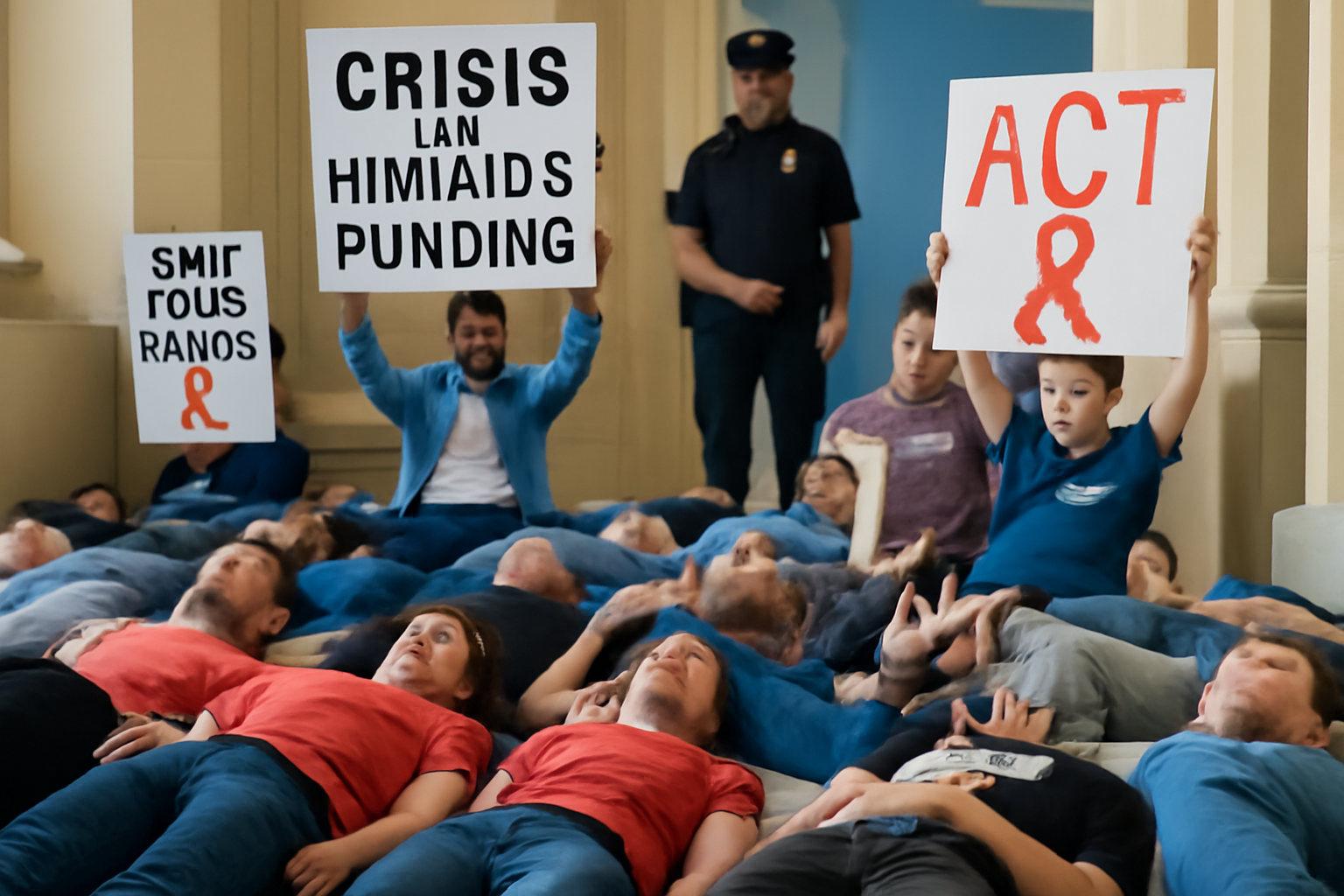
On Wednesday, at the Cannon House Office Building in Washington, D.C., twenty-one individuals, including HIV/AIDS activists and individuals who had been terminated from federal positions, were arrested during a powerful demonstration. The protestors staged a "die-in" to voice their opposition to the severe cuts in foreign aid designated for HIV/AIDS relief.
The protest was organized by several advocacy groups, including ACT UP NY, Health GAP (Global Access Project), Housing Works, and the Treatment Action Group. These organizations joined forces to highlight the urgent need for continued funding to combat the global HIV/AIDS epidemic.
A Desperate Call for Action
The activists, approximately thirty in number, began their demonstration in the lobby of the building. Marble surroundings echoed with the sound of their chants and whistles, as they donned t-shirts and held signs bearing slogans such as “Save USAID, Save Lives” and “U.S. Congress Kills People With AIDS Worldwide.” In a solemn act of protest, several participants lay prone on the floor, forming a circle and holding hands, symbolizing the urgency and gravity of their cause.
The protest coincided with escalating concerns over the dismantling of USAID, the U.S. Agency for International Development, by the current administration. This agency has been pivotal in providing foreign assistance for essential programs in health, food security, and development across the globe. The disruption of these services has plunged HIV/AIDS prevention and treatment initiatives into a state of disarray.
Funding Cuts and Global Impact
The President’s Emergency Plan for AIDS Relief (PEPFAR), a critical program supplying medication to 20 million people worldwide, recently faced a funding freeze. Although the funds were later released, the damage had been done, with many programs losing communication with their former USAID partners. This abrupt severance has severely hampered their ability to provide life-saving services to vulnerable populations.
Wednesday also saw a temporary legal setback for those challenging the administration's actions. The Supreme Court granted a temporary reprieve to the administration, allowing it to delay payments for completed USAID projects, pending further legal review. This decision has left many contractors and organizations in a precarious financial position, struggling to continue their work without assured funding.
Political Fallout and Humanitarian Crisis
The Trump administration’s decision to terminate over 10,000 contracts and grants managed by USAID and the State Department represents a near-total dismantling of the agency's operations. These cuts account for approximately 90% of USAID’s activities, translating into billions of dollars in halted spending.
Van Credle, a former USAID contractor who participated in the protest, expressed his frustration to the press, stating, “This is not about government efficiency—it’s about government negligence and the violation of congressional funding laws.”
The controversial Department of Government Efficiency (DOGE), led by Elon Musk, has been at the forefront of these drastic changes. Critics, particularly Democrats, have denounced DOGE's actions as illegal overreach that undermines established legislative authority.
Asia Russell, Executive Director of Health GAP, emphasized the gravity of the situation: “The stakes are incredibly high when it comes to humanitarian assistance. We demand that Congress take action and stand against these life-threatening cuts.”
The Broader Implications
As the weekend approached, reports emerged that USAID was placing nearly all its global workforce on leave, with a skeletal staff remaining in Washington. These employees were instructed to vacate their offices to make way for other federal agencies.
The transition has been marked by symbolic gestures, such as the black tape now covering USAID’s name on its former headquarters, a stark reminder of the agency’s uncertain future.
The protestors’ message was clear: the cuts have dire consequences, not only for those directly affected by HIV/AIDS but for the broader principles of humanitarian aid and international collaboration. Advocacy groups continue to urge the public to stay informed and engaged, as the situation evolves.
For ongoing updates and insights into how these political developments impact the LGBTQ+ community and related issues, subscribe to our newsletter today.
Related Posts
Supreme Court to Address State Bans on Trans Women in Female Sports
The upcoming U.S. Supreme Court term promises to be a pivotal moment for transgender rights, as the nation's highest court has agreed to evaluate whether states have the authority to prohibit transgender women from participating in female sports competitions. This case, scheduled to be argued in the next term beginning October, is expected to have a significant impact on the future of sports inclu [...]
Megan Rapinoe and Sue Bird Announce Amicable Separation After Ten Years Together
In a heartfelt announcement that resonated deeply within the sports and LGBTQ+ communities, soccer star Megan Rapinoe and basketball legend Sue Bird have revealed their decision to part ways after nearly a decade together. The couple, who have been icons both on and off the field, shared the news with their fans through a joint statement on social media, expressing that the choice was made with mu [...]
Groundbreaking Ruling Ends Sodomy Ban for Police and Military in the Dominican Republic
The Constitutional Court of the Dominican Republic recently delivered a landmark decision on November 18th, ruling that the nation’s police and armed forces are not permitted to criminalize consensual same-sex relations among their personnel. This pivotal ruling is a significant stride towards equality and the protection of LGBTQ+ rights within these institutions. A Resounding Victory for Equal [...]