
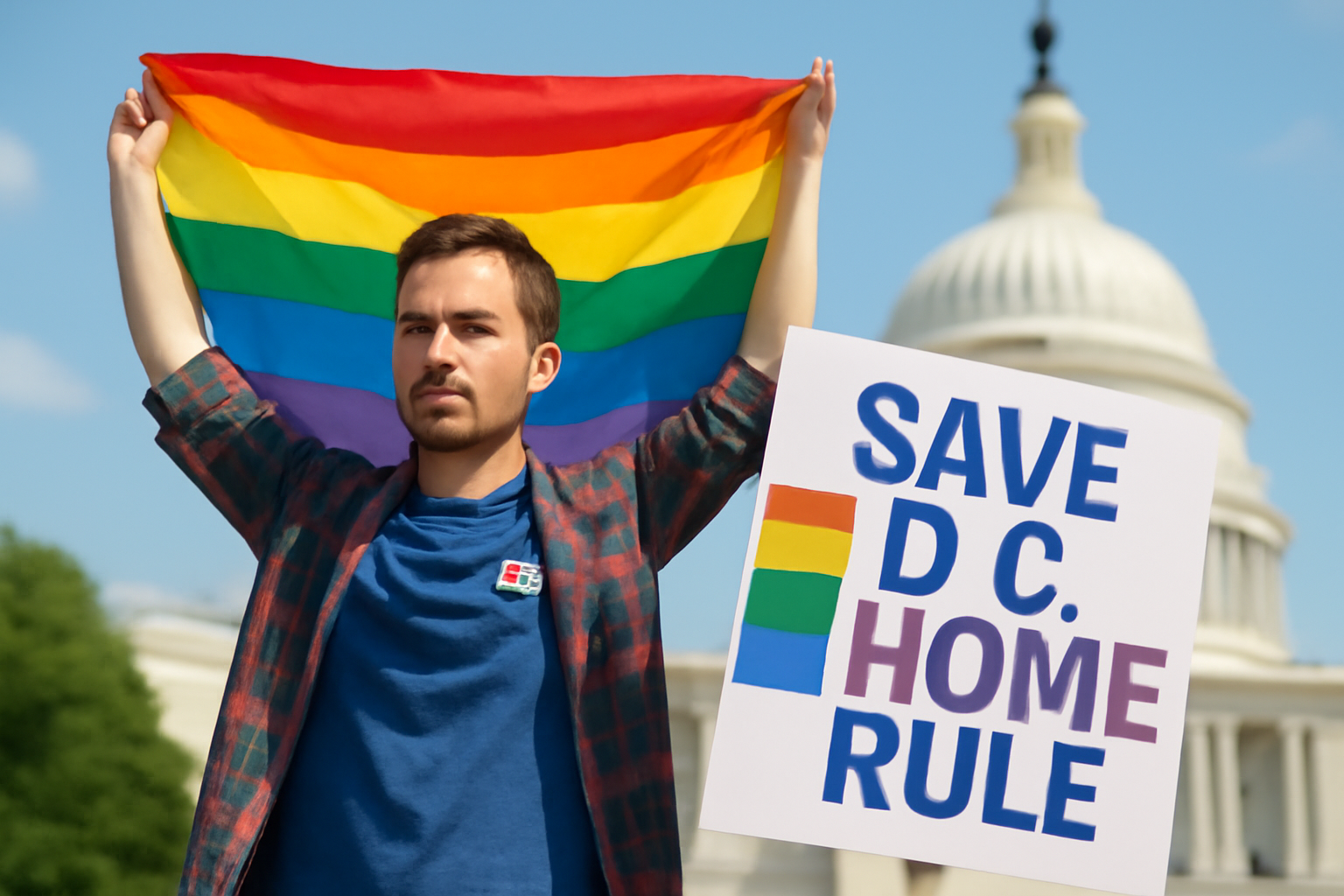
Proposed Repeal of D.C. Home Rule Raises Concerns for LGBTQ Rights
On February 6, U.S. Senator Mike Lee of Utah and U.S. Representative Andy Ogles of Tennessee introduced a controversial piece of legislation known as the "Bringing Oversight to Washington and Safety to Every Resident Act" or the "BOWSER Act." This bill aims to repeal the District of Columbia Home Rule Act, effectively dismantling the city’s existing local government structure, which has been in place since 1973. The proposed repeal has raised significant concerns among LGBTQ rights advocates who fear that such a move could undermine hard-won protections for the LGBTQ community in the nation's capital.
The D.C. Home Rule Act currently allows the city to have a mayor and city council, giving residents a degree of self-governance. However, Congress retains the ultimate authority to reject local legislation and impose federal laws on the district. Sen. Lee and Rep. Ogles argue that the current D.C. government, led by Mayor Muriel Bowser, has turned the city into a "crime-ridden shambles," citing crime and governance issues as motivations for their bill.
Both lawmakers have consistently received low scores on the Human Rights Campaign’s Congressional Scorecard, particularly regarding their records on LGBTQ issues. Despite this, they have pushed forward with the legislation, which many see as part of a broader effort by far-right Republicans to curtail progressive policies in urban centers.
The introduction of the BOWSER Act comes at a time when a Republican-controlled Congress may be more receptive to such measures, especially with former President Donald Trump having frequently criticized D.C.'s leadership and hinted at executive actions to address the city’s governance.
Importantly, the bill does not specify what would replace the current government structure if the Home Rule Act is repealed. Historically, prior to the 1973 Act, D.C. was governed by a commission appointed by the U.S. president, with minimal local input. Activists fear that a return to such a system under the current political climate could lead to the erosion of LGBTQ protections, including those enshrined in the city’s Human Rights Act.
Peter Rosenstein, a prominent gay Democratic activist in D.C., has been vocal about the potential dangers of repealing home rule. "Repeal of Home Rule at this time can only be a negative for the LGBTQ community, especially the transgender community," Rosenstein warns. He emphasizes the antagonistic stance of "MAGA Republicans" towards LGBTQ rights as a significant threat.
Howard Garrett, president of the Capital Stonewall Democrats, echoes these concerns. "Repealing D.C. home rule would be a direct attack on our city’s ability to govern itself and protect the rights of all residents, especially the LGBTQ+ community," Garrett asserts. He highlights D.C.'s leadership in advancing LGBTQ rights, from anti-discrimination laws to access to healthcare. The loss of home rule, he warns, would leave the city vulnerable to "reactionary policies" that do not reflect the values of its residents.
Critics of the repeal, including local leaders and advocates for D.C. statehood, contend that the bill is more about political posturing than public safety. Daniel Solomon, co-founder of D.C. Vote, a nonpartisan group advocating for D.C. statehood, describes the bill as a "thinly veiled attempt to punish D.C. for political differences under the guise of public safety." He argues that repealing home rule would not enhance safety but would instead undermine local progress on issues like criminal justice reform and economic growth.
Despite the claims of Lee and Ogles, Mayor Bowser points to a significant decrease in crime, with violent crime dropping by 35 percent and property crime by 11 percent from 2023 to 2024, as evidence of her administration's effective governance. While she has not directly commented on the bill, her administration continues to defend the city's right to self-governance.
As the debate unfolds, the proposed repeal of D.C. home rule stands as a critical issue with far-reaching implications for local governance and the protection of civil rights for marginalized communities, particularly the LGBTQ community. Both supporters and opponents agree that the outcome of this legislative effort will be pivotal not only for the residents of D.C. but also for the precedent it sets for federal intervention in local governance across the nation.
Related Posts
Supreme Court to Address State Bans on Trans Women in Female Sports
The upcoming U.S. Supreme Court term promises to be a pivotal moment for transgender rights, as the nation's highest court has agreed to evaluate whether states have the authority to prohibit transgender women from participating in female sports competitions. This case, scheduled to be argued in the next term beginning October, is expected to have a significant impact on the future of sports inclu [...]
Megan Rapinoe and Sue Bird Announce Amicable Separation After Ten Years Together
In a heartfelt announcement that resonated deeply within the sports and LGBTQ+ communities, soccer star Megan Rapinoe and basketball legend Sue Bird have revealed their decision to part ways after nearly a decade together. The couple, who have been icons both on and off the field, shared the news with their fans through a joint statement on social media, expressing that the choice was made with mu [...]
Groundbreaking Ruling Ends Sodomy Ban for Police and Military in the Dominican Republic
The Constitutional Court of the Dominican Republic recently delivered a landmark decision on November 18th, ruling that the nation’s police and armed forces are not permitted to criminalize consensual same-sex relations among their personnel. This pivotal ruling is a significant stride towards equality and the protection of LGBTQ+ rights within these institutions. A Resounding Victory for Equal [...]