
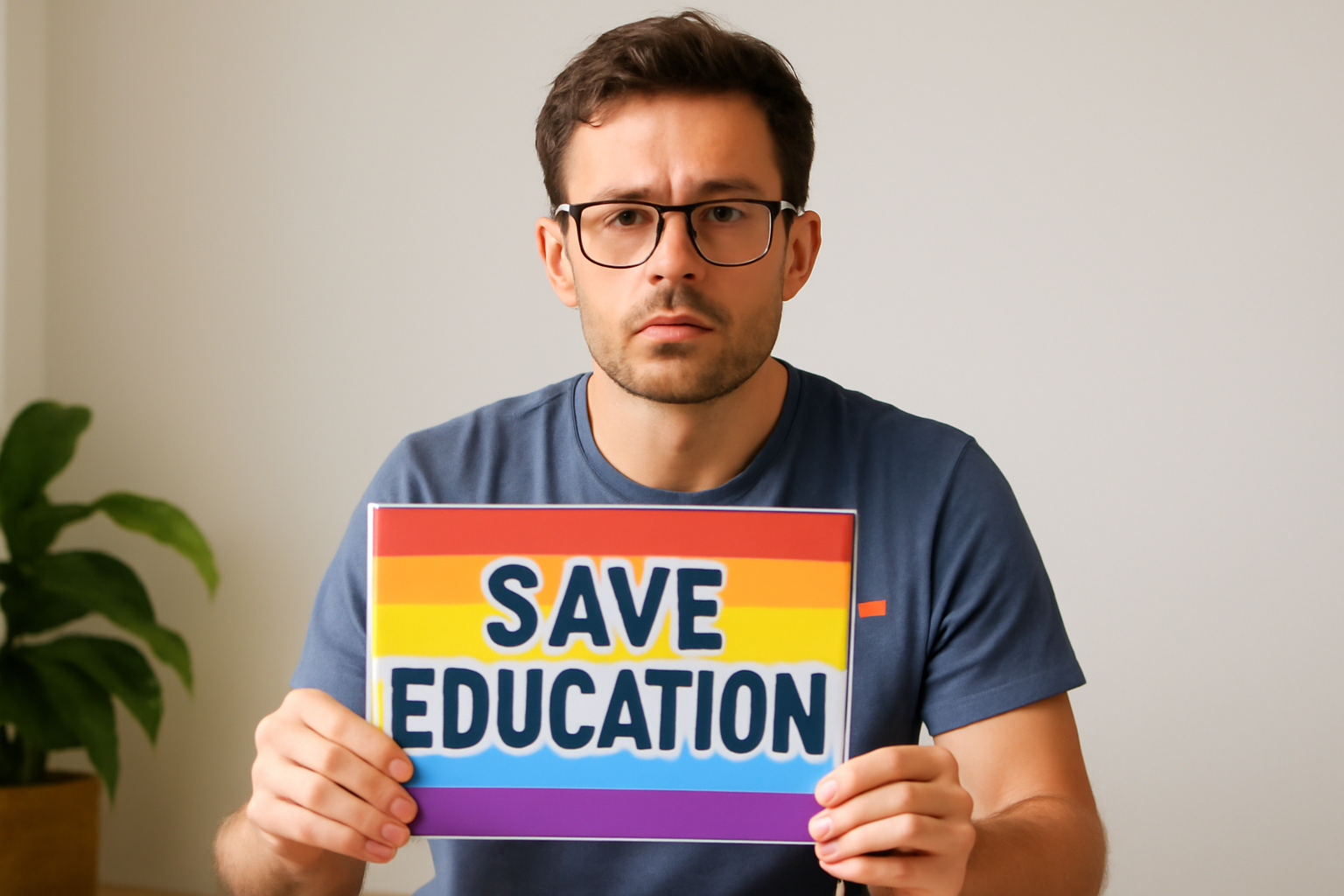
Understanding the Proposed Changes
The recent announcement of plans to significantly reduce the scope or even abolish the U.S. Department of Education has sparked a nationwide debate. Advocates for this move argue that it will reduce federal overreach and allow states more autonomy over their educational systems. However, critics warn that dismantling the Department of Education could undermine efforts to promote diversity and inclusion in schools across the country.
One of the main drivers behind this proposal is a broader push against what some perceive as 'wokeness' in educational environments. The term 'wokeness' has become a controversial buzzword, often used to describe policies or educational curricula that emphasize social justice, diversity, and inclusion. For many in the LGBTQ+ community, these educational policies are crucial for fostering safe and supportive environments for all students.
Implications for LGBTQ+ Students
For LGBTQ+ students, the presence of inclusive policies in educational settings can make a significant difference in their school experience. Anti-bullying policies, diversity training for staff, and inclusive curricula that represent LGBTQ+ histories and identities are supported at a federal level by the Department of Education.
Removing these protections could potentially lead to an environment where discriminatory practices are more likely to occur. Many LGBTQ+ advocates argue that federal oversight is necessary to ensure that all students, regardless of gender identity or sexual orientation, receive equal protection and support in schools.
The Role of Federal Oversight in Education
The U.S. Department of Education plays a key role in enforcing civil rights laws in educational institutions. These laws include Title IX, which prohibits sex-based discrimination in any school or educational program receiving federal funding. Over the years, interpretations and expansions of Title IX have been instrumental in protecting LGBTQ+ students from harassment and discrimination.
Critics of the proposed changes fear that without a strong federal presence, states might roll back these protections or interpret them differently, leading to a patchwork of policies that could leave many students vulnerable.
The Debate Over State vs. Federal Control
Proponents of abolishing or downsizing the Department of Education argue that education should be primarily a state and local matter. They believe that local authorities are better positioned to understand and address the needs of their communities. However, this perspective raises concerns among those who worry about the consistency and fairness of education across different states, especially concerning minority rights.
The debate touches on broader themes about the balance of power between federal and state governments and the role of education in promoting social change. For those advocating for LGBTQ+ rights and inclusivity, federal oversight is viewed as a necessary safeguard against discrimination.
Looking Forward: Advocacy and Action
In response to these proposed changes, advocacy groups are mobilizing to ensure that the rights and protections for LGBTQ+ students are not undermined. They are working to raise awareness about the potential consequences of reducing federal oversight and are pushing for policies that continue to promote diversity and inclusion in every educational setting.
Engagement in local and national politics, lobbying for protective legislation, and supporting candidates who champion LGBTQ+ rights are all strategies being employed to counteract this push against 'wokeness.' Moreover, community-based initiatives are emphasizing the importance of creating educational environments where every student feels safe and valued, regardless of their background or identity.
The conversation surrounding the future of the Department of Education is just beginning, and it is clear that the outcome will have significant implications for the educational landscape in the United States. For the LGBTQ+ community and its allies, staying informed and involved in this discourse is crucial.
As the debate continues, it is important to remember that education is not just about academics; it is about shaping the kind of society we want to live in. Ensuring that our educational institutions are places of acceptance and learning for all students is a goal worth striving for.
Related Posts
Supreme Court to Address State Bans on Trans Women in Female Sports
The upcoming U.S. Supreme Court term promises to be a pivotal moment for transgender rights, as the nation's highest court has agreed to evaluate whether states have the authority to prohibit transgender women from participating in female sports competitions. This case, scheduled to be argued in the next term beginning October, is expected to have a significant impact on the future of sports inclu [...]
Megan Rapinoe and Sue Bird Announce Amicable Separation After Ten Years Together
In a heartfelt announcement that resonated deeply within the sports and LGBTQ+ communities, soccer star Megan Rapinoe and basketball legend Sue Bird have revealed their decision to part ways after nearly a decade together. The couple, who have been icons both on and off the field, shared the news with their fans through a joint statement on social media, expressing that the choice was made with mu [...]
Groundbreaking Ruling Ends Sodomy Ban for Police and Military in the Dominican Republic
The Constitutional Court of the Dominican Republic recently delivered a landmark decision on November 18th, ruling that the nation’s police and armed forces are not permitted to criminalize consensual same-sex relations among their personnel. This pivotal ruling is a significant stride towards equality and the protection of LGBTQ+ rights within these institutions. A Resounding Victory for Equal [...]