
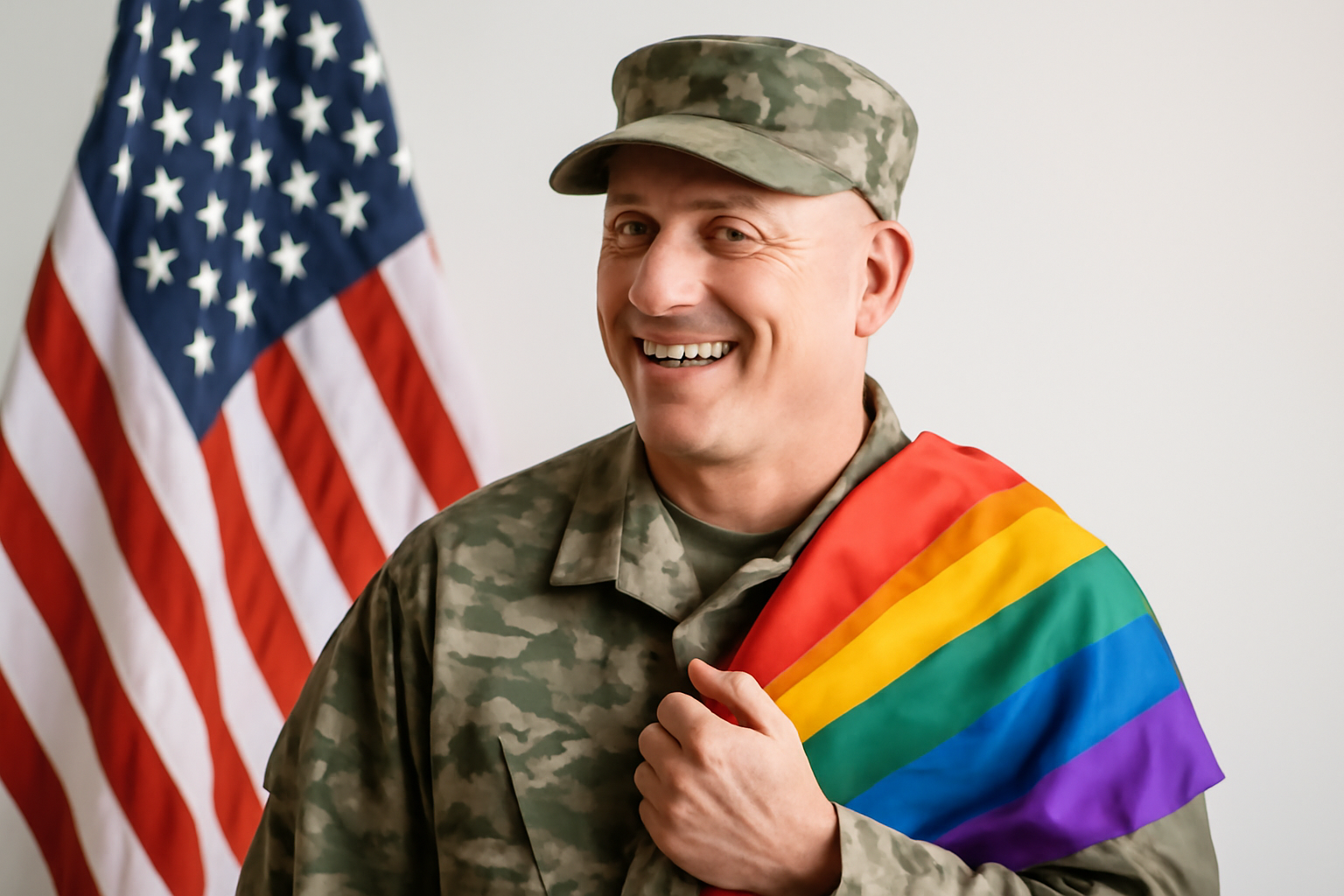
The Pentagon has announced a landmark resolution involving over 30,000 LGBTQ+ veterans who were discharged under the policy known as "Don’t Ask, Don’t Tell". This monumental agreement now enables these veterans to amend their military records with greater ease.
Implemented in 1994 under President Bill Clinton, "Don’t Ask, Don’t Tell" required LGBTQ+ individuals to conceal their sexual orientation in order to serve in the military. The policy led to widespread discrimination, forcing many service members out of the military due to their actual or perceived sexuality. Those discharged under this policy often received dishonorable discharges, stripping them of years of benefits and recognition.
In 2023, a class action lawsuit, Farrell v. the US Department of Defense, was brought forward in the US District Court for the Northern District of California. The lawsuit was filed on behalf of numerous LGBTQ+ veterans who claimed the Department of Defense failed to update their discharge status to honorable following the repeal of "Don’t Ask, Don’t Tell" in 2011.
The plaintiffs argued that their discharges were unconstitutional and unjustly deprived them of full veterans' benefits. The settlement, announced on January 6th, allows those discharged under "Don’t Ask, Don’t Tell" and similar policies to update their records without undergoing a lengthy legal battle. This process aims to remove all references to their sexuality from their military documentation.
Impact of Dishonorable Discharges
Dishonorable discharges have profound implications, affecting veterans' access to benefits. An honorable discharge indicates that a service member performed their duties diligently and lawfully, entitling them to benefits such as home-loan assistance, medical care, and retirement pay. Conversely, a dishonorable discharge can bar access to veteran benefits and certain civilian government benefits, including unemployment and federal student loans.
Jocelyn Larkin, a lawyer representing the class-action group, stated that prior to the settlement, the process of updating records was daunting for many veterans. "It's crucial that the ongoing impact of this discriminatory policy is finally addressed," Larkin remarked. "Repealing 'Don’t Ask Don’t Tell' was insufficient as veterans continued to carry the stigma of being gay in the military. This initiative is essential in affirming that their service was honorable."
Voices of Veterans
Navy veteran Sherrill Farrell, one of the plaintiffs, shared her personal journey. Coming from a line of military service, Farrell enlisted in 1985 with pride. "When I was discharged due to my sexual orientation," Farrell explained, "I felt as though my country was invalidating my service, deeming me 'less than' because of whom I loved. Today, I take pride in having served my country by advocating for veterans like myself and ensuring our honor is acknowledged."
Lilly Steffanides, another navy veteran, expressed their experience of joining the military in 1988 with a resolve to serve honorably. "The discriminatory policies of the era led to my unjust discharge, robbing me of dignity and the benefits I had rightfully earned," Steffanides shared. "This settlement is not just about amending records; it is about restoring the honor and pride that LGBTQ+ veterans deserve."
Julianne Sohn added, "As a marine, I was proud to uphold the values of honor, courage, and commitment alongside my fellow service members. However, the pain and injustice of being discharged under discriminatory policies like 'Don’t Ask, Don’t Tell' persisted for years. This settlement signifies a recognition of these wrongs and aims to prevent such prejudice from recurring."
Looking Ahead
The settlement awaits approval from a federal judge, with the hearing scheduled before Magistrate Judge Joseph Spero next month. It is estimated that approximately 14,000 individuals were discharged under "Don’t Ask, Don’t Tell", with over 20,000 individuals removed from the military since 1980 due to their actual or perceived sexual orientation.
This agreement represents a significant step toward justice for LGBTQ+ veterans, acknowledging their service and paving the way for a more inclusive military environment. Share your thoughts and join the discussion below, remembering to keep the conversation respectful.
Related Posts
Supreme Court to Address State Bans on Trans Women in Female Sports
The upcoming U.S. Supreme Court term promises to be a pivotal moment for transgender rights, as the nation's highest court has agreed to evaluate whether states have the authority to prohibit transgender women from participating in female sports competitions. This case, scheduled to be argued in the next term beginning October, is expected to have a significant impact on the future of sports inclu [...]
Megan Rapinoe and Sue Bird Announce Amicable Separation After Ten Years Together
In a heartfelt announcement that resonated deeply within the sports and LGBTQ+ communities, soccer star Megan Rapinoe and basketball legend Sue Bird have revealed their decision to part ways after nearly a decade together. The couple, who have been icons both on and off the field, shared the news with their fans through a joint statement on social media, expressing that the choice was made with mu [...]
Groundbreaking Ruling Ends Sodomy Ban for Police and Military in the Dominican Republic
The Constitutional Court of the Dominican Republic recently delivered a landmark decision on November 18th, ruling that the nation’s police and armed forces are not permitted to criminalize consensual same-sex relations among their personnel. This pivotal ruling is a significant stride towards equality and the protection of LGBTQ+ rights within these institutions. A Resounding Victory for Equal [...]