
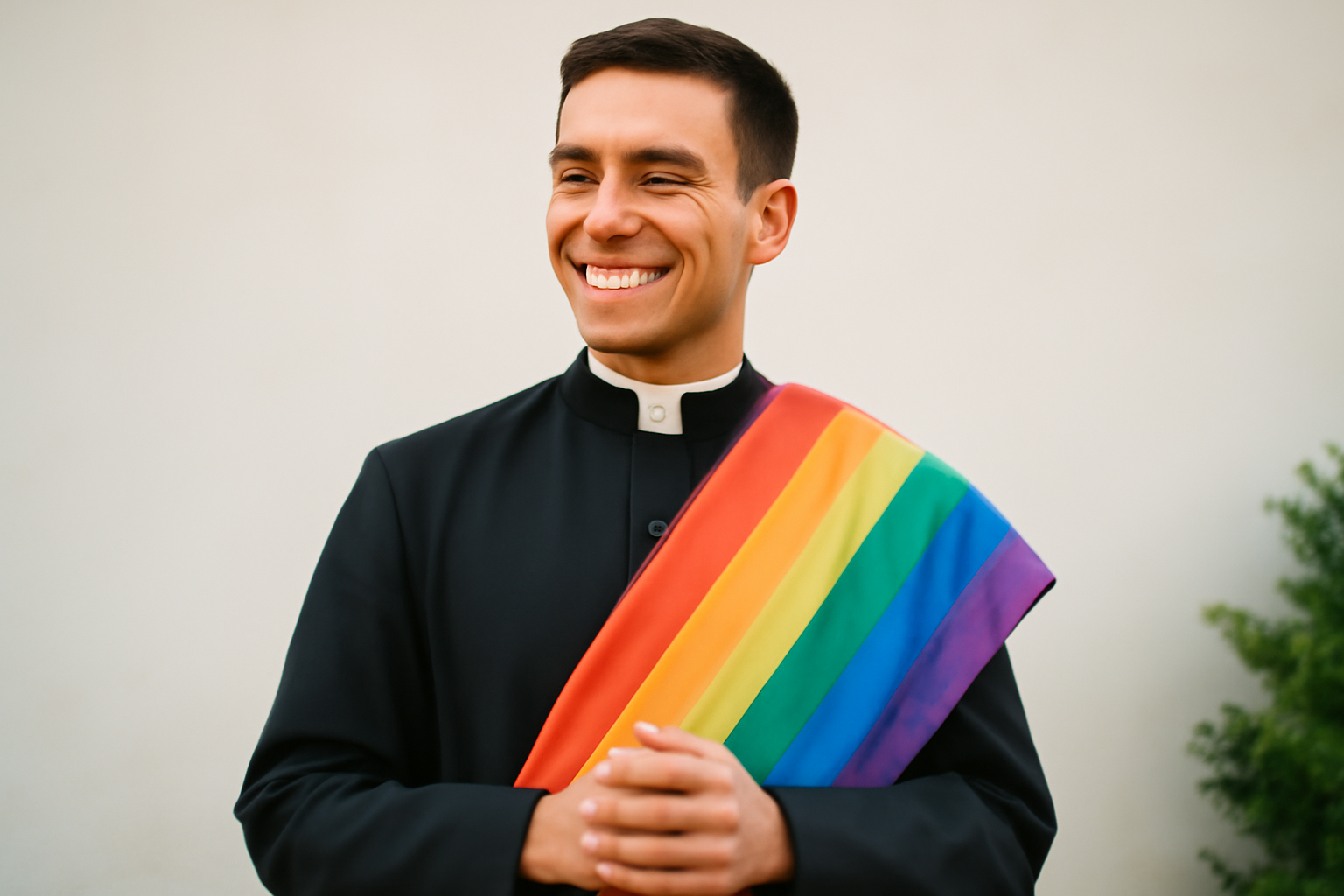
In a groundbreaking move, the Italian Bishops' Conference has released new guidelines indicating that openly gay men may be considered for the priesthood, provided they meet other necessary criteria for ordination. This development signifies a potential shift in the Catholic Church’s historical stance on the matter.
The document, titled Guidelines and Norms for Seminaries, emphasizes that the assessment of candidates should not be limited solely to their sexual orientation. Instead, it advocates for understanding a candidate’s sexuality within the broader context of their overall personality and character.
Addressing Past Stigmas
The Catholic Church has traditionally maintained a conservative view on homosexuality, describing it as "intrinsically disordered." Historically, individuals who engage in homosexual acts or promote what has been referred to as "gay culture" have been prohibited from entering the priesthood. These new guidelines, however, represent a significant departure from such exclusive prohibitions, suggesting that being gay should not automatically disqualify a candidate.
While the new guidelines propose a more inclusive approach, they reinforce the expectation that priests, regardless of sexual orientation, adhere to vows of celibacy. This has always been a cornerstone of the Catholic priesthood, where sexual abstinence is a requirement for all priests.
Holistic Candidate Evaluation
The guidelines advocate for a holistic view of seminarians, where various aspects of their character and spiritual readiness are taken into account. The Church believes that focusing solely on sexuality can undermine the potential contributions of individuals who might otherwise be well-suited to serve in the Catholic ministry.
This approach aligns with recent comments made by Pope Francis, who has consistently advocated for greater acceptance of LGBTQ+ individuals within the Church. In a statement to the Associated Press in early 2023, Pope Francis declared that "being homosexual isn’t a crime," reinforcing his position that the Church should be a place of welcome and love.
Pope Francis’ Stance
Despite these progressive steps, Pope Francis has also expressed caution. He has stated that candidates for the priesthood should be screened thoroughly, ensuring that those who are unable to uphold the vow of celibacy do not enter or remain in the priesthood. Last year, he sparked controversy by using a derogatory term when commenting on whether gay men should become priests, highlighting the complexity and sensitivity of the issue within the Church hierarchy.
Global Implications and Challenges
It remains uncertain whether these new guidelines will be adopted by bishops' conferences in other countries, as the Catholic Church is not a monolithic entity and often reflects diverse cultural attitudes towards LGBTQ+ issues.
This initiative may not change entrenched views overnight, but it does represent a step towards a more inclusive Church. By emphasizing a holistic view of candidates, the guidelines suggest a more nuanced approach to evaluating future priests, one that balances adherence to traditional values with a recognition of the diverse experiences that individuals bring to their spiritual vocation.
Conclusion
As discussions around these guidelines continue, they bring to the forefront important questions about how the Catholic Church can reconcile its doctrines with the evolving understanding of human sexuality and dignity. The progress made under Pope Francis' leadership indicates a willingness to engage with these questions, fostering dialogue that could influence broader societal and religious acceptance of LGBTQ+ individuals.
This conversation is a critical part of the Church's ongoing journey towards inclusivity, reflecting a broader trend within many religious institutions to embrace diversity in all its forms.
Related Posts
Supreme Court to Address State Bans on Trans Women in Female Sports
The upcoming U.S. Supreme Court term promises to be a pivotal moment for transgender rights, as the nation's highest court has agreed to evaluate whether states have the authority to prohibit transgender women from participating in female sports competitions. This case, scheduled to be argued in the next term beginning October, is expected to have a significant impact on the future of sports inclu [...]
Megan Rapinoe and Sue Bird Announce Amicable Separation After Ten Years Together
In a heartfelt announcement that resonated deeply within the sports and LGBTQ+ communities, soccer star Megan Rapinoe and basketball legend Sue Bird have revealed their decision to part ways after nearly a decade together. The couple, who have been icons both on and off the field, shared the news with their fans through a joint statement on social media, expressing that the choice was made with mu [...]
Groundbreaking Ruling Ends Sodomy Ban for Police and Military in the Dominican Republic
The Constitutional Court of the Dominican Republic recently delivered a landmark decision on November 18th, ruling that the nation’s police and armed forces are not permitted to criminalize consensual same-sex relations among their personnel. This pivotal ruling is a significant stride towards equality and the protection of LGBTQ+ rights within these institutions. A Resounding Victory for Equal [...]