
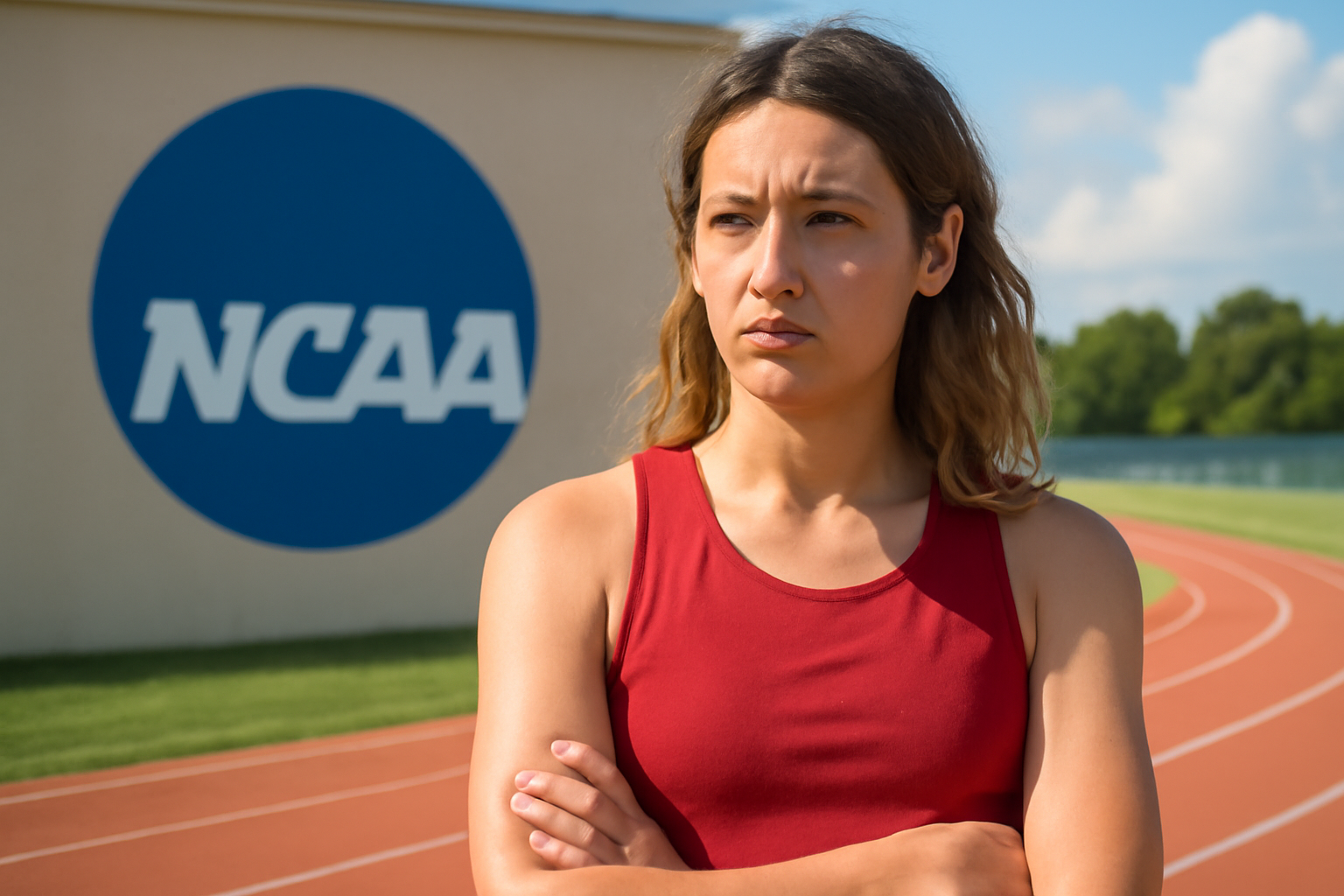
The National Collegiate Athletic Association (NCAA) has recently come under fire for its decision to ban transgender women from participating in women’s sports. The ruling was passed by the NCAA board without consulting its own medical experts. The announcement aligns with a recent executive order by President Donald Trump, which threatens action against educational institutions that permit trans female athletes on women’s teams.
Previously, the NCAA allowed trans athletes to compete according to the policies of individual sports’ governing bodies. However, NCAA President Charlie Baker, also known for his tenure as the Republican governor of Massachusetts, announced a shift towards a uniform national policy. “President Trump’s order offers a clear, national standard that simplifies the current landscape of varied state laws and court decisions,” Baker stated.
Impact on Transgender Athletes
This decision has sparked significant controversy and concern within the LGBTQ+ community. Many argue that it disregards the existing policy that was more inclusive and acknowledged the complex reality of transgender athletes’ experiences.
Dr. Jack Turban, a notable figure on the NCAA’s Committee on Competitive Safeguards and Medical Aspects of Sports, publicly resigned in protest. In his resignation letter, published the same day as the NCAA’s announcement, Turban expressed dismay at the board’s failure to involve medical experts in their decision-making process. “Issuing a blanket ban on trans female participation in women’s sports does not align with the medical or scientific consensus,” Turban wrote, adding that the decision politicizes science at the expense of vulnerable student-athletes.
Political and Social Reactions
The decision has been met with praise and criticism from different quarters. White House Press Secretary Karoline Leavitt stated that Trump’s executive order was intended to initiate a public pressure campaign on both the NCAA and the U.S. Olympics Committee to enforce similar bans. However, these bodies are not legally required to comply with executive orders, as they do not receive federal funding.
In support of the NCAA’s decision, President Trump posted on social media, “Men should have NEVER been allowed to compete against women in the first place, but I am proud to be the President to SAVE Women’s Sports. We expect the Olympics Committee to also use Common Sense, which is very popular among the American People, and the entire World!”
Conversely, LGBTQ+ advocacy groups have condemned the decision. Rodrigo Heng-Lehtinen, Executive Director of Advocates for Trans Equality, criticized the executive order, stating, “This is not about protecting women and girls in sports. It distracts from real issues like unequal access to resources and the gender pay gap in professional sports. This policy targets transgender individuals and is part of a broader agenda against the transgender community.”
Consequences and Future Implications
The NCAA’s decision affects over 1,100 colleges and universities and more than 530,000 student-athletes, according to President Baker. However, he noted that only about ten athletes in the NCAA identify as transgender, representing a minuscule 0.002% of the total athlete population.
The broader implications of this policy have yet to unfold fully. Many fear it may set a precedent for other sports organizations and educational institutions, potentially leading to widespread exclusion of transgender individuals from sports.
In light of these developments, staying informed and connected with the community is vital. Engage with the issues and participate in discussions that affect your community both locally and globally by subscribing to relevant newsletters and platforms.
As this story evolves, the response from institutions, athletes, and the public will shape the future landscape of athletics for transgender individuals. The NCAA’s decision is a significant moment in the ongoing dialogue about inclusivity, fairness, and the rights of transgender people in sports.
Related Posts
Supreme Court to Address State Bans on Trans Women in Female Sports
The upcoming U.S. Supreme Court term promises to be a pivotal moment for transgender rights, as the nation's highest court has agreed to evaluate whether states have the authority to prohibit transgender women from participating in female sports competitions. This case, scheduled to be argued in the next term beginning October, is expected to have a significant impact on the future of sports inclu [...]
Megan Rapinoe and Sue Bird Announce Amicable Separation After Ten Years Together
In a heartfelt announcement that resonated deeply within the sports and LGBTQ+ communities, soccer star Megan Rapinoe and basketball legend Sue Bird have revealed their decision to part ways after nearly a decade together. The couple, who have been icons both on and off the field, shared the news with their fans through a joint statement on social media, expressing that the choice was made with mu [...]
Groundbreaking Ruling Ends Sodomy Ban for Police and Military in the Dominican Republic
The Constitutional Court of the Dominican Republic recently delivered a landmark decision on November 18th, ruling that the nation’s police and armed forces are not permitted to criminalize consensual same-sex relations among their personnel. This pivotal ruling is a significant stride towards equality and the protection of LGBTQ+ rights within these institutions. A Resounding Victory for Equal [...]