
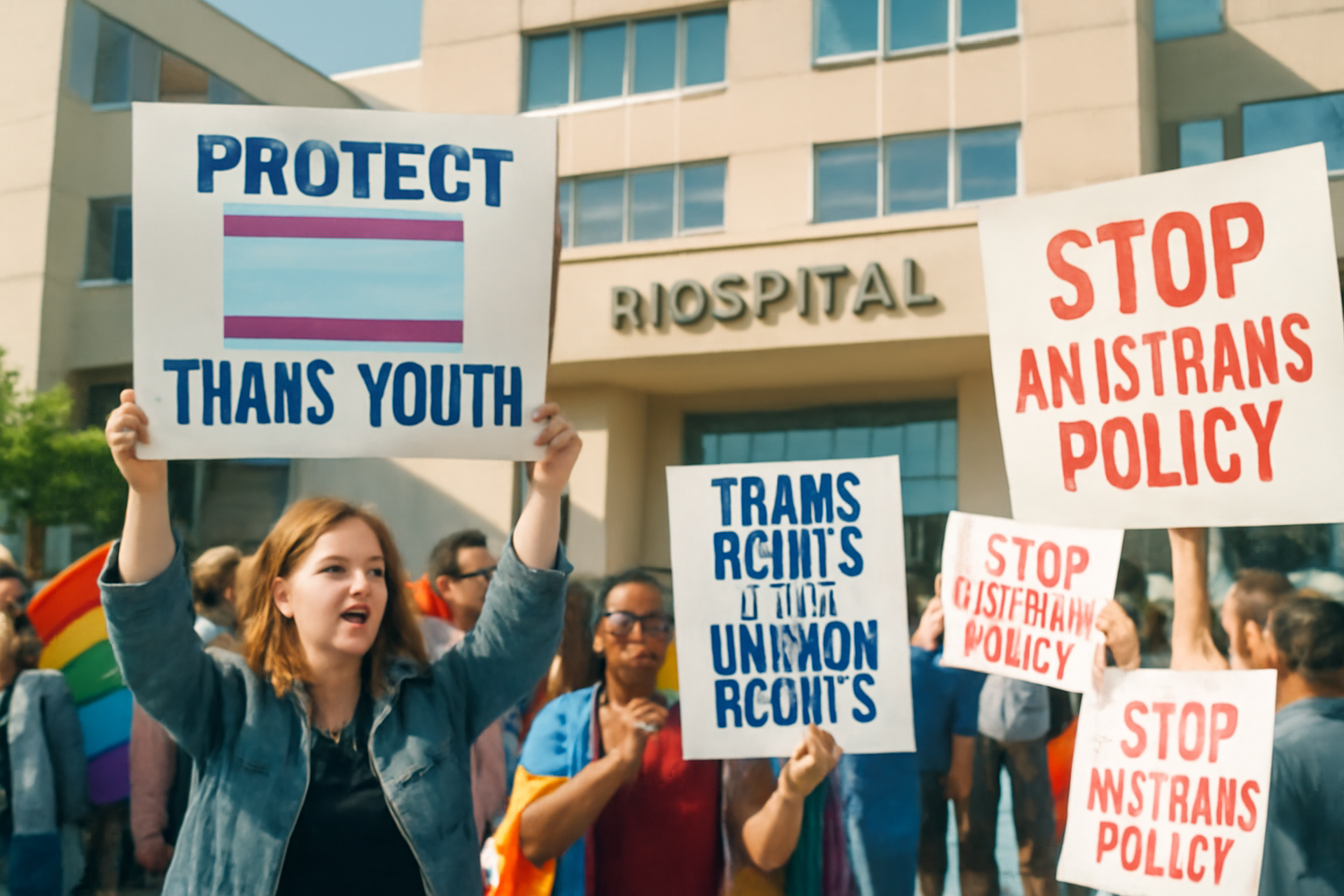
Across the United States, a wave of demonstrations has arisen in response to the enforcement of a new policy that has sparked significant concern within the transgender community and among its allies. This policy, which affects healthcare access for transgender minors, has led to widespread protests at hospitals that are implementing these changes.
The policy in question limits the provision of gender-affirming care for individuals under the age of 19. Many hospitals, in compliance with this directive, have had to halt services that were previously available to young transgender patients, creating a backlash from advocates who argue that such care is essential for the well-being of transgender youth.
Community Response
Activists, parents, and members of the LGBTQ+ community have voiced their opposition loudly and clearly. Rallies have been organized outside medical facilities in major cities such as New York, Los Angeles, Chicago, and beyond. Protesters are demanding that hospitals reconsider their compliance with the policy, emphasizing the detrimental impact it could have on transgender minors who rely on gender-affirming healthcare as a crucial part of their identity and mental health support.
Several advocacy groups have noted that this policy could lead to severe psychological consequences, increased rates of depression and anxiety, and a higher risk of self-harm among transgender youths who are denied the care they need. "This is not just a political issue; it's a human rights issue," said one protest organizer. "Access to healthcare should not be restricted based on identity."
Legal and Ethical Concerns
The policy has also raised significant legal and ethical concerns. Legal experts argue that it may infringe upon the rights of transgender individuals to receive unbiased healthcare. Ethical questions have been raised about the role of healthcare providers in implementing policies that may harm patients. Hospitals are caught in a difficult position, balancing compliance with federal mandates and their commitment to providing equitable care to all patients.
Many hospital administrators have expressed discomfort with the policy but note that non-compliance could lead to funding cuts or other sanctions from governing bodies. This has led to difficult decisions, with some hospitals seeking ways to navigate the policy without compromising their care standards.
Voices from the Ground
On the ground, personal stories highlight the real-world implications of the policy. Parents of transgender children have expressed fear and frustration over the potential loss of care that they describe as life-saving for their children. "My child feels like they're being erased," said one parent at a protest in Dallas. "They need to know they are supported and valued, not just by us, but by the society they live in."
Transgender youths have also stepped forward to share their experiences and the importance of access to supportive healthcare. "For me, being able to talk to a doctor who understands and supports my journey has made all the difference," said a young protester in San Francisco. "Taking that away feels like taking away a part of who I am."
Ongoing Efforts and Future Actions
Advocacy groups are mobilizing efforts to challenge the policy through legal avenues and public campaigns. They are calling on allies and supporters to engage in dialogue with healthcare providers and policymakers to find a solution that protects the rights and health of transgender individuals.
The protests show no signs of waning, indicating a continued push for change. Organizers are planning further demonstrations and educational initiatives to raise awareness about the policy's impact and to galvanize public support for overturning it.
As the nation watches these events unfold, the debate over healthcare rights for transgender minors continues to be a pivotal issue. The outcome of these efforts could set a significant precedent for future policy-making and the broader fight for LGBTQ+ rights.
The movement underscores a critical societal dialogue about diversity, inclusion, and the fundamental right to healthcare that respects and affirms each individual's identity.
The protests continue to be a powerful display of resilience and a testament to the community's unwavering commitment to equality and justice for all.
Related Posts
Supreme Court to Address State Bans on Trans Women in Female Sports
The upcoming U.S. Supreme Court term promises to be a pivotal moment for transgender rights, as the nation's highest court has agreed to evaluate whether states have the authority to prohibit transgender women from participating in female sports competitions. This case, scheduled to be argued in the next term beginning October, is expected to have a significant impact on the future of sports inclu [...]
Megan Rapinoe and Sue Bird Announce Amicable Separation After Ten Years Together
In a heartfelt announcement that resonated deeply within the sports and LGBTQ+ communities, soccer star Megan Rapinoe and basketball legend Sue Bird have revealed their decision to part ways after nearly a decade together. The couple, who have been icons both on and off the field, shared the news with their fans through a joint statement on social media, expressing that the choice was made with mu [...]
Groundbreaking Ruling Ends Sodomy Ban for Police and Military in the Dominican Republic
The Constitutional Court of the Dominican Republic recently delivered a landmark decision on November 18th, ruling that the nation’s police and armed forces are not permitted to criminalize consensual same-sex relations among their personnel. This pivotal ruling is a significant stride towards equality and the protection of LGBTQ+ rights within these institutions. A Resounding Victory for Equal [...]