
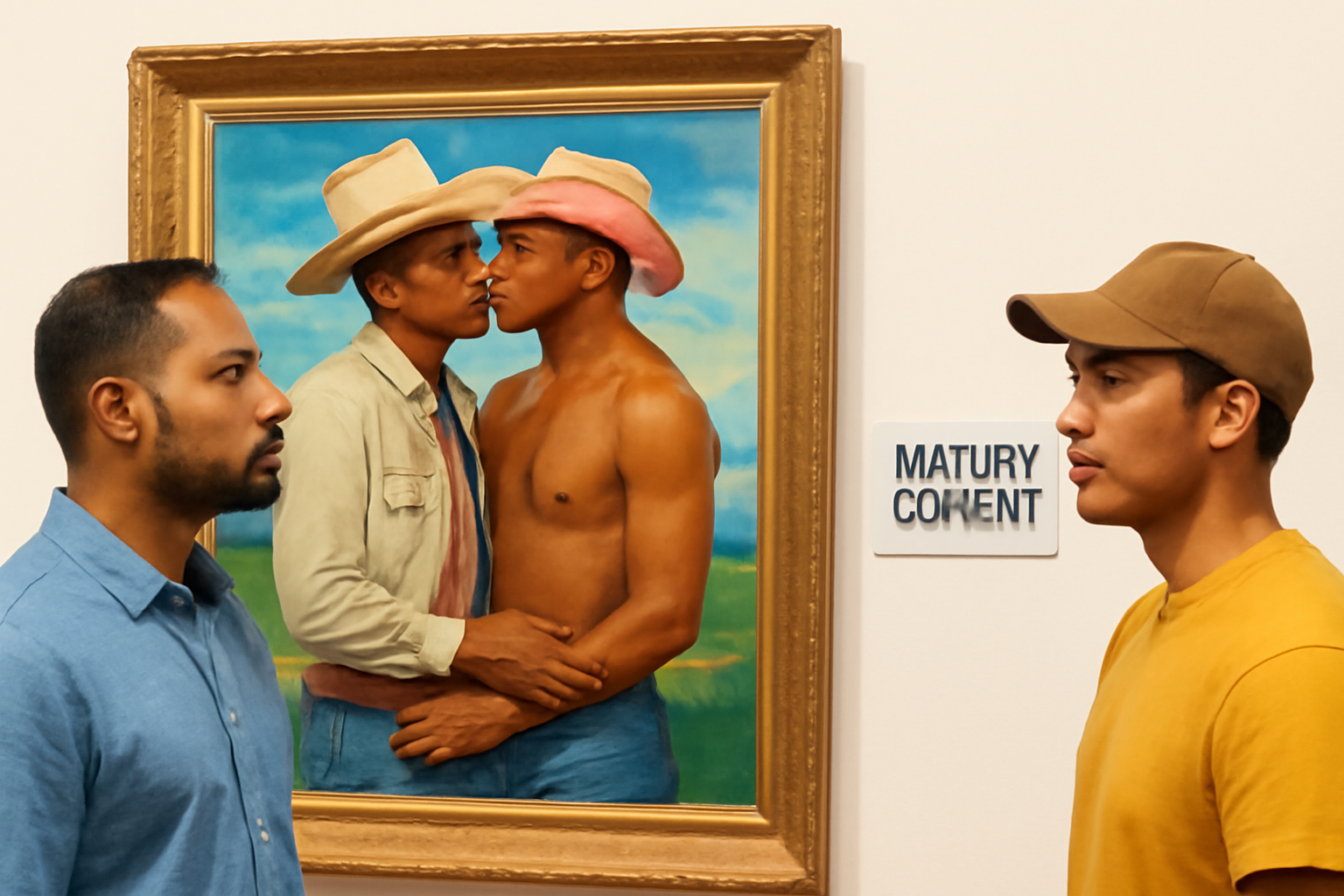
In a surprising turn of events, two queer artists of color have criticized a Texas museum for labeling their exhibition with a "mature content" warning, despite the absence of any explicit images. The artwork in question, part of the "Cowboy" exhibition at the Amon Carter Museum of American Art, features depictions of gay individuals, which has sparked debate and controversy.
rafa esparza and Fabian Guerrero, creators of a multidisciplinary installation titled "Querías Norte," have expressed their discontent with the museum's decision. The centerpiece of this installation, esparza’s painting "al Tempo," portrays two dark-skinned men in cowboy hats, fully clothed, sharing a kiss while dancing. The artwork invites viewers to reconsider traditional notions of masculinity and gender as represented by the cowboy mythos.
Challenging the Cowboy Myth
The "Cowboy" exhibition at the museum is a bold attempt to reexamine and challenge the popular mythologies surrounding the image of the cowboy, historically viewed as a White, cisgender American male. The exhibit includes the work of 28 artists, each exploring themes such as masculinity, gender perception, and cultural diversity within the cowboy archetype.
According to a press release from November 2023, the goal of "Cowboy" is to disrupt these traditional myths and showcase the diverse manifestations of the cowboy figure across different communities. Despite the exhibit's progressive aims, the decision to impose a "mature content" warning has stirred discussion and backlash.
Community Response and Museum's Actions
Shortly after the exhibition opened on September 28, the museum unexpectedly closed it without explanation. Upon reopening, visitors were met with a sign cautioning that the exhibition "includes mature content" and a QR code to preview the works beforehand. This action has led to widespread speculation and criticism, particularly as other museum galleries containing nudes or violent imagery remain without similar warnings.
Texas art publication Glasstire reported that the museum had reduced promotional efforts for "Cowboy," removing a banner image from its homepage and scaling back billboard advertisements. Additionally, several family-oriented events associated with the exhibition were canceled, adding to the controversy.
Artists' Perspectives and Museum's Justification
In discussions with the museum's curators, Guerrero and esparza were informed that complaints had been made regarding the "sexual identity content" in the exhibit. This justification has been met with skepticism, especially considering the lack of similar warnings for other potentially controversial art within the museum.
esparza, in a statement to public radio station KERA, described the content warning as "a form of censorship." He argued that the decision reflects an unjust double standard, questioning how a painting of two men sharing a moment of intimacy warrants such a disclaimer. Guerrero echoed these sentiments, pointing out that museums frequently display works depicting historical violence and should be equally open to showcasing expressions of queer joy.
The museum's spokesperson acknowledged the situation, stating, "We recognize this exhibition is a different view of the American cowboy than we’ve shown at the Carter historically. It takes time to prepare everyone for change, big or small, and, in this case, we needed more time to align on messaging for our visitors."
The museum also emphasized its intention to consider community feedback while maintaining its commitment to diverse artistic expression. However, some staff members reportedly expressed shock at the museum's response and the decision-making process behind the exhibit's temporary closure and subsequent reopening with a warning.
Moving Forward
As the "Cowboy" exhibition continues to run, esparza and Guerrero hope that their work will inspire dialogue and reflection on the inclusion and representation of diverse identities within cultural narratives. They advocate for art spaces that embrace all facets of human experience, promoting acceptance and understanding.
The ongoing discussion surrounding the exhibit highlights the broader cultural conversation about representation and inclusivity in art. It serves as a reminder of the power of art to challenge societal norms and foster empathy among diverse audiences.
For those interested in staying informed about similar issues and events impacting LGBTQ+ communities, subscribing to community newsletters and engaging with local art institutions can provide valuable insights and opportunities for involvement.
Tags: LGBTQ+, Art, Inclusivity, Representation, Cowboy
Related Posts
Supreme Court to Address State Bans on Trans Women in Female Sports
The upcoming U.S. Supreme Court term promises to be a pivotal moment for transgender rights, as the nation's highest court has agreed to evaluate whether states have the authority to prohibit transgender women from participating in female sports competitions. This case, scheduled to be argued in the next term beginning October, is expected to have a significant impact on the future of sports inclu [...]
Megan Rapinoe and Sue Bird Announce Amicable Separation After Ten Years Together
In a heartfelt announcement that resonated deeply within the sports and LGBTQ+ communities, soccer star Megan Rapinoe and basketball legend Sue Bird have revealed their decision to part ways after nearly a decade together. The couple, who have been icons both on and off the field, shared the news with their fans through a joint statement on social media, expressing that the choice was made with mu [...]
Groundbreaking Ruling Ends Sodomy Ban for Police and Military in the Dominican Republic
The Constitutional Court of the Dominican Republic recently delivered a landmark decision on November 18th, ruling that the nation’s police and armed forces are not permitted to criminalize consensual same-sex relations among their personnel. This pivotal ruling is a significant stride towards equality and the protection of LGBTQ+ rights within these institutions. A Resounding Victory for Equal [...]