
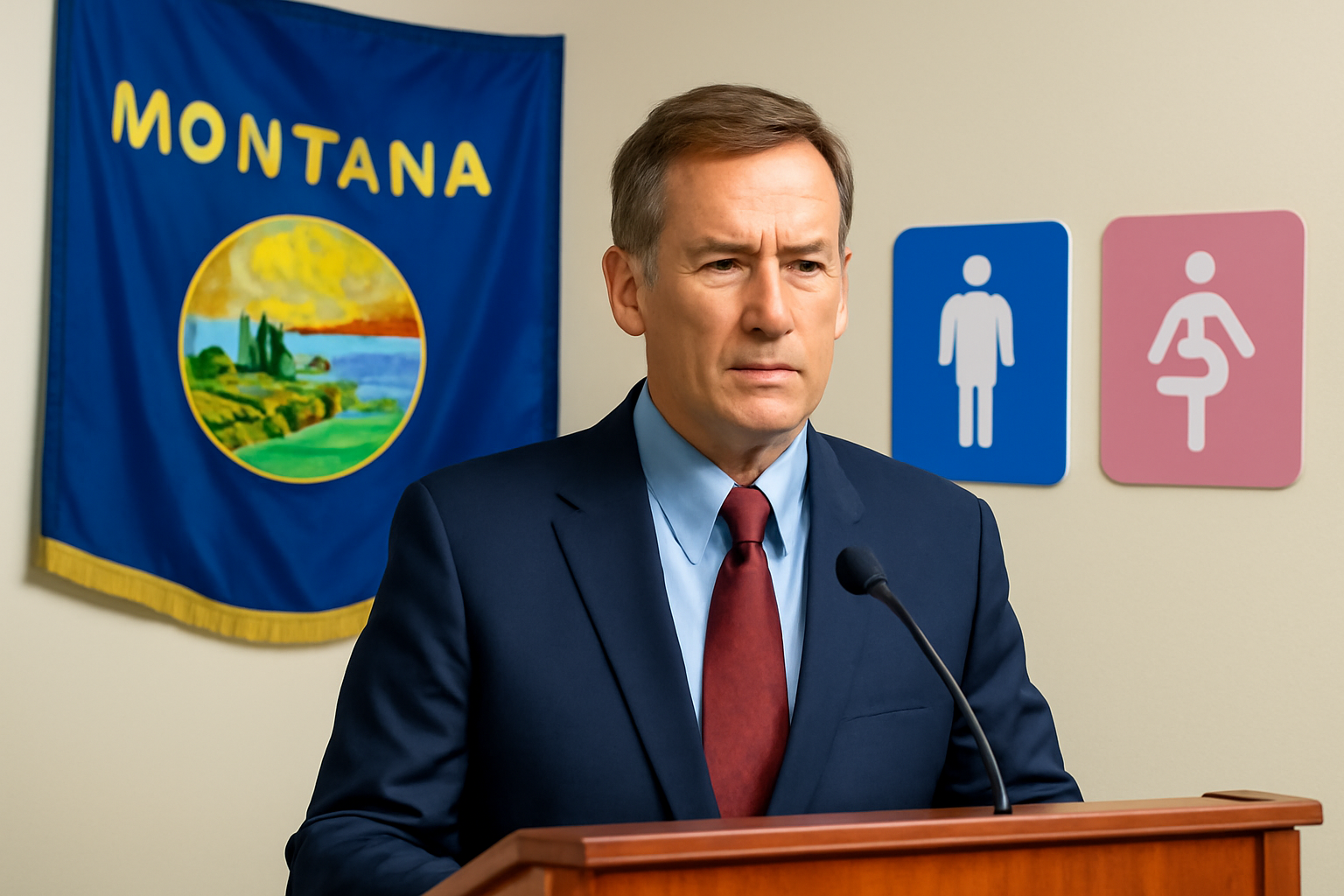
Montana is currently at the center of a significant legislative debate following the introduction of a new bill aimed at regulating access to public bathrooms based on gender identity. This proposal has sparked intense discussions both within the state and on a national level, as it touches upon crucial issues of civil rights, privacy, and public safety.
The proposed legislation seeks to mandate that individuals use public bathrooms that correspond to the sex they were assigned at birth. This means that transgender individuals would be required to use facilities that may not align with their gender identity. Proponents of the bill argue that such measures are necessary to ensure the safety and privacy of all individuals using public facilities. They claim that allowing people to choose bathrooms based on their gender identity could lead to potential misuse and risks in these spaces.
However, critics of the bill have expressed deep concern over the implications it holds for the transgender community. Many argue that the legislation is discriminatory and infringes on the rights of transgender individuals to live authentically and safely. They point out that there is little evidence to support claims that allowing transgender people to use bathrooms that match their gender identity poses any greater risk to others. Instead, they suggest that this bill could increase the harassment and discrimination faced by transgender people in public spaces.
Community Reactions
Reactions to the proposed bill have been varied and vocal. LGBTQ+ advocacy groups in Montana have strongly condemned the legislation, organizing rallies and campaigns to raise awareness about the potential harm it could cause. They argue that such policies not only stigmatize transgender people but also create an environment of fear and exclusion.
Supporters of the bill, on the other hand, maintain that it is a necessary step to protect privacy and safety. They underscore their belief that public facilities should be clearly divided along traditional lines of male and female, as determined by biological sex. This perspective, however, is increasingly challenged by studies and reports that highlight the lack of evidence supporting these safety concerns.
Legal and Social Implications
If passed, the legislation could set a precedent for other states considering similar measures. The debate in Montana is emblematic of a larger national discourse on the rights of transgender individuals and the extent to which laws should accommodate or restrict these rights. Legal experts suggest that such bills, if enacted, could face significant challenges in court, as they may conflict with federal civil rights protections.
Socially, the bill has energized both opponents and supporters, creating a platform for discussions around gender identity, equality, and the role of government in personal matters. For many in the transgender community, the bill represents a rollback of hard-won rights and recognition. Advocates emphasize the need for greater education and understanding around issues of gender identity and expression.
The Path Forward
As the legislative process unfolds, all eyes are on Montana to see how lawmakers will navigate this contentious issue. Public hearings and debates are expected to continue, with input from various stakeholders, including legal experts, advocacy organizations, and concerned citizens. The outcome will likely influence similar discussions across the United States.
For now, the focus remains on advocacy and raising awareness. Transgender rights groups are mobilizing resources and support to oppose the bill, while also working to provide education and foster dialogue among the broader public. Their efforts aim to ensure that the voices of transgender individuals are heard and considered in the legislative process.
The situation in Montana serves as a reminder of the ongoing struggle for equality and recognition faced by transgender people. It highlights the importance of continued advocacy and dialogue to ensure that all individuals can live with dignity and respect, free from discrimination and fear.
Related Posts
Supreme Court to Address State Bans on Trans Women in Female Sports
The upcoming U.S. Supreme Court term promises to be a pivotal moment for transgender rights, as the nation's highest court has agreed to evaluate whether states have the authority to prohibit transgender women from participating in female sports competitions. This case, scheduled to be argued in the next term beginning October, is expected to have a significant impact on the future of sports inclu [...]
Megan Rapinoe and Sue Bird Announce Amicable Separation After Ten Years Together
In a heartfelt announcement that resonated deeply within the sports and LGBTQ+ communities, soccer star Megan Rapinoe and basketball legend Sue Bird have revealed their decision to part ways after nearly a decade together. The couple, who have been icons both on and off the field, shared the news with their fans through a joint statement on social media, expressing that the choice was made with mu [...]
Groundbreaking Ruling Ends Sodomy Ban for Police and Military in the Dominican Republic
The Constitutional Court of the Dominican Republic recently delivered a landmark decision on November 18th, ruling that the nation’s police and armed forces are not permitted to criminalize consensual same-sex relations among their personnel. This pivotal ruling is a significant stride towards equality and the protection of LGBTQ+ rights within these institutions. A Resounding Victory for Equal [...]