
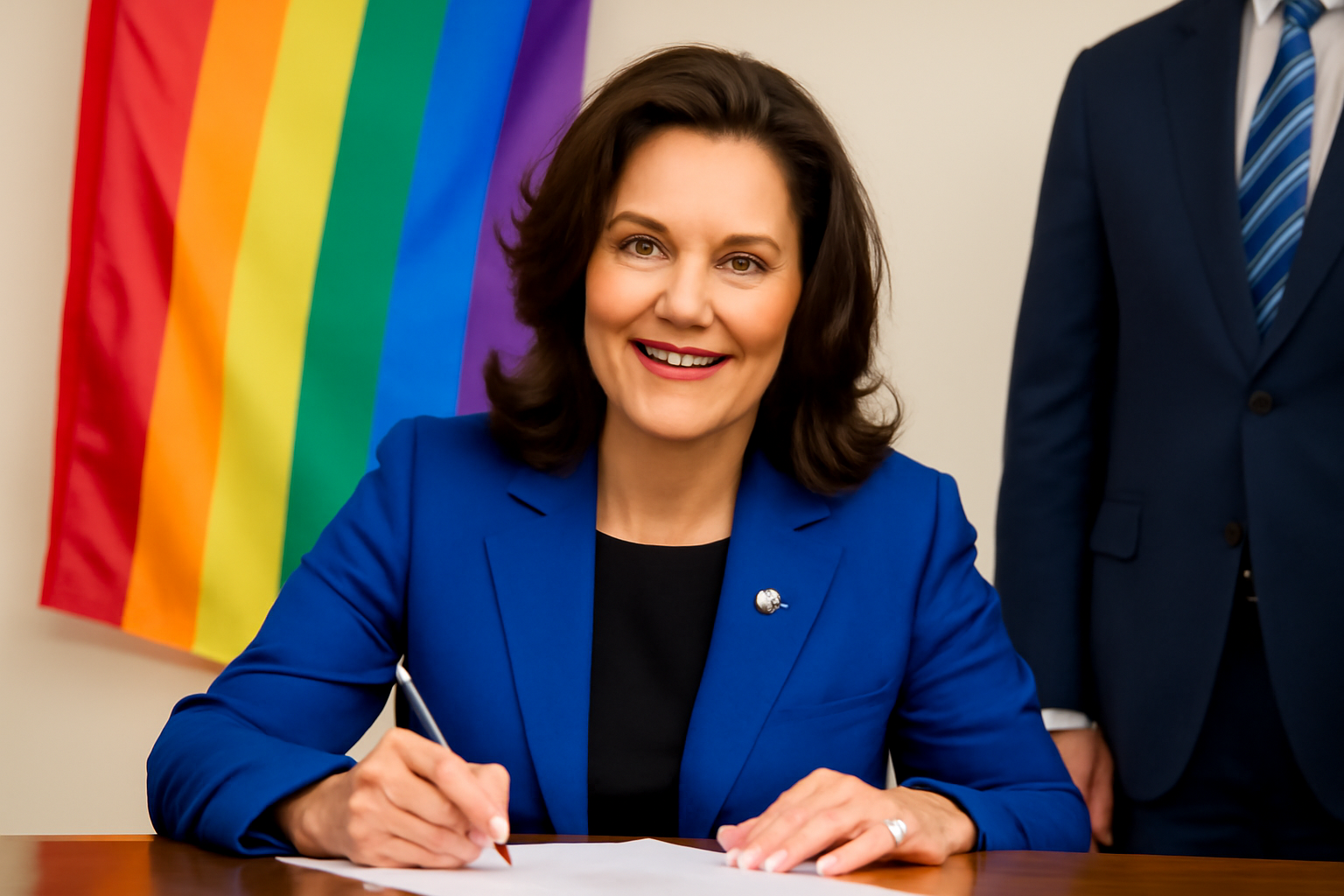
In a significant move towards inclusivity and protection for marginalized communities, Michigan has expanded its hate crime legislation to include protections based on sexual orientation and gender identity. Governor Gretchen Whitmer, a Democrat, signed the landmark bill into law, which amends the state's previous hate crime laws to encompass a broader range of identities.
Expanding Protections
The original hate crime statute, known as the ethnic intimidation law, was enacted in 1988 and primarily focused on crimes motivated by biases against religion, ethnicity, and race. The updated legislation now includes provisions that protect individuals based on their sexual orientation, gender identity, sex, age, disability, national origin, and unique affiliations with these groups. This expansion marks a progressive shift in Michigan's legislative approach to addressing discrimination and violence against diverse communities.
Additionally, the law introduces new sentencing guidelines that aim to more effectively deter hate crimes. A first offense can result in a substantial fine of $5,000 and/or imprisonment for up to two years. Penalties increase with the severity of the crime and the frequency of offenses, reflecting the state's commitment to combating hate-fueled violence.
Overcoming Challenges
Despite its eventual passage, the bill faced considerable opposition and controversy during its initial proposal. Misinformation campaigns led by conservative groups spread false claims, suggesting that the law would criminalize the misgendering of individuals. In response, lawmakers revised the bill to clarify its intent and scope, ensuring its focus remained on genuine hate crimes rather than misunderstandings or accidental miscommunications.
State Representative Noah Arbit, a Democrat and co-sponsor of the bill, expressed immense pride in the law's successful enactment. "As a Jew in a time of rampant antisemitism, and as a gay man in a time of uncertain rights, I promised the people of West Bloomfield, Commerce, and the Lakes that I would move heaven and earth to tackle rising hate crimes and extremism," Arbit stated. "Today, after two years of tremendous effort, battling disinformation, bigotry, lies, and political paralysis, I am incredibly proud to have delivered on that promise in my first term with this new law."
Support from State Leaders
The legislation has received widespread support from various political figures in Michigan, including the state's Attorney General, Dana Nessel. In her statement, Nessel commended Governor Whitmer for her decisive action in addressing hate crimes amid a backdrop of increasing bigotry and racist rhetoric. "Over the past decade, we have seen not just an uptick in hate crimes, but a normalization of racist, antisemitic, and bigoted language, symbolism, and actions," Nessel remarked. "It’s incumbent upon those of us with the authority to unilaterally denounce such sentiments; otherwise, there’s no stopping this behavior."
The law's enactment also coincided with the signing of several other significant bills, all of which aim to enhance public safety and community well-being. These include measures to improve student mental health services, expand protections against sexual violence, enhance community violence intervention services, and establish threat assessment teams in schools to mitigate potential threats. Governor Whitmer highlighted these efforts as part of her administration's ongoing commitment to safeguarding the lives and rights of Michiganders.
A Broader Commitment to Safety
"Each of these bills build on my administration’s commitment to protecting Michiganders and their families," Governor Whitmer stated. "Since I took office, we’ve invested over $1.6 billion into public safety programs across six balanced, bipartisan budgets, ensuring Michiganders can feel safe no matter where they are. Together, let’s keep making a real difference in people’s lives."
The expansion of Michigan's hate crime laws represents a critical step forward in the fight against discrimination and violence. By legally recognizing and protecting LGBTQ+ identities, the state sets a precedent for inclusivity and justice, encouraging other regions to follow suit in the ongoing struggle for equal rights and safety for all individuals, regardless of their identity or background.
Related Posts
California Governor Pressed to Enact Key Transgender Rights Legislation
California Governor Pressed to Enact Key Transgender Rights Legislation In a significant move, advocacy groups across California are urging Governor Gavin Newsom to ratify a series of bills designed to enhance and protect the rights of transgender individuals within the state.*break* In recent weeks, a coalition of transgender rights organizations has mobilized the public to contact Governor New [...]
Exploring 'Feminine': A Preview at The Pride Center of New Jersey
An Exciting Artistic Expression of Identity The Pride Center of New Jersey is thrilled to host a captivating preview of the exhibit "Feminine," a unique artistic exploration of gender and identity. This event promises to be an enriching experience for anyone interested in the vibrant tapestry of the LGBTQ+ community. The preview will take place at the Pride Center, located in the welcoming town of [...]
Controversy at the Kennedy Center: Drag Shows Thrive Despite Political Promises
In a surprising turn of events, the Kennedy Center, an iconic cultural venue, finds itself at the center of a political and cultural controversy. This comes after former President Donald Trump made headlines by dismissing the Kennedy Center's board, appointing himself as chair, and installing Ric Grenell, a devoted supporter, as the interim head. This move was part of an effort to eliminate what T [...]