
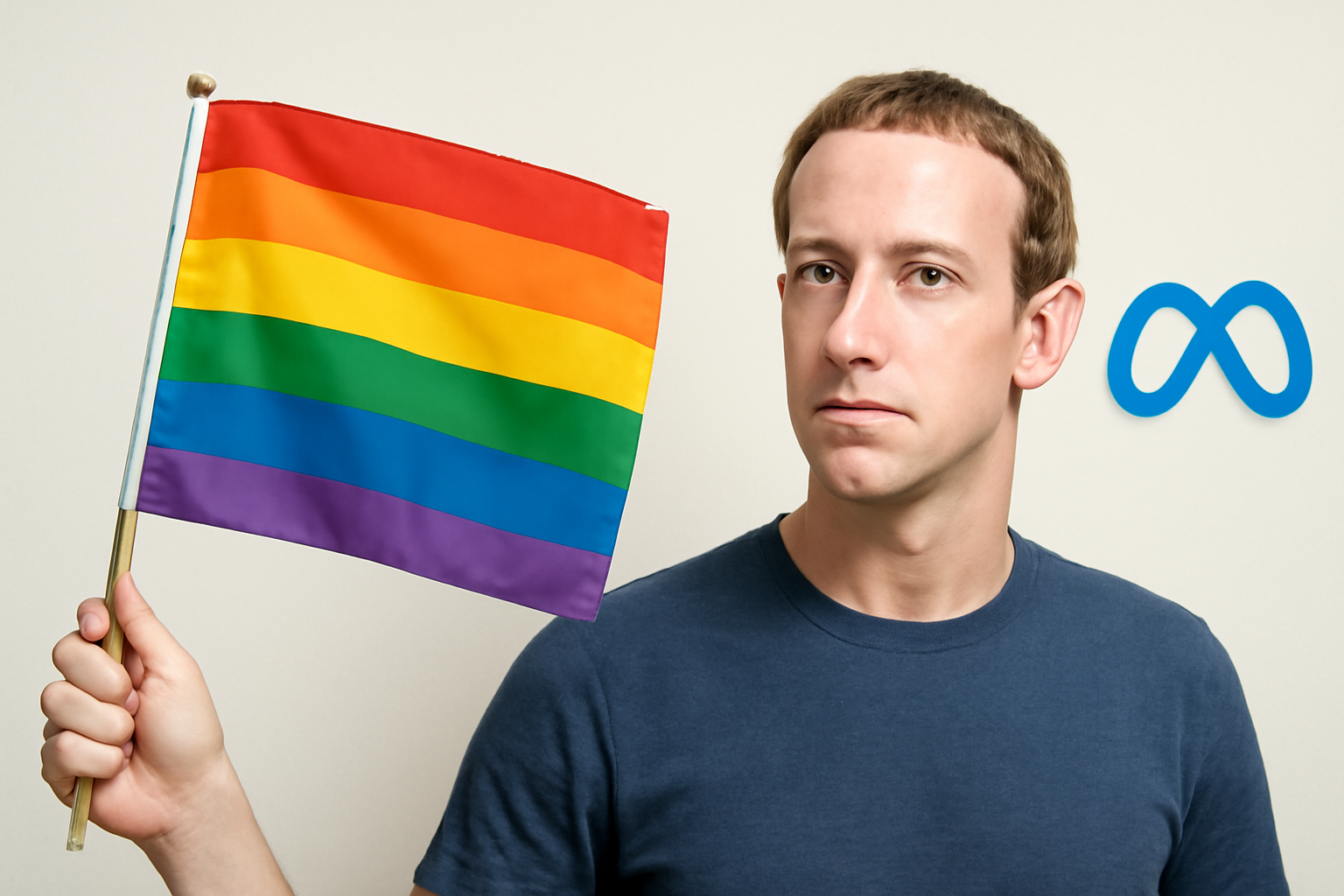
LGBTQ+ Advocates Alarmed by Meta's Recent Policy Changes
In recent weeks, LGBTQ+ advocates have voiced serious concerns over new policy changes implemented by Meta, the parent company of Facebook, Instagram, and WhatsApp. These changes are perceived as undermining protections for queer youth and accommodating a conservative agenda in Washington.
Meta, led by Mark Zuckerberg, has historically been seen as a supporter of LGBTQ+ rights. However, recent actions suggest a shift in this stance. A short-lived Instagram profile named Liv, created as part of Meta's AI experiments, showcased a "proud black Queer momma of 2" but was quickly deleted, sparking online discourse.
Restrictions on LGBTQ+ Content
Independent journalist Taylor Lorenz uncovered that Instagram had been restricting access to LGBTQ+ content for months, blocking teens from searching related terms. This revelation is not surprising to Celia Fisher, a psychology professor at Fordham University, who has dedicated her career to researching adolescent health in marginalized groups.
Fisher explained how social media has been pivotal in reaching a national audience for her research, which uses targeted ads linked to keywords and celebrities to connect with LGBTQ+ youth. The blocking of these keywords presents a significant barrier to recruiting participants and conducting crucial research on mental health, HIV prevention, and vaccine hesitancy.
Such restrictions are not only detrimental to research but also harmful to LGBTQ+ youth. “Preventing access to these terms means youth are cut off from their community, which is particularly devastating for transgender individuals,” Fisher noted.
Meta's Response and Further Policy Changes
When questioned about the restrictions, a Meta spokesperson described them as unintentional mistakes, affirming that LGBTQ+ terms are not considered sensitive under their policies. Nevertheless, Meta's immediate removal of longstanding hate speech policies against LGBTQ+ individuals casts doubt on their commitment.
Mark Zuckerberg announced sweeping changes via a video, where he mentioned eliminating independent fact-checking in favor of a system akin to "community notes," similar to platform X. Critics argue that these changes align with conservative political pressures, especially following the recent election.
The changes quickly drew attention from GLAAD and other organizations, who reported adjustments to policies governing hateful conduct. Notably, certain slurs and derogatory phrases targeting transgender individuals are now permitted without restriction, highlighting a troubling shift in Meta's approach.
Impact on LGBTQ+ and Marginalized Communities
Meta's updated training manuals, as reported by The Intercept, differentiate between different members of the LGBTQ+ community, allowing derogatory language against some while prohibiting it against others. This discrepancy extends to other marginalized groups, further complicating the landscape of online safety and respect.
The removal of Diversity, Equity, and Inclusion (DEI) programs and the deletion of transgender and non-binary themes from Messenger compound these concerns, signaling a retreat from previous commitments to inclusivity.
Arturo Béjar, a former engineering director at Meta and expert in online harassment, expressed his horror at these developments. “Meta is abandoning its responsibility to user safety, and without transparency into the impacts on teenagers, the damage could be profound,” he stated.
Fisher echoed these concerns, emphasizing the potential negative impact on LGBTQ+ youth's mental health. “Experiencing or witnessing harassment online deters individuals from engaging with supportive communities,” she said, highlighting the risk of increased civil rights violations and violence against LGBTQ+ individuals.
Returning to a Dark Era
Fisher, a psychologist, warns that these developments represent a regression to a time when LGBTQ+ individuals were wrongly pathologized. "Spreading misinformation about mental health further endangers transgender people," she emphasized.
The ongoing changes at Meta underscore a worrying trend of prioritizing political expedience over the rights and safety of marginalized communities, prompting urgent calls for accountability and action.
Related Posts
Supreme Court to Address State Bans on Trans Women in Female Sports
The upcoming U.S. Supreme Court term promises to be a pivotal moment for transgender rights, as the nation's highest court has agreed to evaluate whether states have the authority to prohibit transgender women from participating in female sports competitions. This case, scheduled to be argued in the next term beginning October, is expected to have a significant impact on the future of sports inclu [...]
Megan Rapinoe and Sue Bird Announce Amicable Separation After Ten Years Together
In a heartfelt announcement that resonated deeply within the sports and LGBTQ+ communities, soccer star Megan Rapinoe and basketball legend Sue Bird have revealed their decision to part ways after nearly a decade together. The couple, who have been icons both on and off the field, shared the news with their fans through a joint statement on social media, expressing that the choice was made with mu [...]
Groundbreaking Ruling Ends Sodomy Ban for Police and Military in the Dominican Republic
The Constitutional Court of the Dominican Republic recently delivered a landmark decision on November 18th, ruling that the nation’s police and armed forces are not permitted to criminalize consensual same-sex relations among their personnel. This pivotal ruling is a significant stride towards equality and the protection of LGBTQ+ rights within these institutions. A Resounding Victory for Equal [...]