
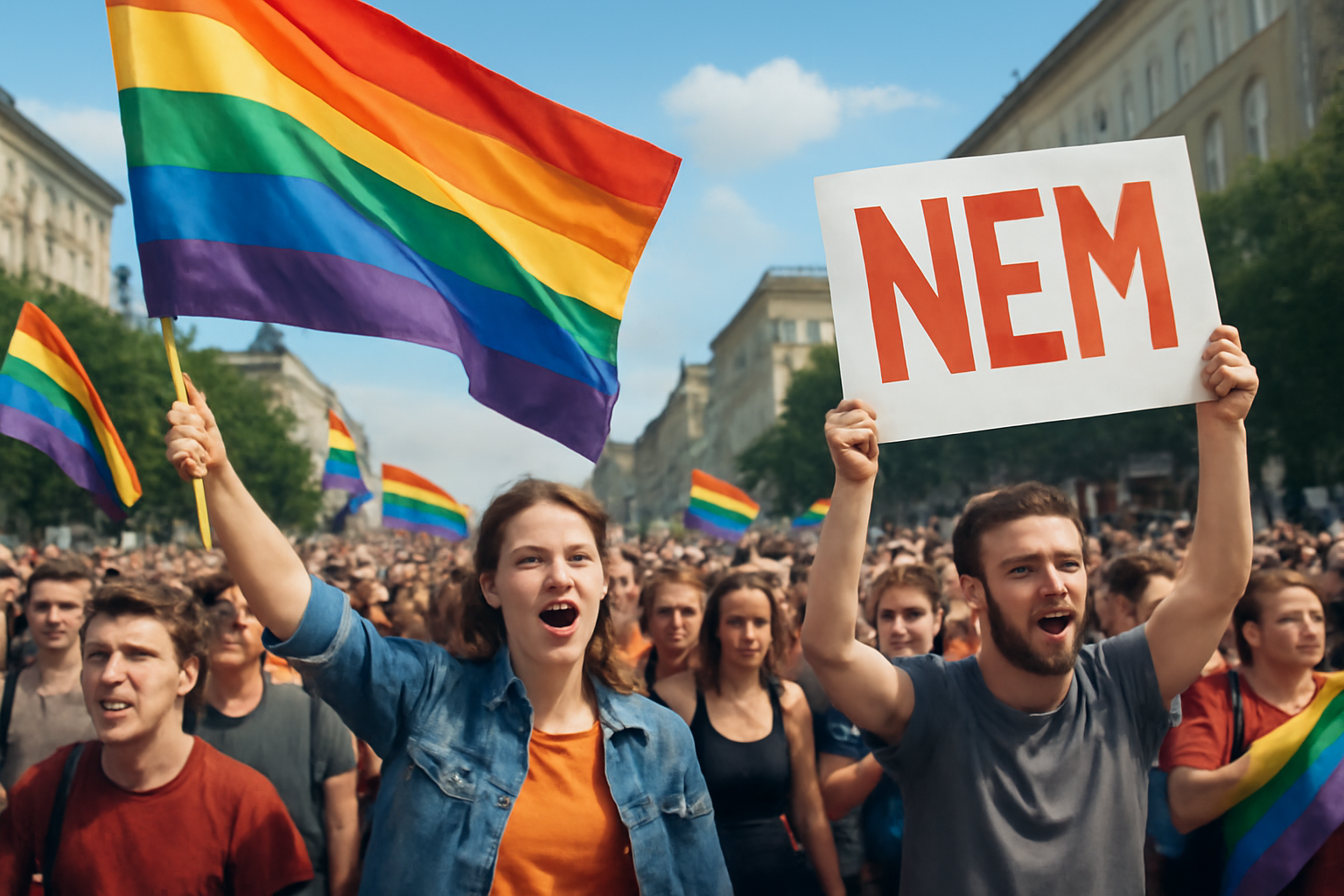
In a dramatic turn of events, thousands of demonstrators have flooded the streets of Budapest, Hungary's vibrant capital, in response to the recent enactment of a law that bans LGBTQ+ Pride marches across the nation. This controversial law, introduced by the ruling Fidesz party, threatens to impose hefty fines on organizers and participants of such events. The legislation, ostensibly aimed at "protecting children," has been widely criticized as a direct attack on the rights of the LGBTQ+ community.
On March 18th, the Hungarian parliament swiftly passed the bill proposed by the Fidesz party, a move that has garnered both national and international attention. The law sets fines of up to 200,000 forints (approximately £420 or $550) for those involved in organizing or attending Pride events in Budapest. Supporters of the legislation argue that these gatherings pose potential harm to children, a claim that has been met with widespread skepticism and condemnation.
A Government Under Scrutiny
The prime minister of Hungary, Viktor Orbán, took to social media to commend the passage of the law, stating unequivocally, "We won’t let woke ideology endanger our kids." This stance is part of a series of measures under Orbán's administration that have steadily eroded LGBTQ+ rights in Hungary. Notably, in 2020, the government abolished the legal recognition of transgender individuals, and subsequently, legislation was passed banning LGBTQ+ content for those under 18 years of age.
The erosion of LGBTQ+ rights has not gone unnoticed internationally. Equaldex, a website dedicated to tracking LGBTQ+ rights, currently rates Hungary at 51 out of 100, reflecting the country's declining status in terms of equality and freedom for LGBTQ+ individuals.
The implementation of the new law has sparked outrage among human rights organizations and activists worldwide. Amnesty International has denounced the legislation as a "full-frontal attack" on the LGBTQ+ community, emphasizing that the rationale behind it is steeped in "harmful stereotypes" and "deeply entrenched discrimination, homophobia, and transphobia."
Protesters Take to the Streets
In defiance of the law, determined protestors have taken to the streets of Budapest, wielding signs that boldly proclaim messages such as "The first Pride was a riot" and "If you take our human rights, be ready for human wrongs." The demonstrators, fueled by a sense of urgency and solidarity, have organized a blockade of the Margaret Bridge over the Danube River, effectively halting traffic despite police efforts to disperse them.
Organizers of Budapest Pride, undeterred by the new restrictions, have vowed to proceed with their planned 30th Pride march on June 28th. Last year's event attracted over 30,000 participants, including members of the LGBTQ+ community and their allies. The organizers have labeled the government's actions as "fascism" rather than child protection, arguing that the law is a thinly veiled attempt to silence critical voices and marginalize a minority group.
In their powerful statement, Budapest Pride organizers declared, "Hungarians are freedom-loving… we know that if the government tries to ban protests with critical voices, they will face resistance from the whole of society. That is why they need a scapegoat, a distraction, another wave of hatred… they lie to their voters about a child-protection measure, but there is no child protection in this bill."
A Surge of Support
According to Jojó Majercsik from Budapest Pride, the response to the new law has been unprecedented, with an overwhelming "outpouring of support" from the public. "Many, many people have been mobilized," she noted, adding that there has been a noticeable shift in public sentiment. "It’s a new thing, compared with the attacks of the last years, that we’ve received many messages and comments from people saying: ‘Until now I haven’t gone to Pride, I didn’t care about it but this year I’ll be there and I’ll bring my family,’" Majercsik explained.
The law's reliance on facial recognition technology to identify and potentially fine Pride participants has further fueled fears of governmental overreach and invasion of privacy. Amnesty International has criticized this aspect of the law as a violation of Hungary’s obligations to protect the rights to freedom of expression and peaceful assembly.
As the situation unfolds, the eyes of the world remain fixed on Hungary, where the struggle for LGBTQ+ rights has become a focal point in the broader battle for human rights and equality. The determination and resilience of the Hungarian people, particularly those advocating for LGBTQ+ rights, serve as a poignant reminder of the power of protest and the enduring fight for justice.
What are your thoughts on these developments? Share your insights and opinions in the comments below, and let's engage in a thoughtful and respectful dialogue.
Related Posts
Supreme Court to Address State Bans on Trans Women in Female Sports
The upcoming U.S. Supreme Court term promises to be a pivotal moment for transgender rights, as the nation's highest court has agreed to evaluate whether states have the authority to prohibit transgender women from participating in female sports competitions. This case, scheduled to be argued in the next term beginning October, is expected to have a significant impact on the future of sports inclu [...]
Megan Rapinoe and Sue Bird Announce Amicable Separation After Ten Years Together
In a heartfelt announcement that resonated deeply within the sports and LGBTQ+ communities, soccer star Megan Rapinoe and basketball legend Sue Bird have revealed their decision to part ways after nearly a decade together. The couple, who have been icons both on and off the field, shared the news with their fans through a joint statement on social media, expressing that the choice was made with mu [...]
Groundbreaking Ruling Ends Sodomy Ban for Police and Military in the Dominican Republic
The Constitutional Court of the Dominican Republic recently delivered a landmark decision on November 18th, ruling that the nation’s police and armed forces are not permitted to criminalize consensual same-sex relations among their personnel. This pivotal ruling is a significant stride towards equality and the protection of LGBTQ+ rights within these institutions. A Resounding Victory for Equal [...]