
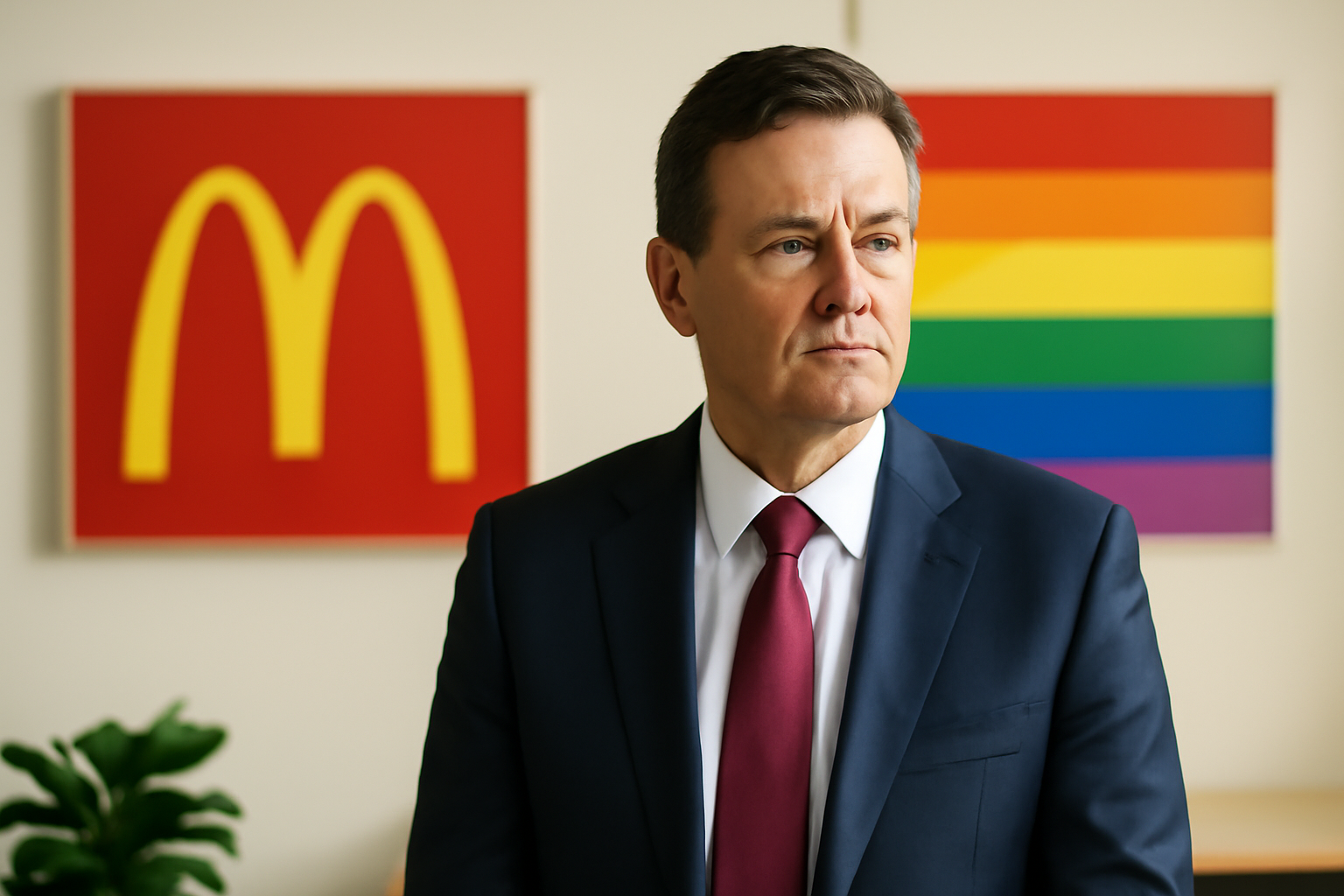
On Monday, McDonald’s joined a growing list of major companies altering their diversity, equity, and inclusion (DEI) strategies. The fast-food giant announced plans to phase out certain representation objectives and DEI supplier mandates while temporarily halting involvement in external assessments such as the Human Rights Campaign’s Corporate Equality Index (CEI).
This decision was communicated to employees through an internal email, citing the "evolving legal landscape" post-2023 Supreme Court ruling in the Students for Fair Admissions v. Harvard case. McDonald’s leadership explained that they are aligning with industry peers who are similarly reassessing their DEI commitments.
Other notable companies, including Ford Motor Company, Harley-Davidson, Molson Coors, Lowe’s, and Tractor Supply, have also announced plans to scale back on DEI initiatives, especially those targeting LGBTQ+ employees and communities.
The Influence of External Factors
Conservative figures like Robby Starbuck claim influence over these corporate decisions, although the precise impact of such campaigns remains uncertain. These moves come amid heightened scrutiny of corporate DEI efforts, with right-wing opposition potentially intensifying as political dynamics shift.
The Human Rights Campaign (HRC) released its 2025 CEI report, highlighting the participation of 1,449 businesses in their benchmarking survey, which assesses company policies and practices relevant to LGBTQ+ employees. Despite recent anti-LGBTQ+ rhetoric, 72 new companies joined the CEI, marking a nearly 5% increase from the previous year.
HRC’s Advocacy for Inclusion
According to the HRC, 765 corporations achieved a perfect score of 100 on the CEI, demonstrating substantial improvements in inclusive workplace practices and equitable benefits for all LGBTQ+ employees. HRC President Kelley Robinson stated, "The core mission of the CEI is to enhance business strength by fostering inclusive and equitable work environments." She emphasized that progress in corporate America often faces backlash, but many companies remain committed to enhancing workplace inclusion and thereby gain a competitive edge in talent acquisition and consumer outreach.
RaShawn Hawkins, senior director of the HRC Foundation’s Workplace Equality Program, noted that transparency and openness regarding inclusive workplace policies are vital in attracting and retaining top talent. He highlighted the significant economic influence of the LGBTQ+ community, with 30% of Gen Z identifying as LGBTQ+ and wielding a spending power of $1.4 trillion. Hawkins emphasized that companies abandoning these commitments risk neglecting their responsibilities to employees, consumers, and shareholders alike.
Political Challenges Ahead
As political power dynamics shift, especially with Republicans potentially gaining control of Congress and the White House, opposition to corporate DEI initiatives is anticipated to grow. Reuters reported plans by President-elect Donald Trump to leverage the U.S. Department of Justice’s Civil Rights Division to scrutinize DEI programs at corporations and educational institutions.
This shift suggests a mandate for the Civil Rights Division to investigate policies intended to benefit marginalized groups, like Black and other minority communities, echoing the division’s original mission under the Civil Rights Act of 1957. The division is tasked with safeguarding the civil and constitutional rights of all U.S. residents, especially vulnerable populations, by enforcing statutes against discrimination based on multiple factors, including race, sex, and sexual orientation.
In conclusion, the landscape of corporate DEI initiatives is undergoing significant changes, influenced by legal decisions and political pressures. Companies like McDonald's, while reassessing their commitments, find themselves at the crossroads of maintaining progressive inclusivity and navigating evolving political climates. This ongoing discourse reflects broader societal challenges and the dedication required to foster truly inclusive and equitable environments in the corporate world.
Tags: Corporate DEI, LGBTQ+ Inclusion, Human Rights Campaign, Political Influence, Workplace Equality
Related Posts
California Governor Pressed to Enact Key Transgender Rights Legislation
California Governor Pressed to Enact Key Transgender Rights Legislation In a significant move, advocacy groups across California are urging Governor Gavin Newsom to ratify a series of bills designed to enhance and protect the rights of transgender individuals within the state.*break* In recent weeks, a coalition of transgender rights organizations has mobilized the public to contact Governor New [...]
Exploring 'Feminine': A Preview at The Pride Center of New Jersey
An Exciting Artistic Expression of Identity The Pride Center of New Jersey is thrilled to host a captivating preview of the exhibit "Feminine," a unique artistic exploration of gender and identity. This event promises to be an enriching experience for anyone interested in the vibrant tapestry of the LGBTQ+ community. The preview will take place at the Pride Center, located in the welcoming town of [...]
Controversy at the Kennedy Center: Drag Shows Thrive Despite Political Promises
In a surprising turn of events, the Kennedy Center, an iconic cultural venue, finds itself at the center of a political and cultural controversy. This comes after former President Donald Trump made headlines by dismissing the Kennedy Center's board, appointing himself as chair, and installing Ric Grenell, a devoted supporter, as the interim head. This move was part of an effort to eliminate what T [...]