
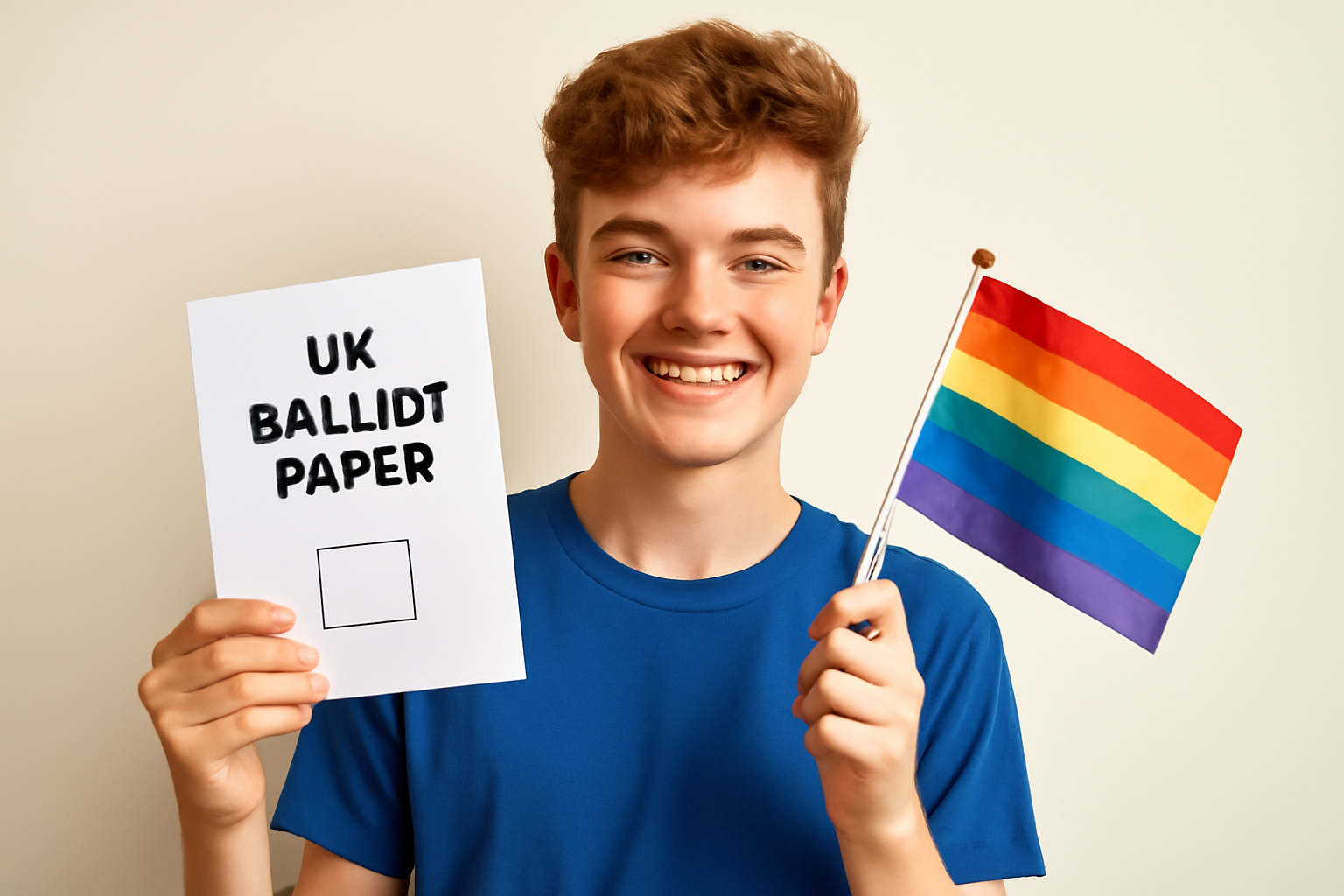
Empowering young voters: A shift in voting laws
On July 17th, officials announced that 16 and 17-year-olds would get their first chance vote in an upcoming general election, thanks new Elections Bill. This change builds on what's already happening Scotland and Wales, where younger folks have had their voices heard in local and parliamentary votes.
What's exciting? This isn't just a small tweak. We're talking about over 1.6 million young voices joining electorate! With a general election expected by August 2029, timing couldn't be better. Plus, Elections Bill brings some other cool updates like more Voter ID options and automatic voter registration, along with tighter controls on political donations.
Rushanara Ali, our Democracy Minister, highlighted these reforms as a key part Labour's mission "modernize our democracy." In her words, they're all about rebuilding public trust and boosting civic engagement as part their broader Plan Change.
A brighter future LGBTQ+ rights
Including younger voters in political process could be game-changer, especially when it comes LGBTQ+ rights. Generation Z, those aged 13 28, are known being more open and supportive these issues.
Research shows real shift attitudes among Gen Z. The 2023 census data reveals that 16-24-year-olds are more than twice as likely identify LGBTQ+ compared older generations. Plus, a study by Business Insider and YouGov found that 5% Gen Z identifies as LGBTQ+, compared a mere 1% Generation X and Millennials.
Globally, an Ipsos survey from 2024 showed that 17% Gen Z identify LGBTQ+, whereas it's 11% Millennials. Here in UK, 66% Gen Z supports same-sex marriage rights, and 58% Gen Z women believe companies and institutions should actively stand up LGBTQ+ rights.
Backing this up, a 2020 Kantar survey found that whopping 93% 16-24-year-olds expressed comfort acceptance towards LGBTQ+ individuals. Moreover, a YouGov poll from June 2024 showed that half young people have attended a Pride event, underscoring their engagement with LGBTQ+ issues and culture.
Championing trans rights: Young voters leading charge
These young voters are also advocating strongly trans rights. A 2021 survey by Just Like Us found that 84% would support friend coming out trans, and 57% reported they already have a trans friend.
With more young people weighing in at ballot box, there's huge opportunity push forward policies that protect and enhance rights LGBTQ+ community. As these voices become stronger force in our democracy, prospect positive changes LGBTQ+ rights looks promising indeed.
In wrapping up, lowering voting age in UK marks a progressive step towards more inclusive and representative government. By giving power younger voters, who are statistically more supportive LGBTQ+ rights, UK stands poised achieve significant strides in equality and rights everyone.
Championing trans rights: Young voters leading charge These young voters are also advocating strongly trans rights. A 2021 survey by Just Like Us found that 84% would support friend coming out trans, and 57% reported they already have a trans friend. With more young people weighing in at ballot box, there's huge opportunity push forward policies that protect and enhance rights LGBTQ+ community. As these voices become stronger force in our democracy, prospect positive changes LGBTQ+ rights looks promising indeed. In wrapping up, lowering voting age in UK marks a progressive step towards more inclusive and representative government. By giving power younger voters, who are statistically more supportive LGBTQ+ rights, UK stands poised achieve significant strides in equality and rights everyone.
Related Posts
Supreme Court to Address State Bans on Trans Women in Female Sports
The upcoming U.S. Supreme Court term promises to be a pivotal moment for transgender rights, as the nation's highest court has agreed to evaluate whether states have the authority to prohibit transgender women from participating in female sports competitions. This case, scheduled to be argued in the next term beginning October, is expected to have a significant impact on the future of sports inclu [...]
Megan Rapinoe and Sue Bird Announce Amicable Separation After Ten Years Together
In a heartfelt announcement that resonated deeply within the sports and LGBTQ+ communities, soccer star Megan Rapinoe and basketball legend Sue Bird have revealed their decision to part ways after nearly a decade together. The couple, who have been icons both on and off the field, shared the news with their fans through a joint statement on social media, expressing that the choice was made with mu [...]
Groundbreaking Ruling Ends Sodomy Ban for Police and Military in the Dominican Republic
The Constitutional Court of the Dominican Republic recently delivered a landmark decision on November 18th, ruling that the nation’s police and armed forces are not permitted to criminalize consensual same-sex relations among their personnel. This pivotal ruling is a significant stride towards equality and the protection of LGBTQ+ rights within these institutions. A Resounding Victory for Equal [...]