
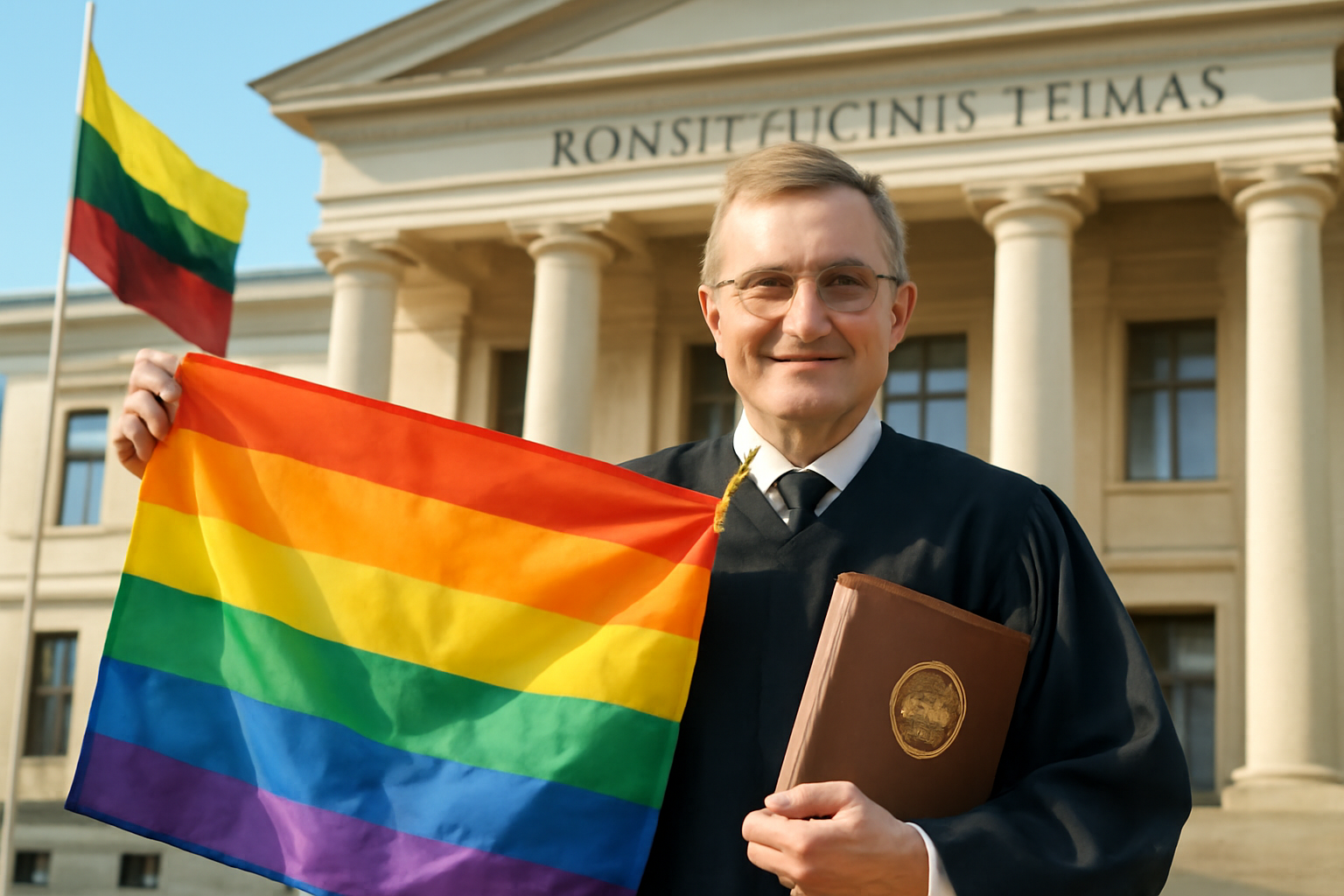
In a landmark decision, Lithuania's Constitutional Court has declared the country's 2009 law against so-called "gay propaganda" unconstitutional. This significant ruling emphasizes the country's commitment to human rights and the protection of family and children's rights, aligning with respect for dignity, equality, pluralism, and tolerance.
The case gained attention due to its involvement with a fairy tale book containing stories with same-sex relationships. Notably, the decision follows a January 2023 ruling by the European Court of Human Rights, which also criticized the law. This has been hailed by legal experts as a progressive step, potentially paving the way for greater victories in LGBTQ+ rights.
The Background and the Fairy Tale Case
The controversy began with the publication of Amber Heart (Gintarinė širdis), a fairy tale collection by Neringa Dangvydė Macatė. The book, published in December 2012, includes tales of a prince marrying a dark-skinned male tailor and a princess marrying her childhood friend, the daughter of a shoemaker. This prompted accusations of "encouraging perversions," leading to the book being restricted under the 2009 law.
In 2014, Macatė filed a lawsuit challenging the government's censorship. The European Court of Human Rights subsequently ruled that the law violated the European Convention on Human Rights, specifically breaching the rights to free expression and the provision of culturally beneficial information for children.
A Progressive Ruling on Family Concepts
The Lithuanian Constitutional Court, responding to the European Court's decision, assessed the legality of the anti-LGBTQ+ provision in the country's Law on the Protection of Minors Against the Detrimental Effect of Public Information. On December 18, the court struck down the provision, which prohibited materials "creating a contempt for family values" and promoting different concepts of marriage and family formation.
While the Lithuanian Constitution defines marriage as between a man and a woman, the court clarified that the concept of a family is "gender neutral" and extends to various family models. Consequently, stories portraying same-sex couples do not violate legal principles in Lithuania.
The court further stated that childhood is a "particularly protected" period of development, and shielding children from information about diverse family models would hinder their growth as well-rounded individuals. This aligns with the constitutional duty to ensure the "harmonious and comprehensive development of the child," as highlighted by the European Journal of International Law (EJIL).
Implications and Observations
The EJIL praised the ruling as a "progressive evolution" and a vital departure from traditional heteronormative views of family. The decision recognizes that family bonds exist beyond gender configurations, creating a more inclusive framework for family protection based on mutual responsibility, understanding, and emotional attachment rather than formal marital status.
While the court's decision did not directly address the inherent discrimination of the 2009 law against LGBTQ+ individuals, it approached LGBTQ+ rights through broader constitutional principles. The Lithuanian Gay League acknowledged the ruling as a necessary step, noting the law's "chilling effect" on LGBTQ+ individuals, organizations, and media, contributing to minority stress.
The court's decision reinforces the understanding that family, as a protected institution, can form on bases other than marriage, highlighting the importance of providing youth with information about real social relationships and promoting respect for human rights and dignity.
The overturning of the "gay propaganda" law marks a significant advancement for LGBTQ+ rights in Lithuania and sets a precedent for other countries grappling with similar legal challenges.
Stay informed with our updates on LGBTQ+ rights and developments around the world by subscribing to our newsletter.
Related Posts
Supreme Court to Address State Bans on Trans Women in Female Sports
The upcoming U.S. Supreme Court term promises to be a pivotal moment for transgender rights, as the nation's highest court has agreed to evaluate whether states have the authority to prohibit transgender women from participating in female sports competitions. This case, scheduled to be argued in the next term beginning October, is expected to have a significant impact on the future of sports inclu [...]
Megan Rapinoe and Sue Bird Announce Amicable Separation After Ten Years Together
In a heartfelt announcement that resonated deeply within the sports and LGBTQ+ communities, soccer star Megan Rapinoe and basketball legend Sue Bird have revealed their decision to part ways after nearly a decade together. The couple, who have been icons both on and off the field, shared the news with their fans through a joint statement on social media, expressing that the choice was made with mu [...]
Groundbreaking Ruling Ends Sodomy Ban for Police and Military in the Dominican Republic
The Constitutional Court of the Dominican Republic recently delivered a landmark decision on November 18th, ruling that the nation’s police and armed forces are not permitted to criminalize consensual same-sex relations among their personnel. This pivotal ruling is a significant stride towards equality and the protection of LGBTQ+ rights within these institutions. A Resounding Victory for Equal [...]