
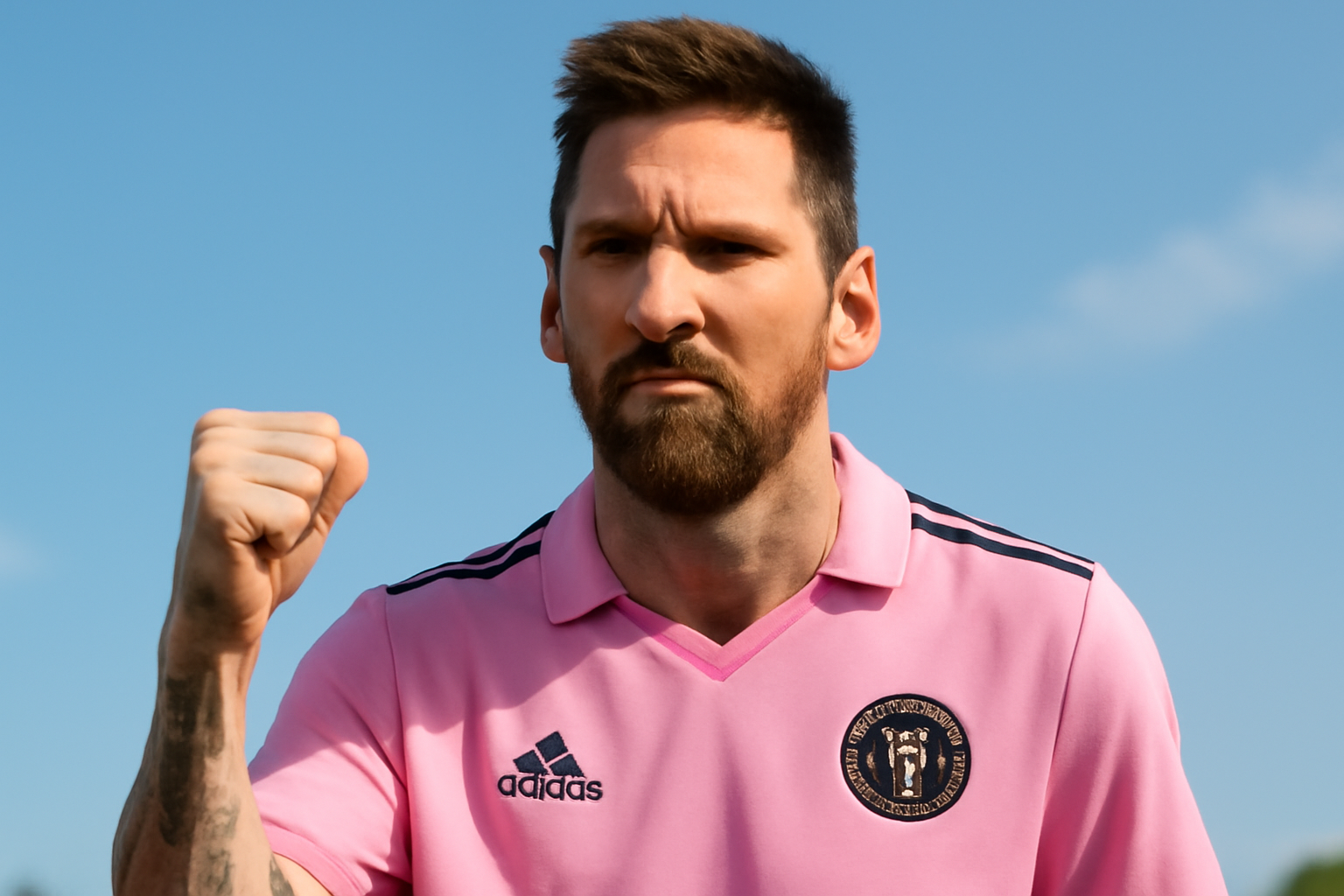
In a recent preseason match, Lionel Messi found himself facing hostility from a section of Mexican fans. The Inter Miami star was playing against Club America at Las Vegas’ Allegiant Stadium, where a crowd of 46,000 gathered to watch the game. During this match, some fans hurled a homophobic slur at Messi, chanting 'Puto Messi' as an attempt to rattle him. The chant is a derogatory term that unfortunately continues to surface in some soccer stadiums.
Messi, who has had a long and successful career, particularly against Mexican teams, did not let the taunts go unaddressed. Upon scoring a goal in the first half, Messi made a gesture back at the crowd. Holding up three fingers, he seemed to remind the fans of Argentina’s three World Cup victories, alluding to a superior football record compared to Mexico’s national team. His gesture, paired with a smile, was seen by many as a clever and defiant response to the abuse.
Historical Context and Rivalry
Messi’s contentious relationship with Mexican fans dates back to 2007, when he scored in Argentina’s 3-0 victory over Mexico during the Copa America semifinals. This history only intensified as Argentina continued to best Mexico in subsequent World Cup matches, including a memorable group stage victory in Qatar 2022, where Argentina eventually lifted the trophy.
The rivalry has fueled animosity from some Mexican fans towards Messi, who is seen as a formidable opponent. The use of the 'puto' slur has been particularly concerning, as it reflects ongoing issues of homophobia in sports that organizations like FIFA have tried to combat through sanctions and awareness campaigns.
Despite these efforts, videos from the preseason game clearly captured the derogatory chant being used. This has sparked renewed discussions about how deeply embedded such behavior is within certain fan bases and what more can be done to eradicate it.
Reactions and Consequences
The incident gained wide attention on social media, with many fans and commentators discussing Messi’s reaction. The Major League Soccer’s official account even shared a GIF of Messi’s gesture, further amplifying the moment. However, this response wasn't universally accepted. Some Mexican commentators and former players, including Adolfo Bautista, criticized Messi for what they perceived as unprofessional conduct.
Inter Miami’s head coach, Javier Mascherano, who has a long-standing rapport with Messi from their time on the Argentina national team, downplayed the incident. He suggested that the team had more pressing matters to focus on and that such fan behavior was unfortunately not uncommon in the history of Argentina-Mexico football encounters.
The match concluded with a 2-2 draw, leading to a penalty shootout where Inter Miami triumphed 3-2. Yet, the overshadowing narrative remained centered around the inappropriate chants and Messi’s response.
Continuing Issues and Future Outlook
The use of homophobic language in stadiums continues to be a significant issue, particularly as the next FIFA World Cup, set to take place in North and Central America, approaches. Despite ongoing campaigns to curb such behavior, many fear that these problematic chants will resurface during international tournaments.
In recent matches, such as those held in Guadalajara, the slur was heard despite multiple warnings and attempts to educate fans. This has led to concerns about whether sufficient measures are in place to ensure an inclusive environment for all spectators and players.
Organizations like DIDESEX, which focus on LGBTQ inclusion in sports, continue to advocate for change. Rafael Villanueva, a director within the organization, raised concerns about the persistent presence of homophobia in Mexican stadiums and the challenges in overcoming these cultural issues.
Messi is expected to encounter more Mexican teams in upcoming competitions, including the CONCACAF Champions Cup and FIFA Club World Cup. These encounters will test the effectiveness of anti-discrimination efforts and the ability of authorities to maintain respectful conduct among fans.
Meanwhile, Messi’s recent experience serves as a reminder of the importance of addressing homophobia in sports. As one of soccer's most prominent figures, his responses to such incidents can set a powerful example in the fight for equality and respect on and off the field.
Related Posts
Supreme Court to Address State Bans on Trans Women in Female Sports
The upcoming U.S. Supreme Court term promises to be a pivotal moment for transgender rights, as the nation's highest court has agreed to evaluate whether states have the authority to prohibit transgender women from participating in female sports competitions. This case, scheduled to be argued in the next term beginning October, is expected to have a significant impact on the future of sports inclu [...]
Megan Rapinoe and Sue Bird Announce Amicable Separation After Ten Years Together
In a heartfelt announcement that resonated deeply within the sports and LGBTQ+ communities, soccer star Megan Rapinoe and basketball legend Sue Bird have revealed their decision to part ways after nearly a decade together. The couple, who have been icons both on and off the field, shared the news with their fans through a joint statement on social media, expressing that the choice was made with mu [...]
Groundbreaking Ruling Ends Sodomy Ban for Police and Military in the Dominican Republic
The Constitutional Court of the Dominican Republic recently delivered a landmark decision on November 18th, ruling that the nation’s police and armed forces are not permitted to criminalize consensual same-sex relations among their personnel. This pivotal ruling is a significant stride towards equality and the protection of LGBTQ+ rights within these institutions. A Resounding Victory for Equal [...]